Cats and Trails and Garden Tales
Musings on cats, travel, gardens and life
After the Storm
We heard the wind howling in the night but woke to overcast skies and promising sunbreaks. We thought we could beat the storm’s next wave and so headed out to Coulon Park for a morning walk. We found everything windswept, clean and fresh, and eagles soaring overhead.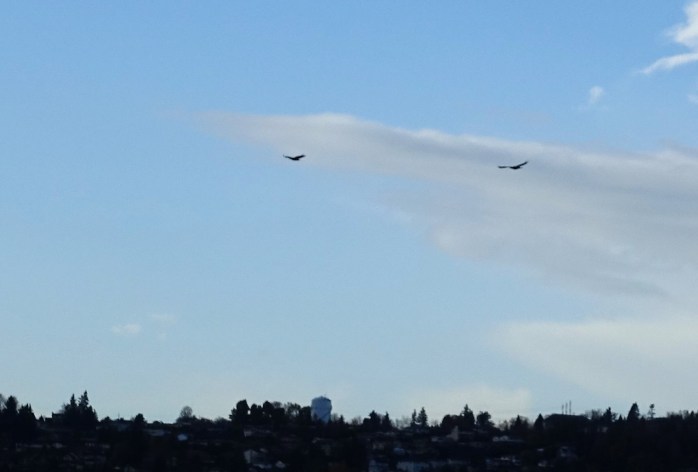
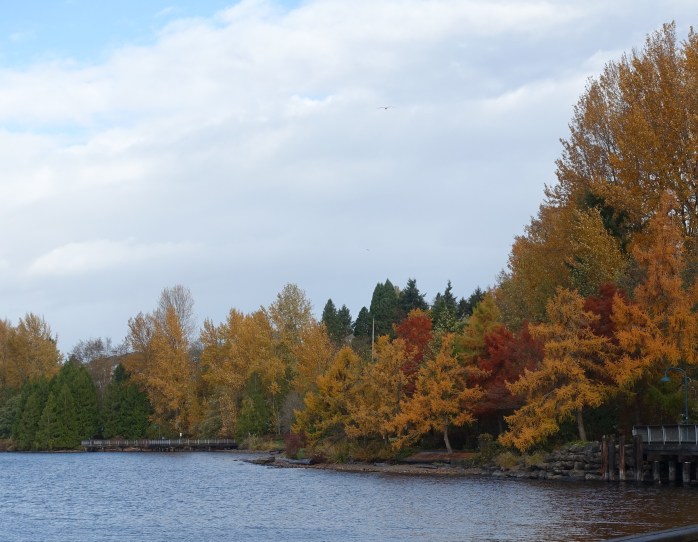
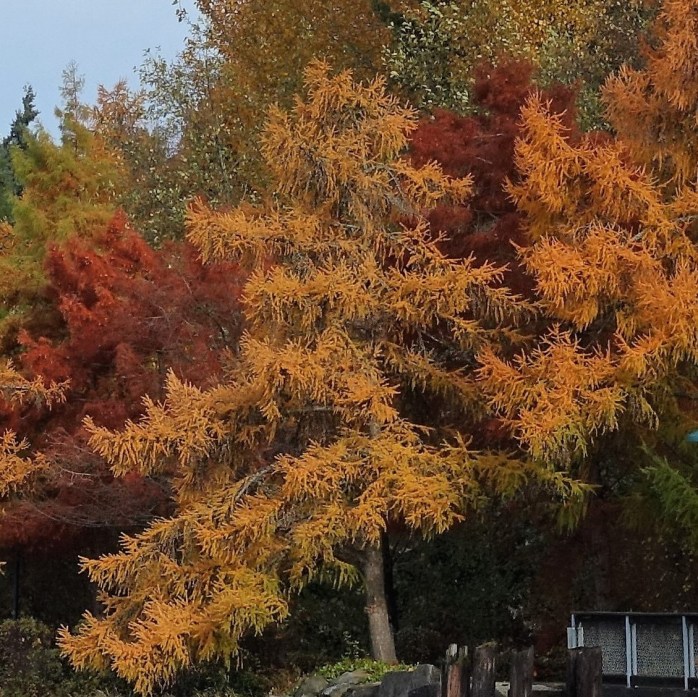
Golden Larch trees were clustered together and at their peak color.
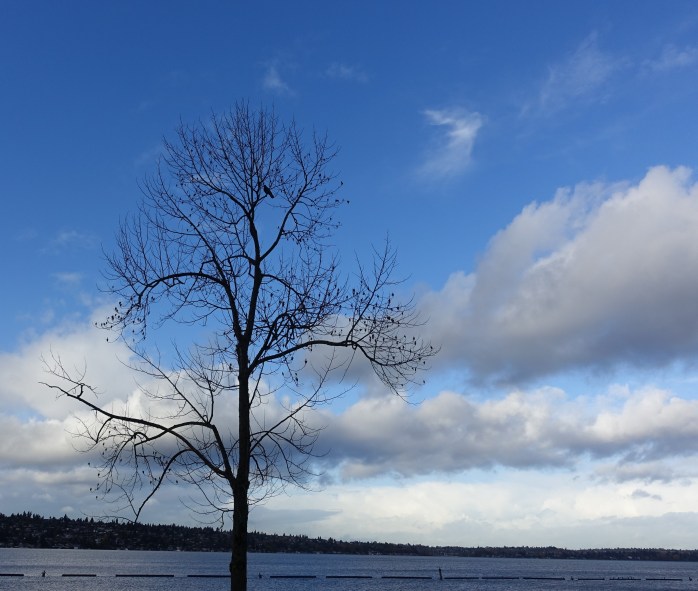
This tree stood alone, uncovered, desolate and beautiful against mostly blue skies.
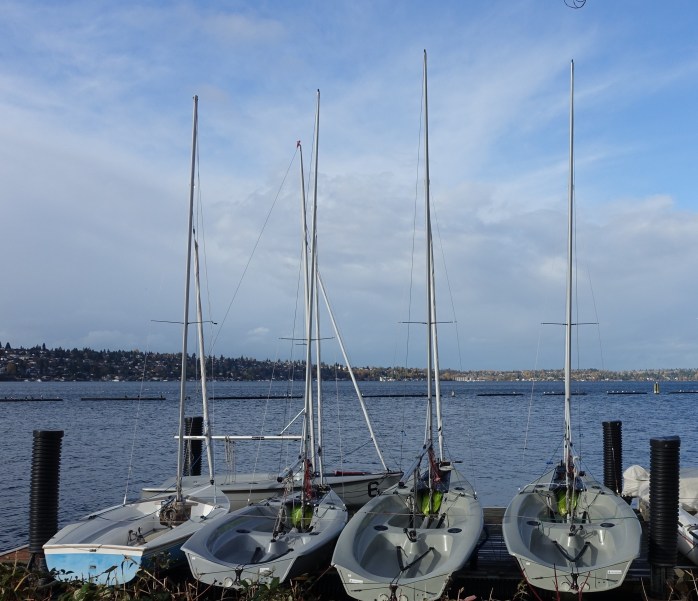
Sailboats were safely moored and undeterred as always.
But skies grew grayer over the boat launch.
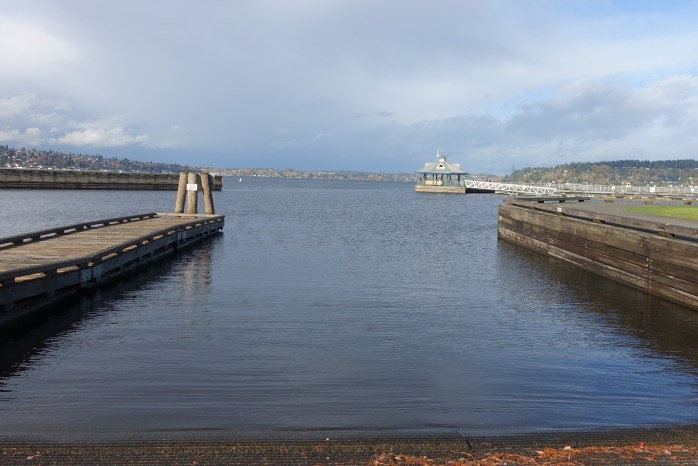
We made it back without wind or rain. We love this walk.
~ Susanne
Tiger’s New Chair
This is Tiger and I appreciate how Sue takes care of me, even in the small things. The problem was Benji. (No surprise there.) I was here first but when he moved in he took over all the best places to sleep. Like the chair in the living room.
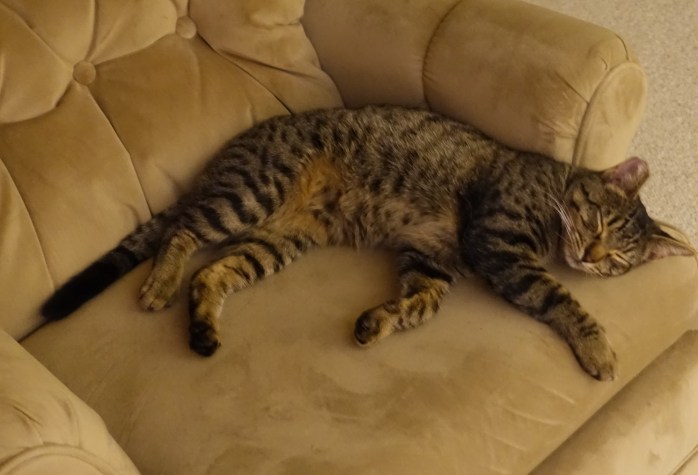
Well it’s a small chair and he’s pretty small himself so I let it go, being the tolerant cat that I am. I moved on to the couch but it wasn’t long before he claimed that too.
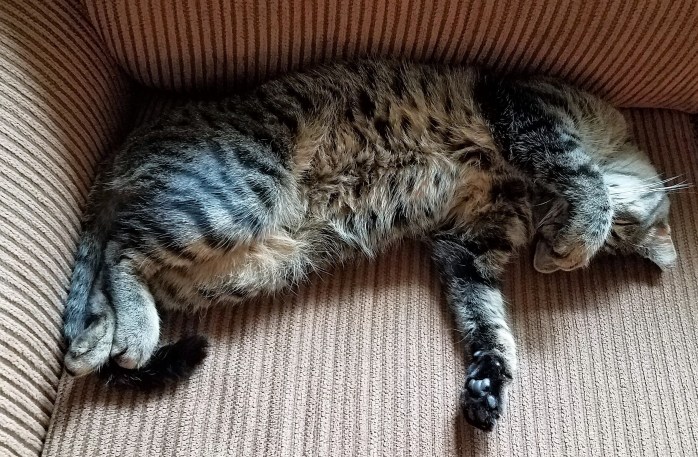
Enough is enough I thought, so I had a few words with Sue.

And you know what? She got me a new chair.
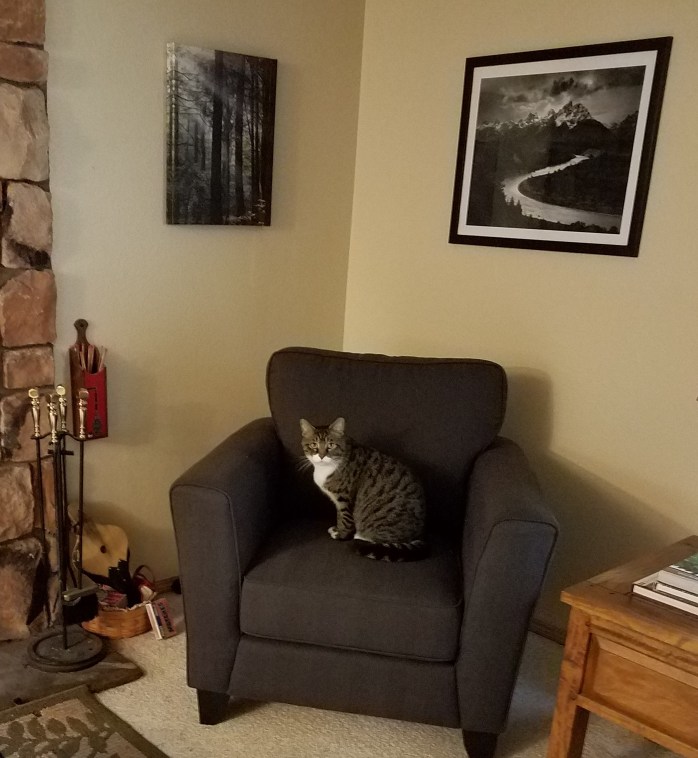
And it’s the perfect fit.
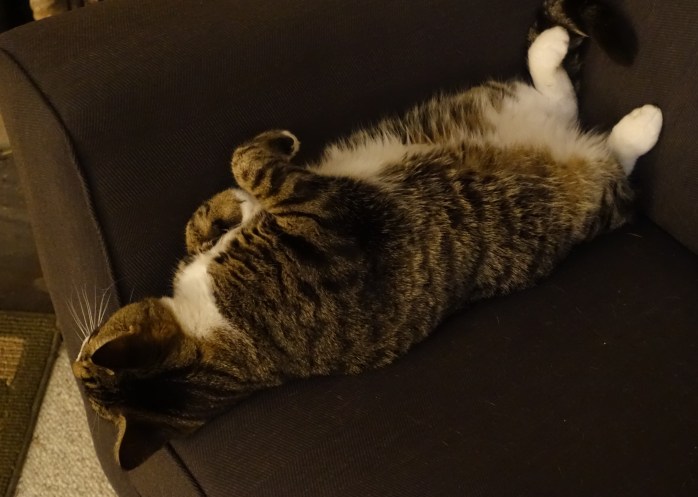
I’m keeping this one.
~ Tiger
Temporary Morning Brilliance
“Susanne, are you awake? You’ve got to see this.”
My husband the early riser had been out for his morning walk when the sun was starting to rise.
I was awake and jumped out of bed hoping to capture that temporary morning glow before it disappeared.


A few minutes later the sky returned to an ordinary pale grey.
~ Susanne
WordCamp Seattle
Today’s post isn’t about my usual suspects. It’s not about my cats (though Tiger’s picture is on the badge below.) And it’s not about trails and travels in the Pacific Northwest (though I did take the light rail downtown to my destination.)
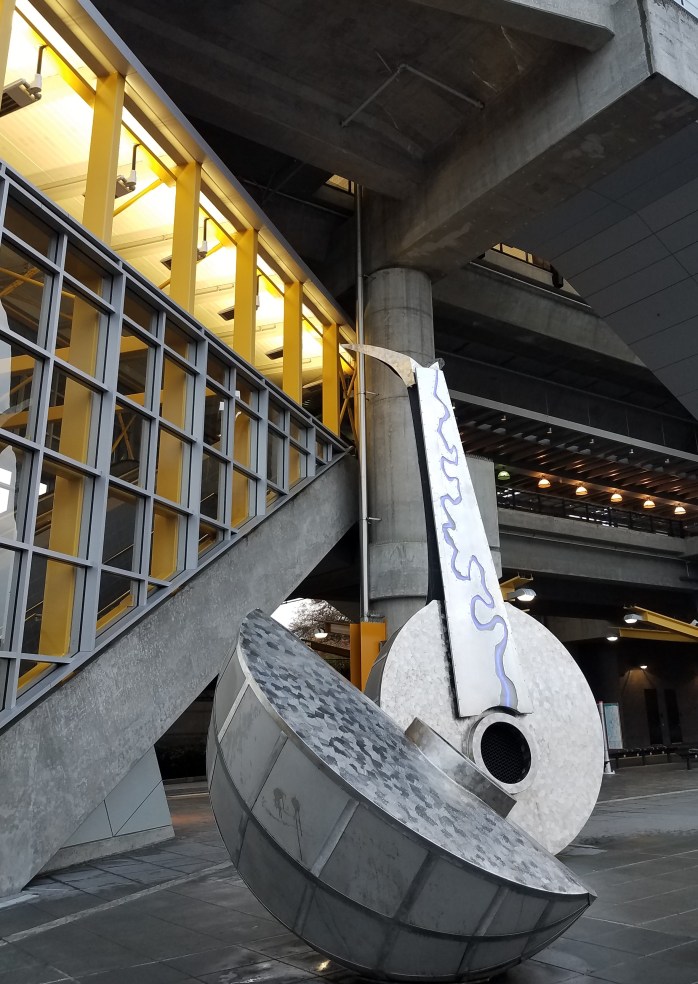
No, this post is about my experience at WordCampSeattle 2017. What’s that you say?
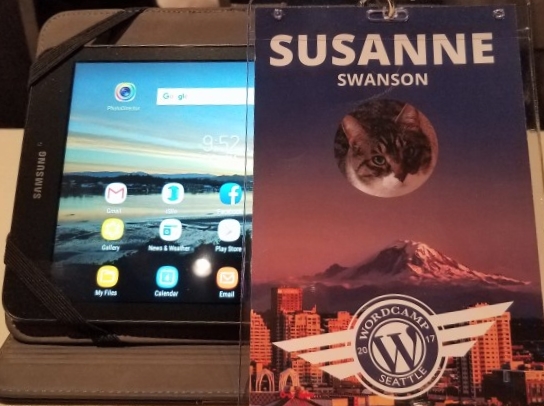
According to the WordCamp Central website: “WordCamps are informal, community-organized events that are put together by WordPress users like you. Everyone from casual users to core developers participate, share ideas, and get to know each other.”
I haven’t been blogging that long (a year a half) but when I discovered there’d be a WordCamp in Seattle this month, I thought, why not? It would give me the opportunity to learn more about the software and meet other users. When I looked over the schedule I realized that the Workshop (“Learn to Use your WordPress Website”) was worth the price of admission alone. Adding in the other sessions and all the free stuff (see SWAG below, their word not mine) the $40 fee was a real bargain. And it included lunch.

What I Got Out of WordCamp
- More familiarity with the WordPress ‘Community.’ The key-note speaker mentioned that WordPress makes up 28% of the internet. As an open source project, it’s a collaborative effort and they welcome contributors. How a software organization can operate without employees is still somewhat mysterious to me, but this website helped a bit. make.wordpress.org
- The workshop was good. The excellent instructor led us through Dashboard functionality as we followed along using a temporary installation of wordpress on our laptops. By the way, you too can have a ‘sandbox’ to practice in by downloading it from (sorry to say) poopy.life.
- One thing I learned in the workshop was that you can make your own minor customizations to a theme using CSS. I don’t know CSS (called the gateway drug to coding) but I’d like to learn the basics so I can tweak a few things. We shall see.
- I also picked up some good tips and tools from the session entitled, “Get Google to Love Your WordPress Site.” I realized my Tags are good, but I think my Categories need some improvement to help google better identify my content.
- Finally, I continue to learn the differences between wordpress.org and wordpress.com (which is what I use for my blog.) WordPress.org came first and is the ‘self-hosted’ version you install on your computer. (You have to pay for your own web hosting.) It has greater functionality and can be modified to your heart’s content, assuming you have the technical know-how. And you have to handle all the updates, backups and maintenance yourself. WordPress.com is a spinoff and easier to use for the less technical among us. You don’t install it and you can’t modify the core code. It has similar though more limited functionality and themes, and they host it for you for free. WordCamp seemed to be more focused on wordpress.org.
Was it worth going? Yes, if you like these sorts of things. And I do. Perhaps this is due to my background. I spent the last half of my career supporting financial systems using PeopleSoft and Oracle software. I used to attend their User Conferences and always learned something useful to bring back and apply. Of course, they were in San Francisco. Maybe that had something to do with it.
So there you have it. WordCampSeattle.
Maybe you’d like to attend one in your part of the world. The price is right.
~ Susanne
Surprised by Snow
Yes it’s far too early to have snow. And yes, it’s going to be a long, long winter. And yes, I’m lucky I don’t have to drive in it if I don’t want to. Still, isn’t it pretty?


~ Susanne
A Walk on the Cedar River Trail
What a difference a day makes! This morning brought brief snow flurries to the region (the earliest I can remember) but yesterday was mild with only light rain. I’m happy we took our walk on the Cedar River Trail yesterday. The Trail follows the river 17 miles beginning from the Cedar River watershed in the south, through Maple Valley and Renton in the north, to where the river flows into Lake Washington. We often walk the northern portion of the trail where it passes by the Renton Boeing Plant but found yesterday’s walk further south even better.
We accessed the trail at the Cedar River Park on the Maple Valley Highway and found it quieter and less traveled as it weaved through park and forest. Fall colors were brilliant and leaves still abundant on the trees and the ground. The fragrance brought up childhood memories of when we’d pile up the fallen leaves and jump into them with abandon.
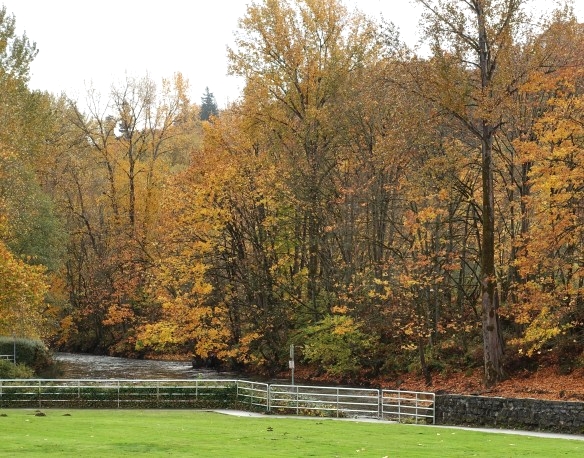
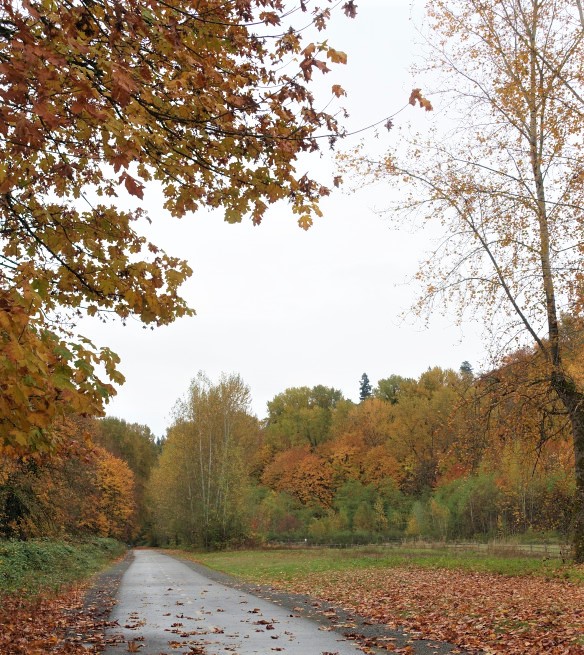

We saw spawning salmon making their way slowly up the river home, and some who’d already completed their mission.


And we found this part of the trail had gone to the dogs.

Yes, these dogs have their own park and were happily running and chasing newfound friends.

As I am writing this, tiny snowflakes are still falling. Perhaps yesterday was fall’s last hurrah.
~ Susanne
Mountain Peek
For this week’s Photo Challenge – A football game on a late afternoon overshadowed by the mountain peeking in the background.

Tiger’s Turn
“Sue we need to talk.”
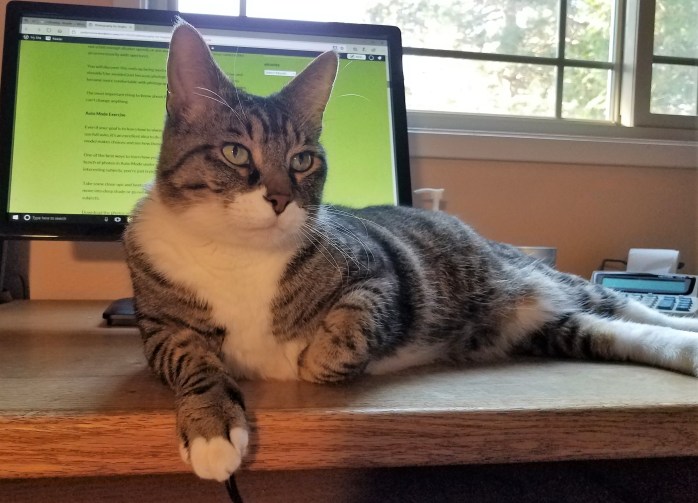
“Sure Tiger. What is it? I always have time for you”
“Do you Sue? Sometimes I wonder.”
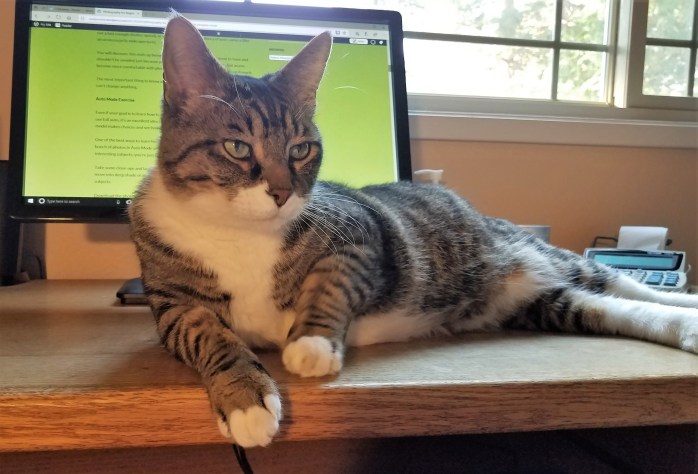
“Why do you say that Tiger?”
“It’s the boy, Sue. He gets all the attention. It’s always ‘Benji this’ and ‘Benji that.’ I’m beginning to think you like him more than me.”
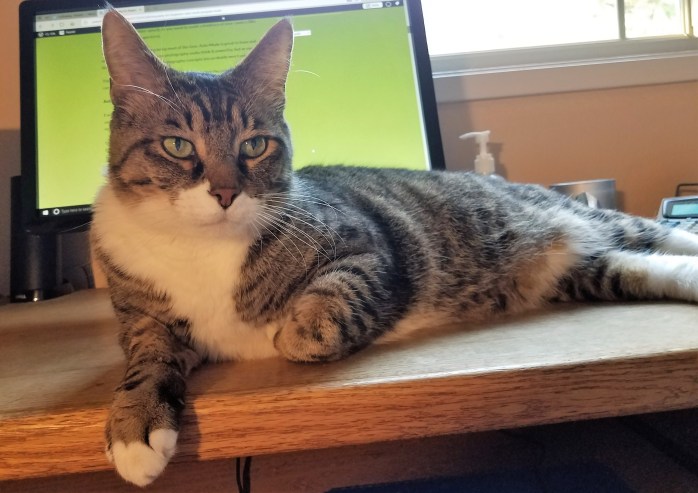
“Oh Tiger. You mustn’t think that. It’s just that he requires a lot more attention than you do. You know how he is, young and impetuous. I don’t know what I’d do without a mature cat like you around the house to balance out the boy.”
“Well okay Sue,” he said. “Still I’d like to be on the blog now and then.”
“Of course Tiger! It’s your turn! How about we get one of you sleeping?”
“Sure Sue. How’s this?”
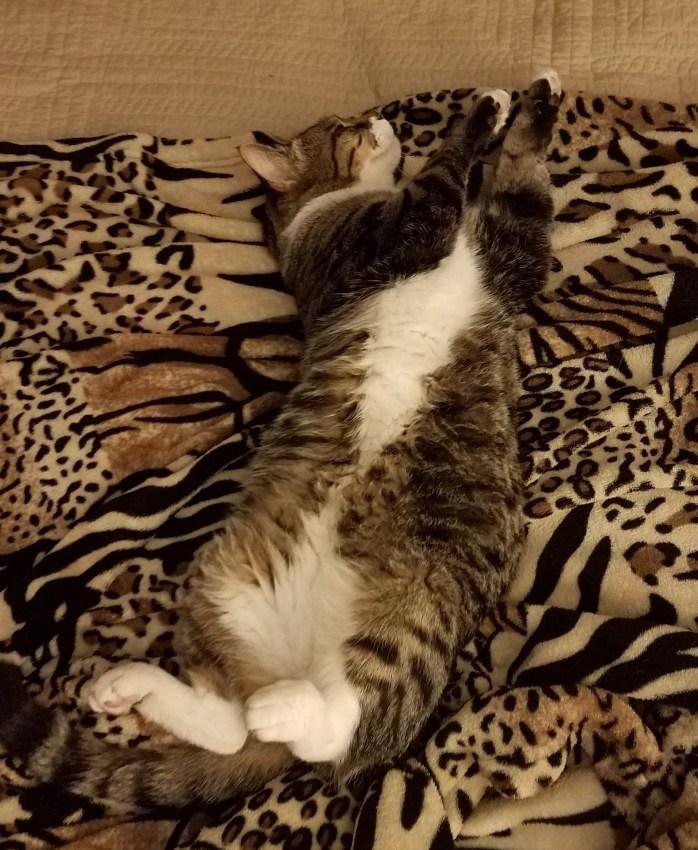
“Perfect Tiger! What form!”
“Aw thanks Sue.”
~ Susanne and Tiger
Icicle Creek and Wenatchee
Day 2 of our road trip to Leavenworth and we awoke to another sunny day and headed to nearby Icicle Creek. (You can see the story and pictures from Day 1 here if you missed it.)
Icicle Creek originates near the crest of the Cascades and flows into the Wenatchee River near Leavenworth. This wilderness area draws hikers, campers, and rock climbers.

.
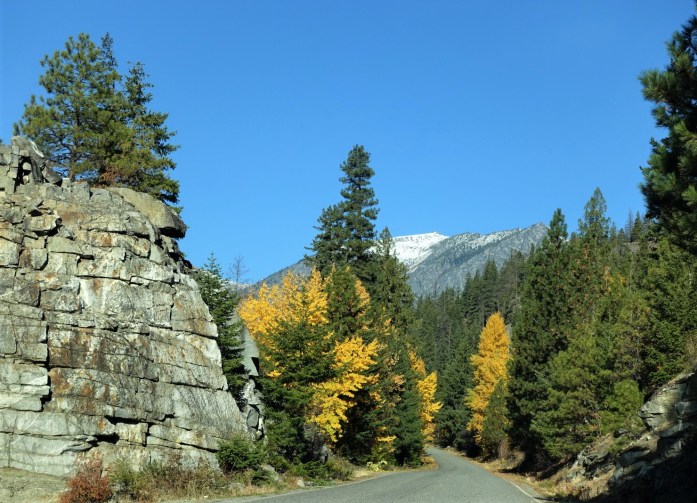
It also draws serious backpackers to one of the most popular hikes in the country: The Enchantments in the Alpine Lakes Wilderness.
According to the Washington Trails Association website: “In the Enchantments, nature has carved one of the magnificent places of this world–an alpine paradise of granite worn smooth by glaciers, larches manicured by wind and cold, and crystal blue lakes strung together by a creek that tumbles and thunders between them. Seemingly everywhere, herds of mountain goats calmly wander by. Superlatives simply don’t suffice, and you quickly find yourself resorting to otherworldly comparisons, just like the early visitors who bestowed place names like Aasgard, Sprite and Leprechaun on the fairytale surroundings.”
We stopped by the trail head to check it out.
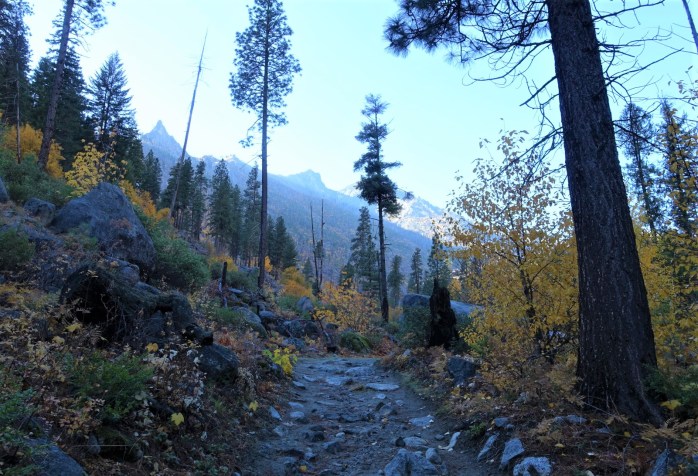
No we did not take the hike. It’s challenging for even the strongest hiker and requires a minimum of two days (and that assumes you have the coveted permits, determined months in advance by lottery.) It’s a hike that every backpacker in the state dreams about doing. Bob did it once and we have the pictures to prove it.


Enchanting, yes, but not for me. I never did take to backpacking. I had one failed attempt in high school and never tried again. (But that’s another story.)
After our fill of Icicle Creek we moved on to Wenatchee where we stopped for lunch at the Pybus Public Market and took a walk along the Columbia River.


The paved Apple Capital Loop Trail follows the river and has boat ramps, playgrounds, a railway, and sculptures. My favorite is PED.

Amazing that in just two days time we had covered so much ground, enjoyed sunshine and forests and mountains and flowing rivers all adorned in fall color. A wonderful time for sure but it’s always good to be back home.
~Susanne
Toes Up
While working on my next post on our road trip to Leavenworth, I found myself distracted by the cute one sleeping on the couch. I thought you might enjoy being distracted too. So here’s Benji, Toes Up.

~ Susanne
 Cats and Trails and Garden Tales