Cats and Trails and Garden Tales
Musings on cats, travel, gardens and life
How long does a Snag Keep Standing?
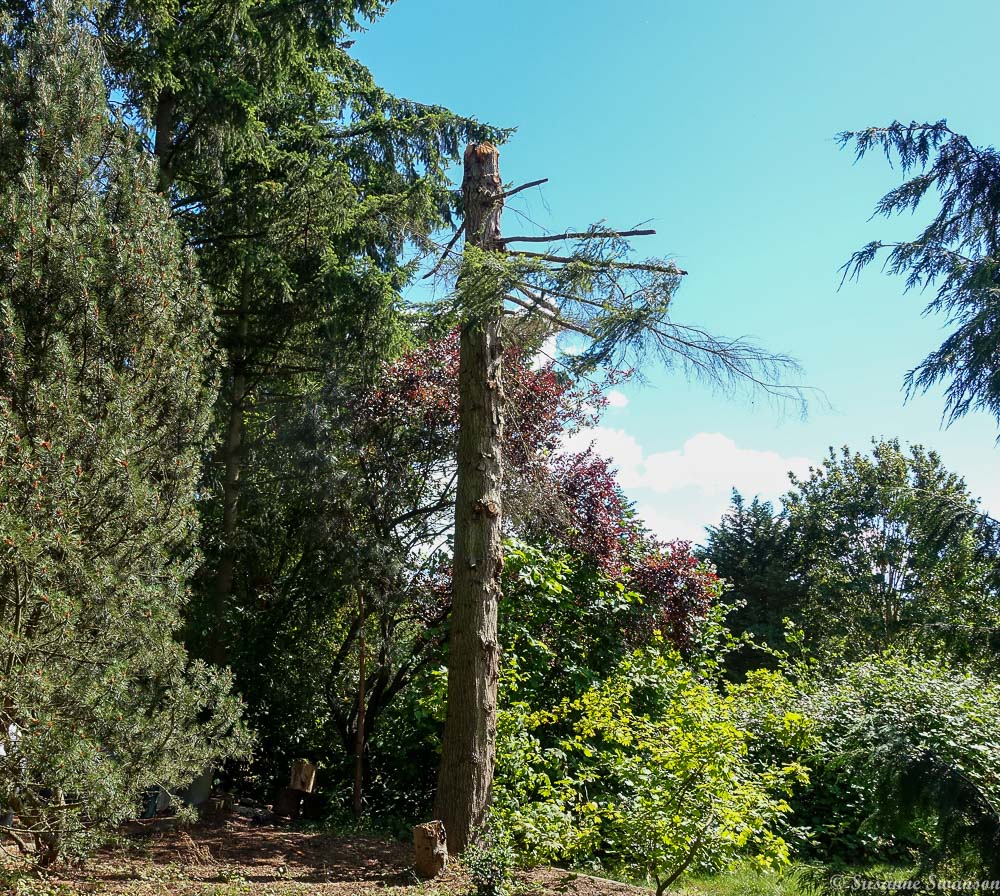
Not long enough, though I should have seen the signs.
It was eight years ago when Bob called out an arborist to take down our dying Hemlock. Instead, he convinced us to keep it standing for the sake of birds and other wildlife.
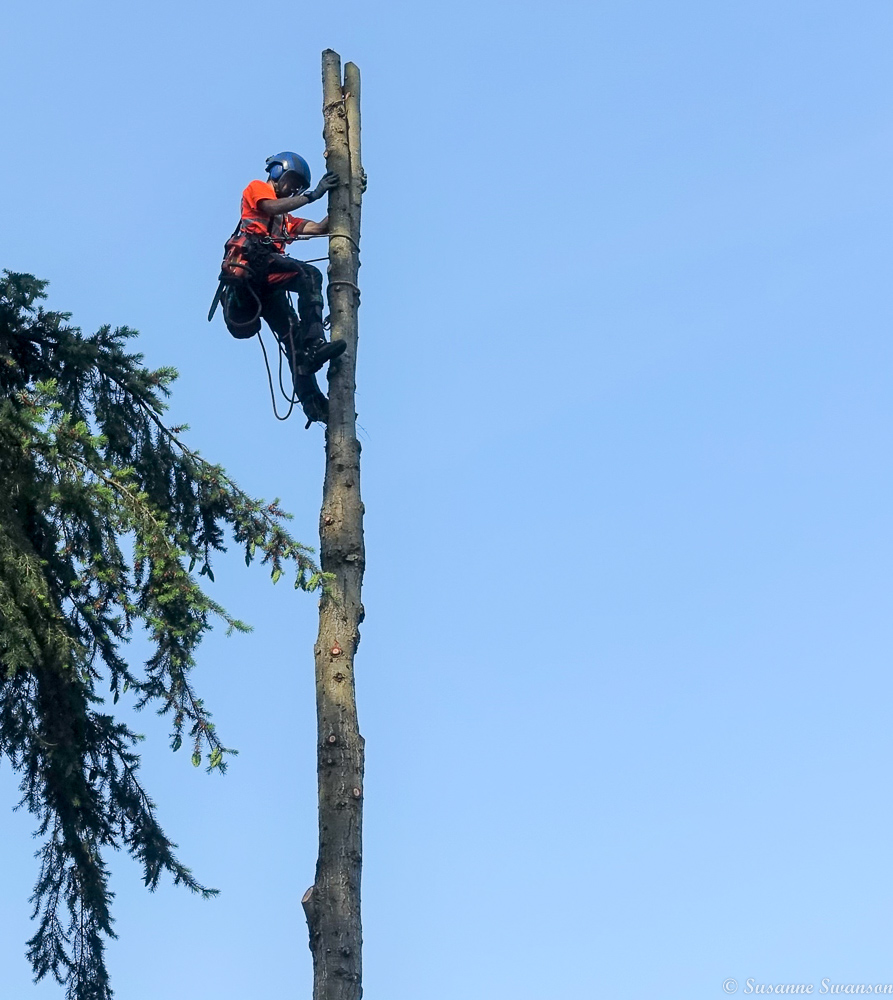
According to the Washington Dept. of Fish and Wildlife, “Hard to believe, but trees can actually provide more habitats for wildlife dead than when they are alive. Standing dead and dying trees, called “snags” or “wildlife trees,” are important for wildlife in both natural and landscaped settings, occurring as a result of disease, lightning, fire, animal damage, too much shade, drought, root competition, as well as old age.
Birds, small mammals, and other wildlife use snags for nests, nurseries, storage areas, foraging, roosting, and perching. Live trees with snag-like features, such as hollow trunks, excavated cavities, and dead branches can provide similar wildlife value.”
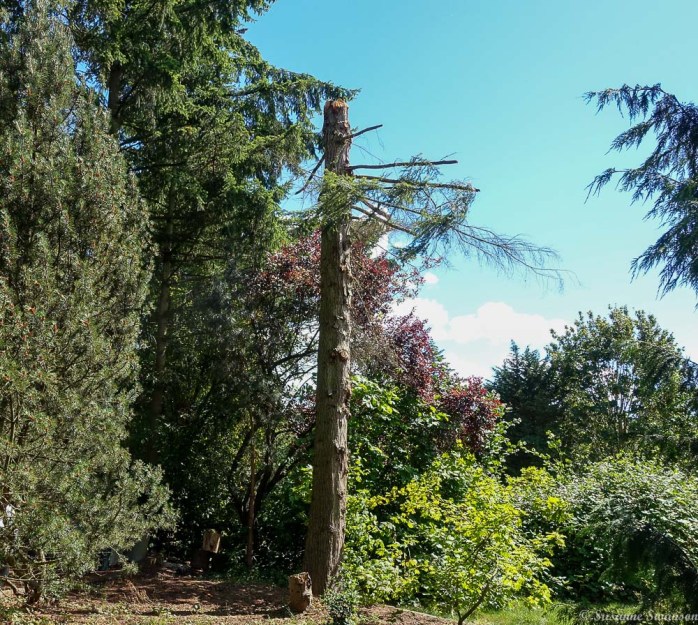
It was funny looking both to us and our neighbors, but it weathered nicely over time, and we accepted it in the landscape.
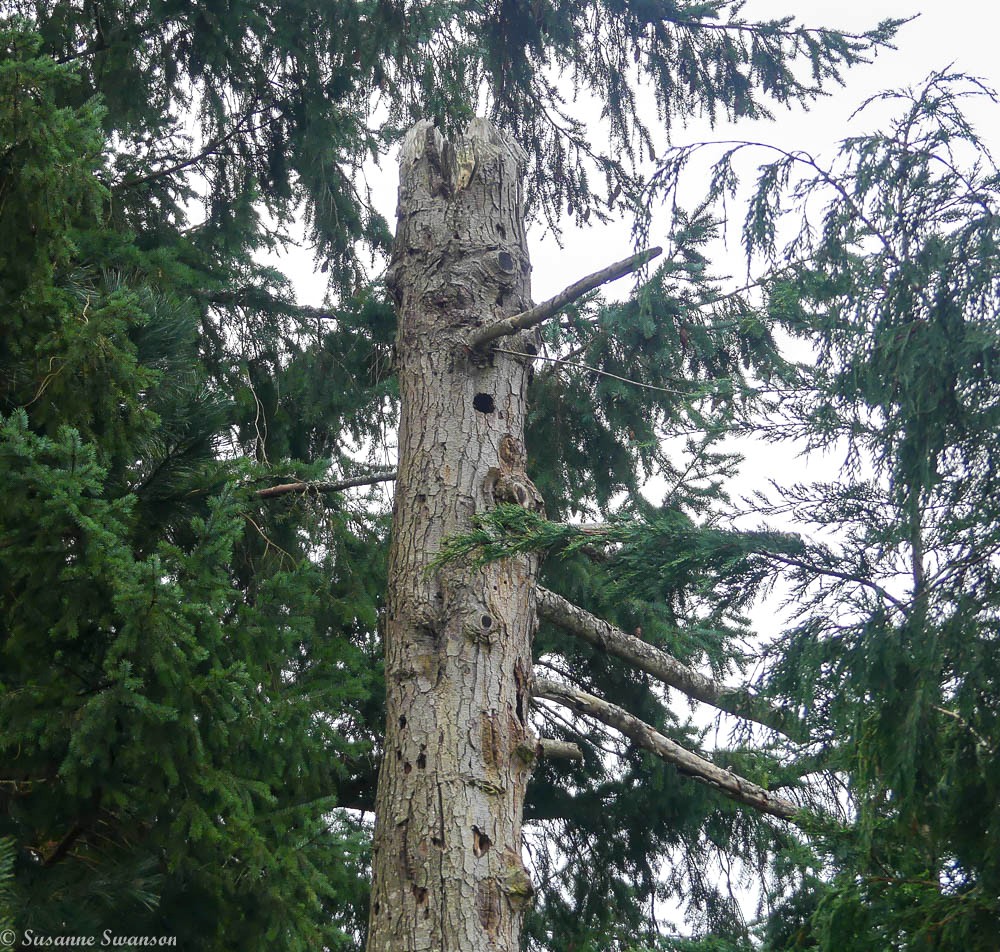
And the birds loved it, especially the Northern Flickers who hammered out cavities and used them for nesting year after year.
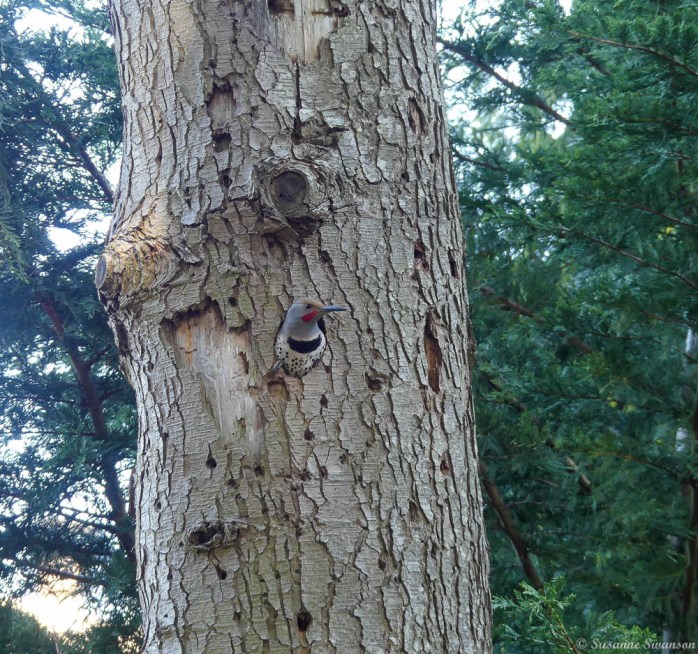
They were back at it in February with excavations continuing through last weekend, while I was out taking pictures.
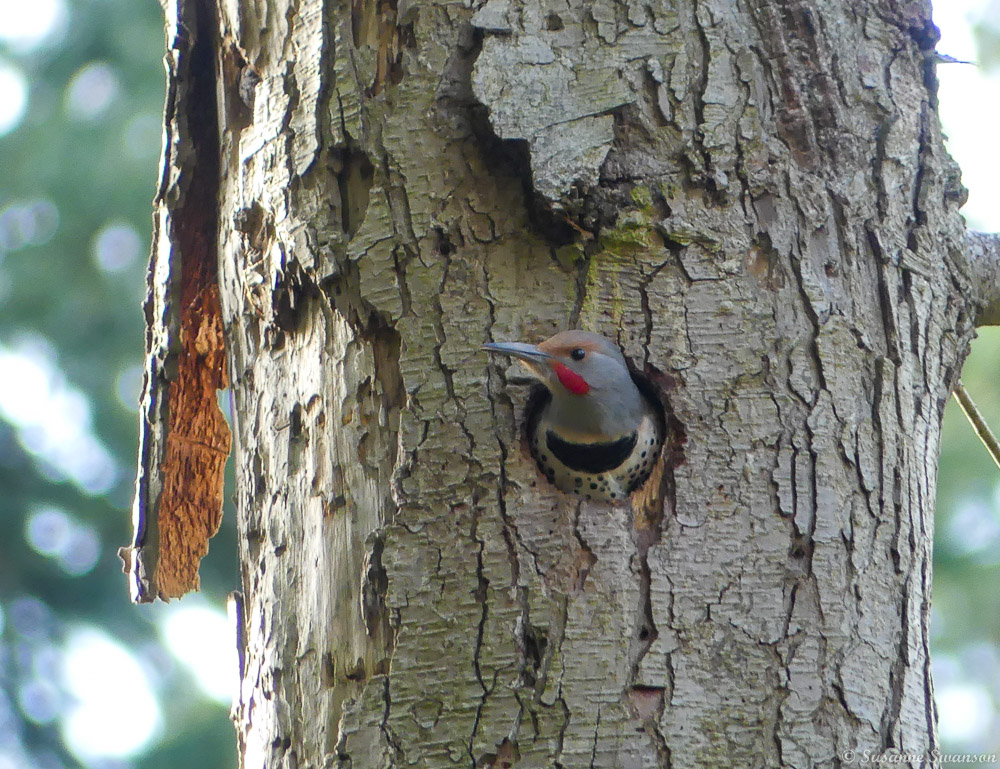
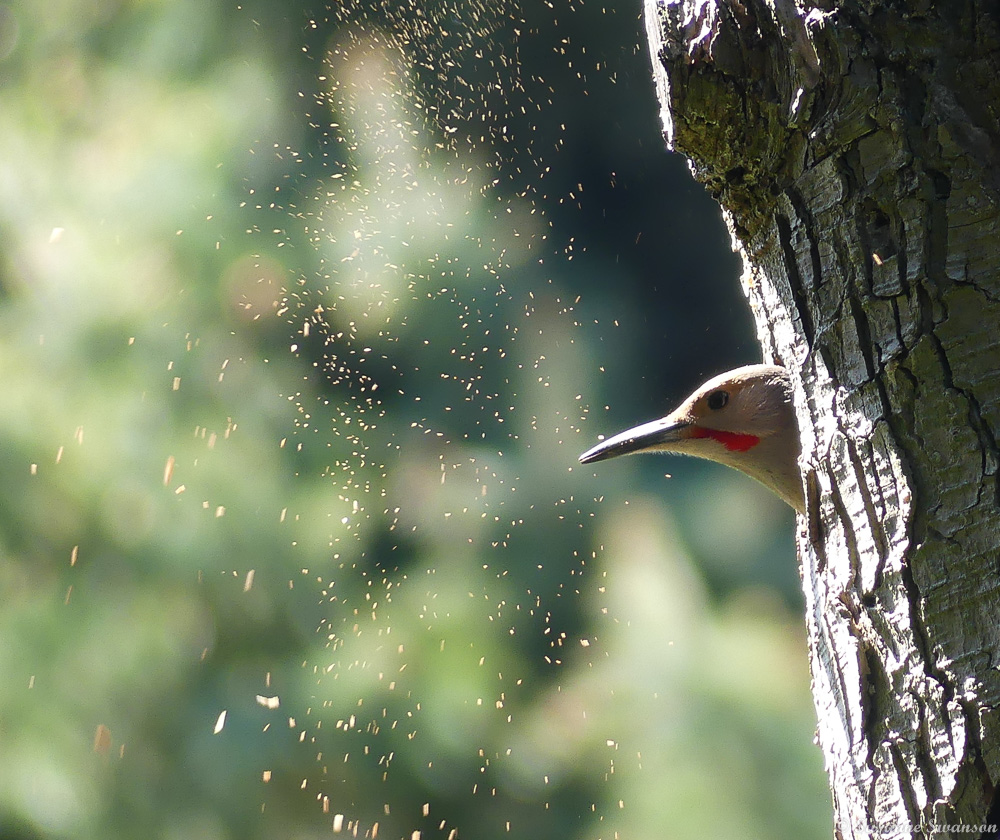
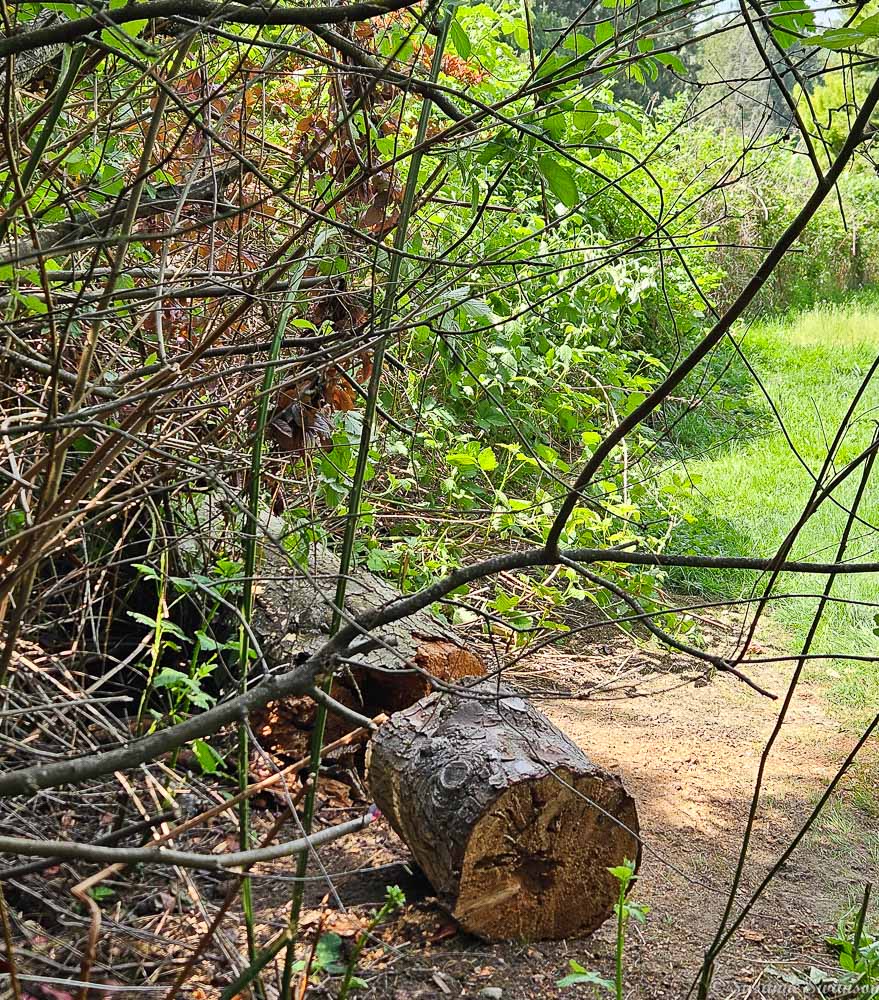
So I was more than a bit surprised to get a text from our neighbor later that day saying the snag had fallen over! 😦 There’d been no wind or stormy weather, the old tree just gave out, and without a sound, broke and hit the ground. Fortunately, it fell in a safe place, not on our truck in the driveway, and far from both houses.
My immediate thought was for the birds! Did they make it out safely?
Bob chopped it up the next day, and reported it was completely rotted through, soft and full of deep cavities and old nests but no sign of birds or eggs. (Phew!) I consoled myself with the fact that it happens in the wild too.
Honestly, it hadn’t occurred to me that it might come down. I don’t remember the arborist mentioning it, or to be on watch. Then again, I had wondered recently: was it always that crooked, leaning so heavily to one side? (I had habitually straightened it in my pictures, to make it appear more upright.)
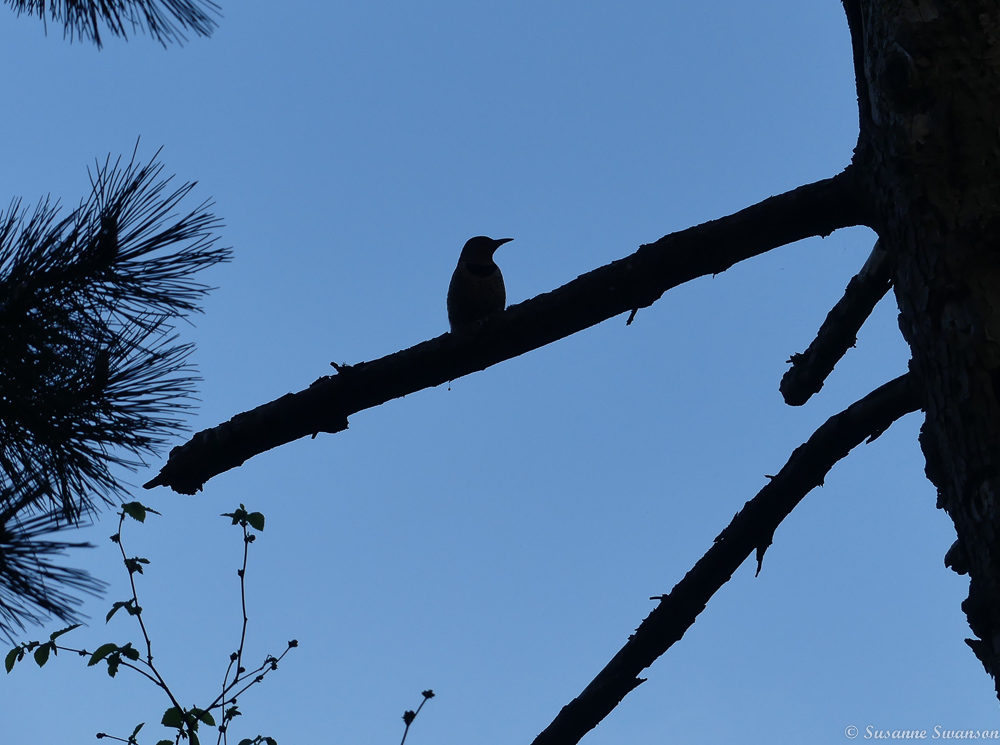
The Flickers will miss the old snag. We will too. But I suspect this old stump has more to give.
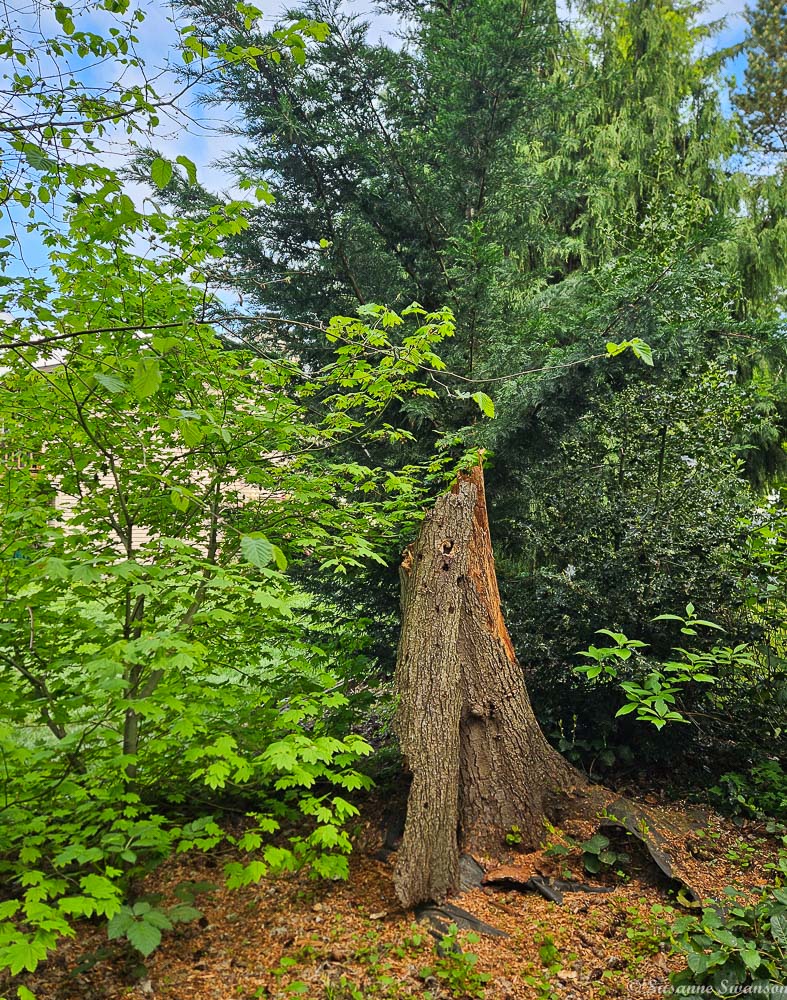
Life goes on.
~ Susanne
 Cats and Trails and Garden Tales
Sad but not unexpected. Still, it gave you a good few years of interesting bird life. I guess they’ll adjust, as they do in nature.
Yes, it served as both food and lodging for birds for 8 years. Still, it was a quite a surprise when it went down.
Birds will find a way, they always have done. Meanwhile, the fallen wood and stump can be home to many other forms of wildlife.
Best wishes, Pete.
Thanks, Pete. The stump will still be useful to wildlife. But it was quite a surprise to see the old snag down after 8 years.
A shame to see it fall but it’s done a great job for the birds (and you) over the last few years. And hopefully the stump and fallen trunk will be just as good for wildlife albeit in different ways. Btw, I love the shot of the flicker peering out and all the wood dust (I assume?) in the air!
It really was a surprise, especially having just watched the birds in it that very day. That flicker was busy flinging the sawdust out of his lodging!
Oh my, what a surprise, Susanne! Glad no lives were lost not property damaged! I think the stump will attract some critters! Beautiful pictures and wonderful memories!
Thank you, Terri. It was indeed a surprise, and my first thought was for the birds, especially the flickers. I hope they find another place to nest this year!