Cats and Trails and Garden Tales
Musings on cats, travel, gardens and life
Scenes from San Francisco
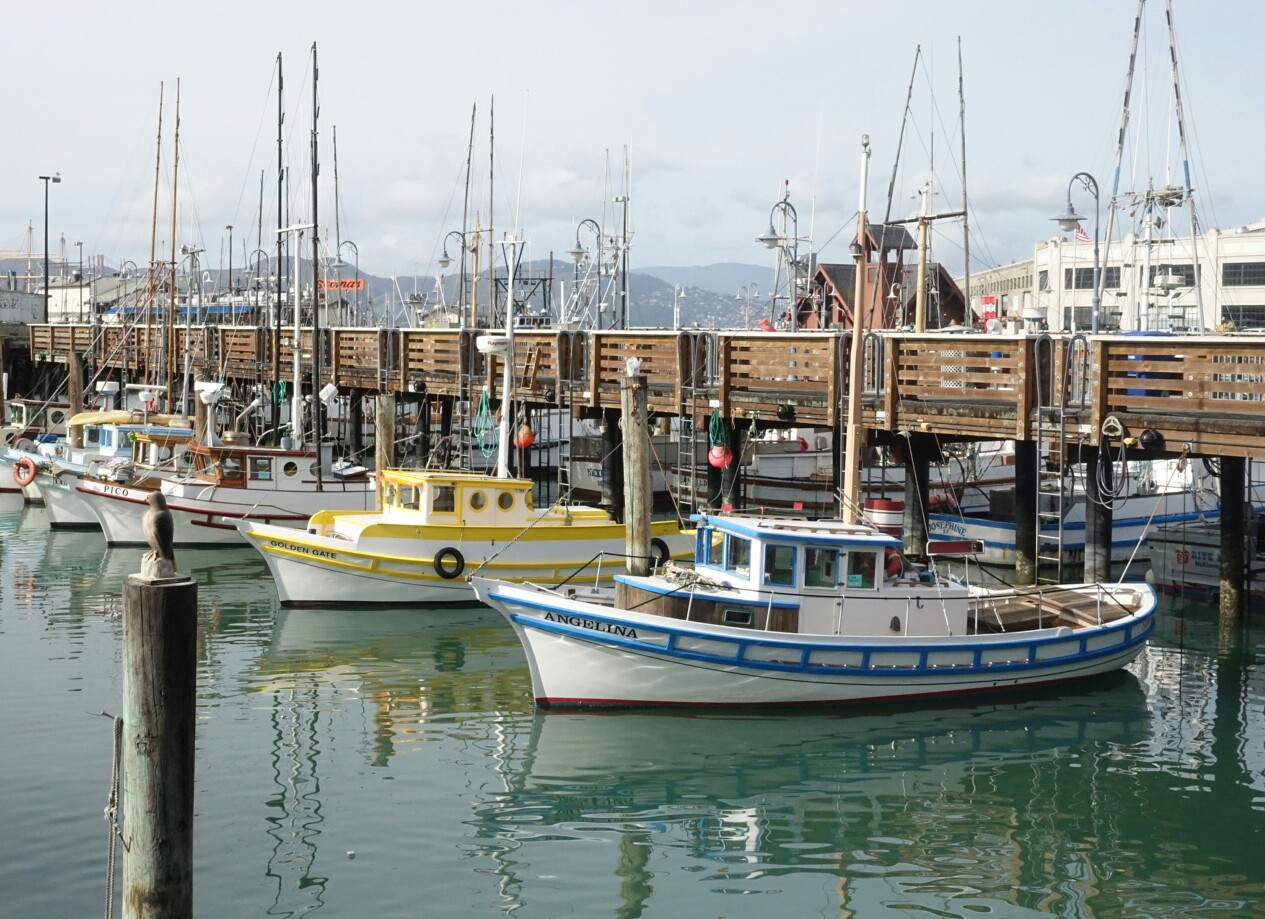
Sunshine and clouds, waterfront, boats and bridges in San Francisco….




Another Rainy Day in Seattle means MOHAI
After an unseasonably warm start to November the rainy season is officially upon us. What to do, what to do? You can either lament the weather and hunker down inside for the next six months… or you can plan your rainy day activities now. Here’s one for starters: MOHAI. No it’s not some exotic island in the Pacific; it’s Seattle’s own Museum of History and Industry at its new location on the shores of Lake Union.

The Grand Atrium
One recent rainy day we made the trek into Seattle to visit the museum. First up was the Grand Atrium where we saw colorful icons from Seattle’s past. Soaring overhead – Boeing’s first commercial aircraft, the 1919 B-1 flying boat (the only one made) which provided international airmail service between Seattle and Victoria, B.C. for eight years. Also on display: the Rainier brewery sign, Slo-Mo-Shun IV the legendary hydroplane, and the original Lincoln Toe Truck with its big toe reaching 11 feet into the air.

Enterprising Seattle!
Before continuing to the next floor, I watched a short film and was reminded of the many companies that got their start in Seattle beginning with the granddaddy of them all, the Boeing Airplane Company. Did you know that a Boeing 737 takes off or lands somewhere every two seconds? Starbucks opened its first store in 1971 at the Pike Place market and changed America forever by making strong, delicious (overpriced) coffee available on every corner. And how about Microsoft, started by two local brainy teenagers Bill Gates and Paul Allen, that other billionaire maker, Amazon, just to name a few.
Of course there’s too much in the museum to cover in a single post, so I’ll just mention a few things of interest, starting with the landing at Alki.
Denny Party arrives at Alki
In November of 1851 twenty-two white settlers known as the Denny Party come ashore at Alki Point in the dreary cold and icy rain. How fitting. Chief Seattle and his tribe welcomes them and eventually the new town is named after the accommodating chief. Henry Yesler starts up a lumber mill on Elliott Bay and logs are dragged to the mill down “Skid Road.” The town grows and there seems to be a shortage of women who might teach and perhaps marry the loggers. What to do? Import them!
Here Come the Brides
Asa Mercer goes east in search of educated and adventurous women who are willing to come to Seattle. The journey was a long one from Massachusetts to the Isthmus of Panama and San Francisco to finally reach Seattle. In 1864 the first small group of women arrives with more to follow. Remember the nineteen sixties TV show that tells the story? I do!
The Big Fire of 1889
The town continues to grow and prosper until like any big city worth its salt in history, it burns to the ground. On June 6, 1889 the main business core of Seattle (mainly built of wood) burns down when a glue-pot tips over. The volunteer fire department shows up but alas there is no water to be had anywhere. As the singing exhibit will tell you, “The tide was out and the hydrants were dry!”

There was no loss of life but the town was turned into rubble, leading to rebuilding with brick and mortar under new building codes.
(By the way it is a fact that much of the new town was rebuilt on top of the old one giving rise to today’s tours of Underground Seattle in Pioneer Square, which most locals never take; but hey, don’t let that stop you!)
Fast forward to the 20th Century and Music, Music, Music!
Yes, Seattle has a vibrant music history! Ray Charles moves to Seattle in 1948 and cuts his first record in his adopted city. He meets Quincy Jones who grew up here. Jimmy Hendrix also grows up in Seattle and teaches himself guitar. And grunge rock takes off in the eighties led by the likes of Kurt Cobain, Nirvana, Pearl Jam and Soundgarden.
The Seattle World’s Fair
And how can I fail to mention the 1962 Century 21 Exposition otherwise known as the Seattle World’s Fair that helped shape Seattle’s future and brought the Space Needle to our skyline? You can learn all about it at MOHAI.

So why don’t you come and see the exhibits for yourself the next time the rain is falling?
Until then I’ll leave you with this Happy Ending from Elvis at the World’s Fair!
So long for now and …. Mohai!
~ Susanne
Before the Sun Sets
It is late afternoon and I am looking out my window as billowy white and pale gray clouds are drifting across soft blue sky. The sun will set soon but I don’t wait. This is our version of a sunset. The ordinary beauty of the Pacific Northwest.


Notes on Tolerance from Tiger and Benji
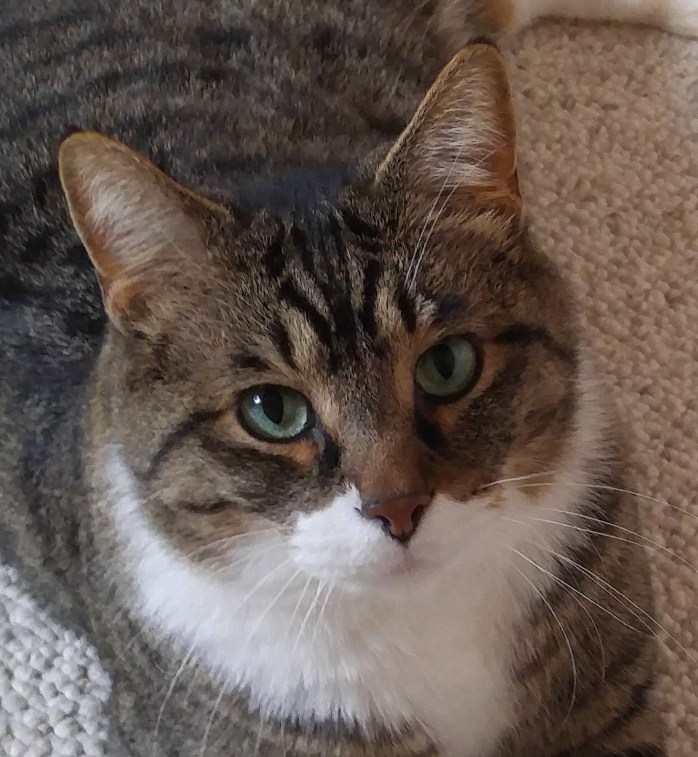
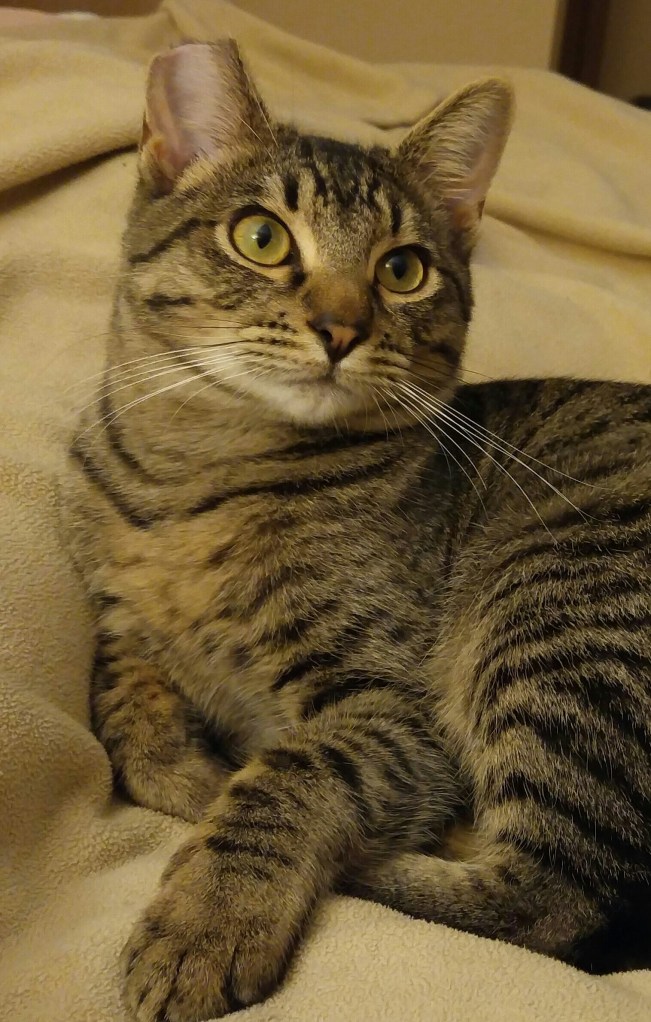
More nose to nose. Less rebuke and hissing. More close encounters of the peaceful kind. Less misunderstanding the intentions of the other. No, I’m not talking about the country (though that would be good too.) I’m talking about Tiger the resident tabby and his new little brother Benji. After almost three months, rejection is giving way to tolerance, and tolerance to acceptance, and acceptance approaching understanding. Friendship is sure to follow.
Tiger – Benji is my little brother. I can tell by his chopped ear that he had a rough first life. I went through hard times too. I’m learning that his annoying behavior is playful and not malicious. He’s still young and can’t help himself. I guess I was like that too once. Sue wants us to get along and so I am trying. Someday I may like him more than I do now. But I do not hate him. We share the same house and I know he is part of our family. I think there is room for both of us.
Benji – I like Tiger. He is big and strong. I want to play with him but need to learn how. He doesn’t like me to pounce on him so I am trying hard to stop. He is sure to remind me if I forget. I hope someday we get along even better and have lots of fun outside together. He is a good hunter and I want him to teach me the ways of the stealthy cat. When I grow up I want to be like him. I think there is room for both of us.
~ Susanne and Tiger and Benji
A beautiful November week …. at least for the weather
Whether November turned out to be beautiful for you or not.. well, we won’t go there. Instead, let us look to the skies at the beautiful weather we are having here in the Pacific Northwest. After a record breaking rainy October, we reached 70 degrees earlier this week, the highest temperature ever recorded this late in the year. And we have had several days in the sixties since. I suppose that compensates for other disappointments. Or maybe not.
Yesterday we took a drive and visited Olympia, Washington’s state capital. I wandered down to the Capitol Lake and was cheered to see the Capitol Building still standing strong. Okay, perhaps I exaggerate. But it is lovely.

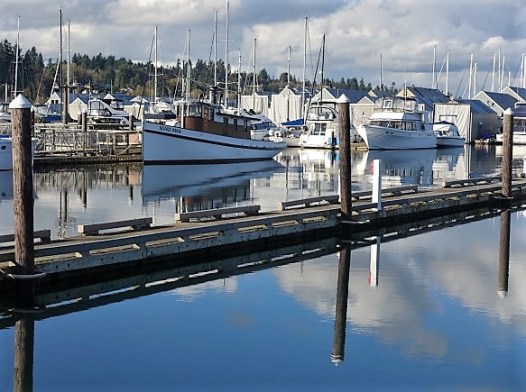
And the bay nearby was serene and peaceful, just what I needed.
What to say? Perhaps we have to give one another the benefit of the doubt. Good people voted for the candidate of their choice for reasons known only to themselves. Obvious deal breakers for some were not for others. Let each be persuaded in their own mind.
We shall see. Change is hard. But today, the sun is still shining.
~ Susanne
Still Tiger, with most favored feline status
This is Tiger and I thought it was time for an update lest you think I was a most unhappy cat after little you know who moved in not long ago. Not to worry. Today I was out surveying my kingdom unhindered, while the skies were blue, the leaves were fragrant underfoot and the sun was shining through the clouds. Sue sought me out and I knew she had something on her mind. I pawsed. (Little cat humor there.)
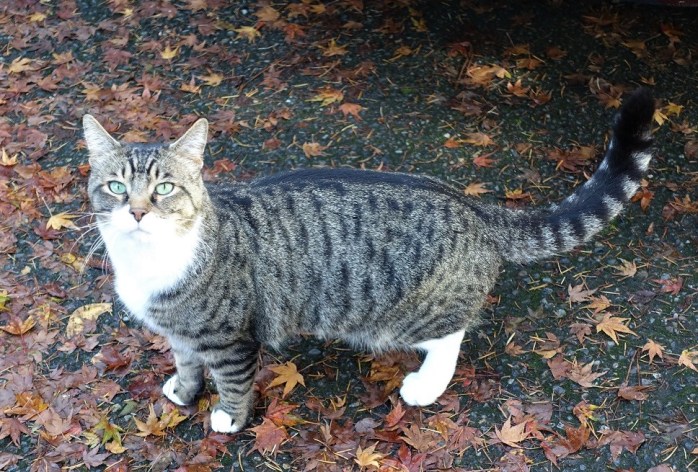
She bid me come inside so we could talk awhile. Sure, I said. I always have time for you….

Up to her office we went where I took some time to clean up while she settled into her chair.
“Don’t worry about Benji,” she said, “he’s still young and will soon grow out of his pestering ways. See how much better he is in only two months.”
I had to agree. I am now able to look upon the young cowboy with nary a hiss (well…. most of the time.) Things are looking up.
She also assured me that I, being the senior cat in residence and clearly the most handsome and charitable and reasonable one on the premises, would retain most favored feline status and all that included. Regardless of how it sometimes appeared. I was being tested daily, she continued on, but it would only make me stronger. This too I considered and had to agree. I am strong. And most reasonable.

She has always been straight with me and trustworthy too. And I the same with her.
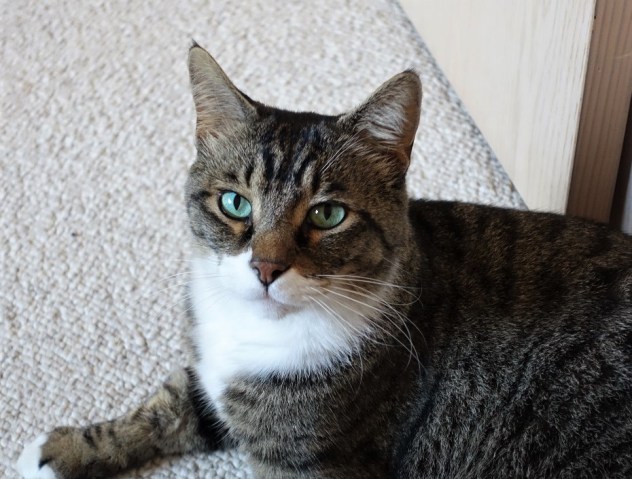
She needed reassurance that I was still happy and on board with the newcomer. Certainly I was, yes. I pledged my continued cooperation while the youngster grew out of his worst traits. (Too many to mention here.)
And thus, I am still happy, with most favored feline status and with top billing,
~ the Tiger
Walking along the Cedar River
We finally have a reprieve from the rain and decide to walk the Cedar River Trail. The air is clean and fresh, the pathway clear..
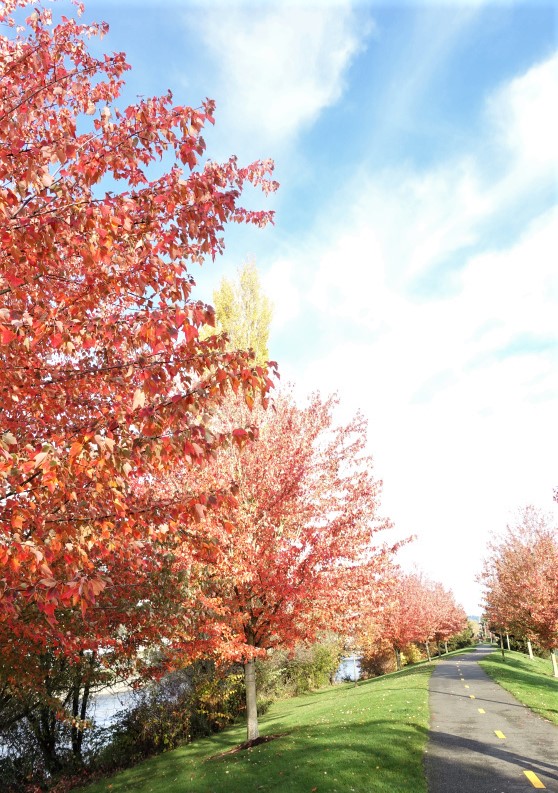
We come across this brilliant golden tree and pause to enjoy….


And pass this flock of big birds on the banks of the river..
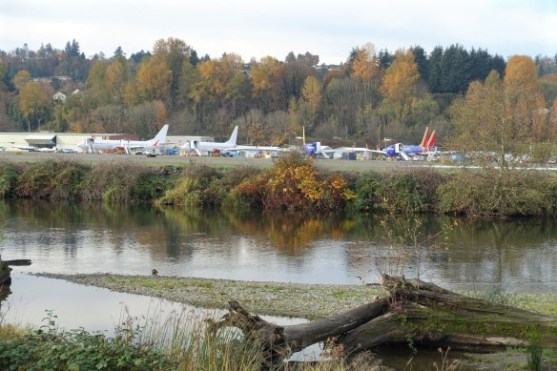
Until we reach the southern shores of Lake Washington into which the river flows
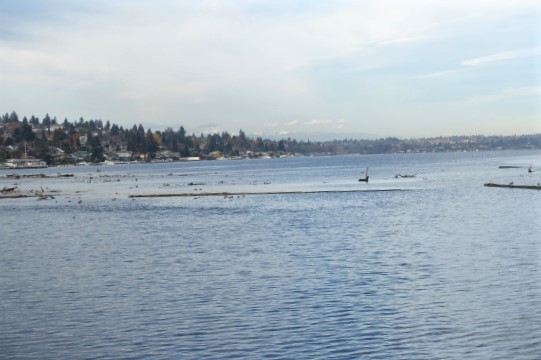
We return refreshed.
The bluest skies you’ve ever seen are in Seattle? or did you mean Saguaro?
The bluest skies you’ve ever seen are in Seattle, or so sang Perry Como back in the sixties. Which really begs the question; have you ever been there? First of all let me say that I am a native and as such reserve the right to talk about the touchy subject of weather. (Sorry you transplants are not allowed to. After all, you made the conscious decision to move here, didn’t you?)
So I don’t mean to burst your bubble, but let me say it outright. No, the bluest skies you’ve ever seen are actually not in Seattle. Perhaps the grayest skies you’ve ever seen are in Seattle. Just look at our weather forecasts and you will see. (Honest. I kid you not.)
Overcast. Cloudy. Partly cloudy. Mostly cloudy. Cloudy with a chance of rain. Morning showers. Scattered Showers. Increasing showers. Afternoon showers. Showers in the PM. Rain. Rain likely. Rain and drizzle. Heavy rain at times. Rainy and breezy. Rain tapering off. (Yay!) Occasional sun breaks. (One can only hope!)
I don’t mean to sound bitter but we just broke the record for rainiest October in Seattle with over 9 inches to date. Of course it seems like we are always breaking those kinds of records. It’s hard to keep up. And we are only half way through fall.
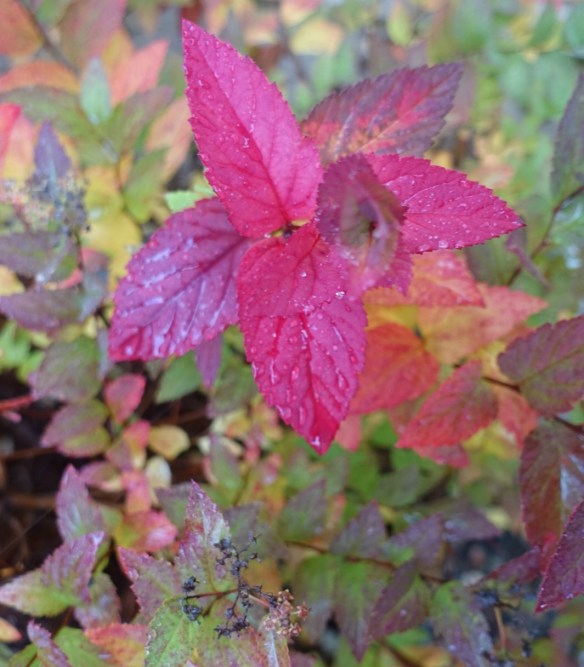
The fact is the days are growing shorter and darker and colder and grayer. Is it any wonder I find myself longing for the places where the sun always shines?
While the fortunate among us may flee to the desert when winter arrives (those lucky snowbirds) the rest of us poor locals must content ourselves with the occasional jaunt to sunny places, only to return and pore over the pictures when the going gets tough. Now is such a time.
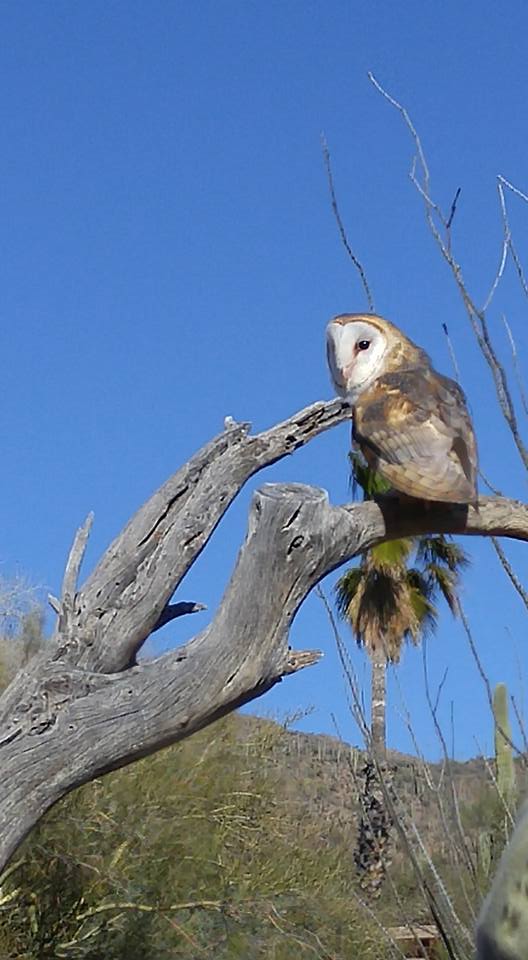
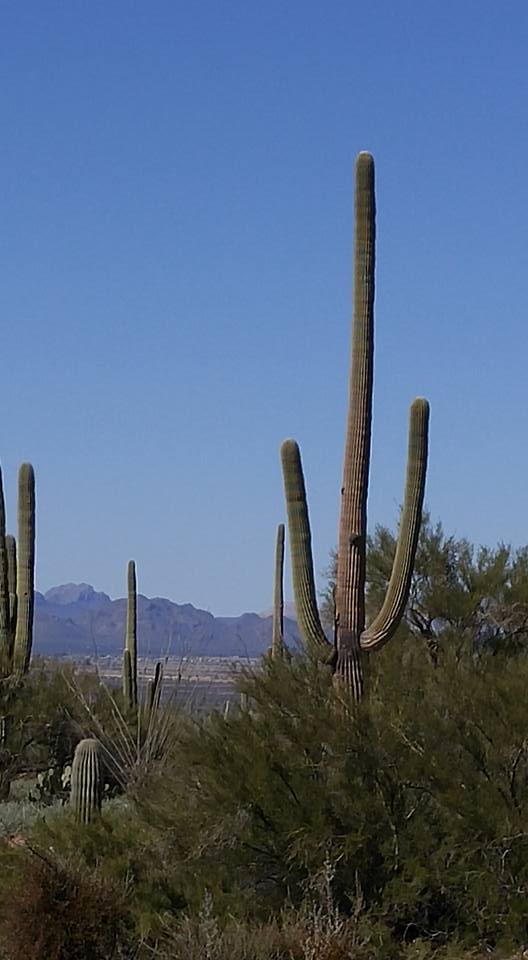
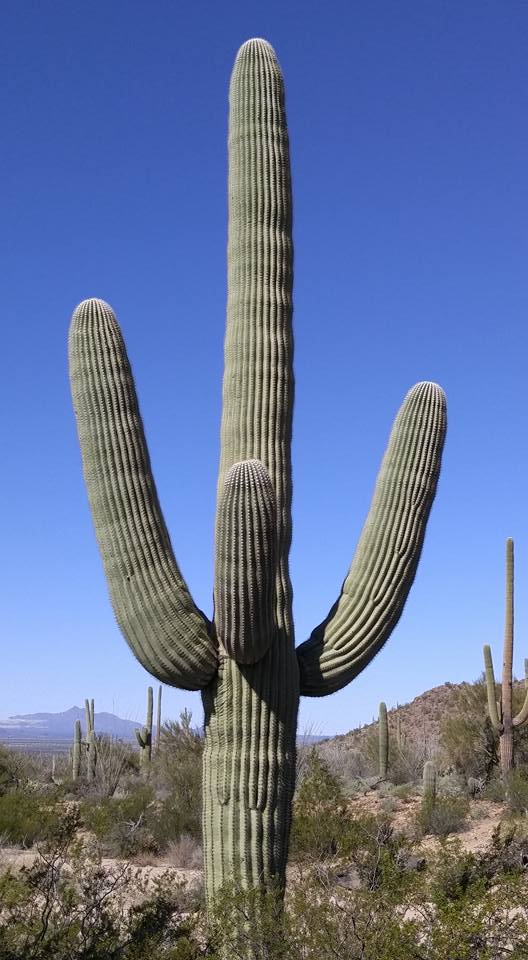
Last winter we escaped the area’s cold and gray for a few days in Arizona and a visit to Saguaro National Park. Now that’s what I call blue skies! And how about those majestic Saguaro cactus, symbol of the American West!
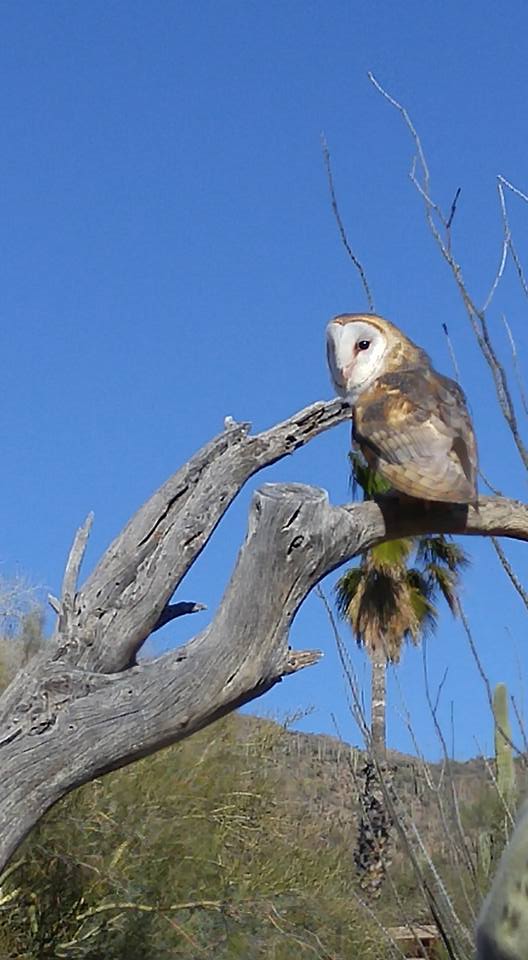
And doesn’t this beautiful owl from the nearby Arizona Sonoran Desert Museum look great against that same blue sky?
Okay I am starting to feel better already. Sometimes that’s all it takes. A reminder that the sun is always shining somewhere! And as I look out my window, I see the promised sun breaks appearing. Yay! I think this should carry me through until our next escape to sunny locales.
~ Susanne
Observations from Benji the teenage cat
Hi. This is Benji and here are my observations on life so far. I am not yet one year old in human years but in cat years I am a teenager and thus, very smart.
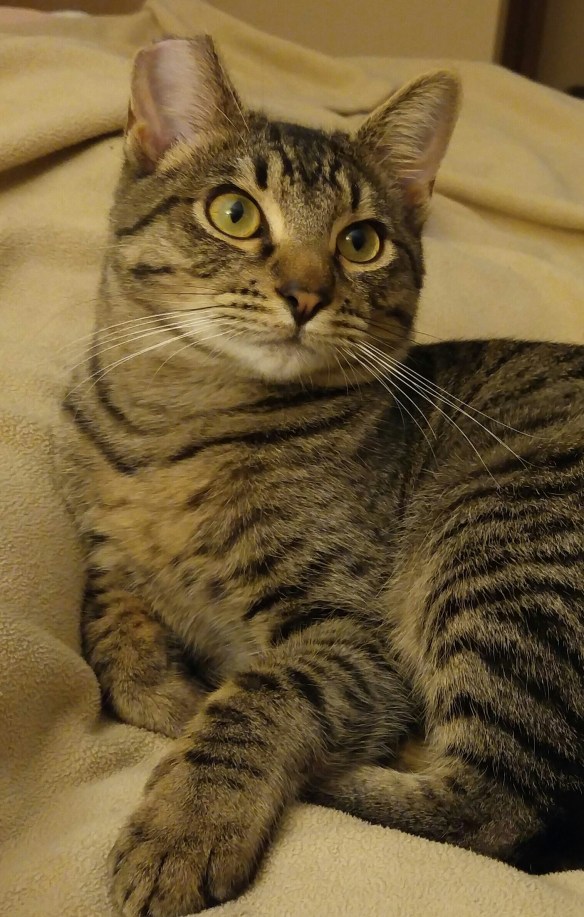
Do you think my chopped ear looks good? It makes me feel different and self-conscious. This came from my 1st life when I was trapped from the crazy house where I was born. I like my 2nd life and new home much better. And I love Sue and Bob and Grandma. I also like my big brother Tiger and hope someday he likes me too.
I want to play all the time. Sometimes this gets me in trouble with Sue. Why, I do not know. She used to play mouse on a string with me though she could never keep up with my speed. I am very, very fast. (Much faster than Tiger if I do say so myself.) It turns out many, many things have strings attached to them, both thick and thin. They are everywhere. Computers and cameras. Shoes and purses. Window blinds and necklaces. When I play with these Sue yells NO! and sometimes squirts me with water from the bottle. I don’t understand this at all. She’s the one that taught me to play with things on strings. It seems not even the best humans can always be trusted or completely understood. Maybe Tiger will teach me about these things when he starts talking to me.
Anyway, now that I am a teenager I get to go outside and chase things that move on their own without strings. Sometimes I catch them. I am very, very fast.
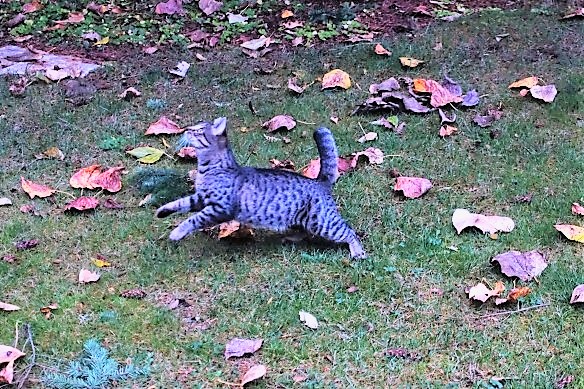
I learned I can go in and out whenever I want just by standing at the door. Tiger taught me this.
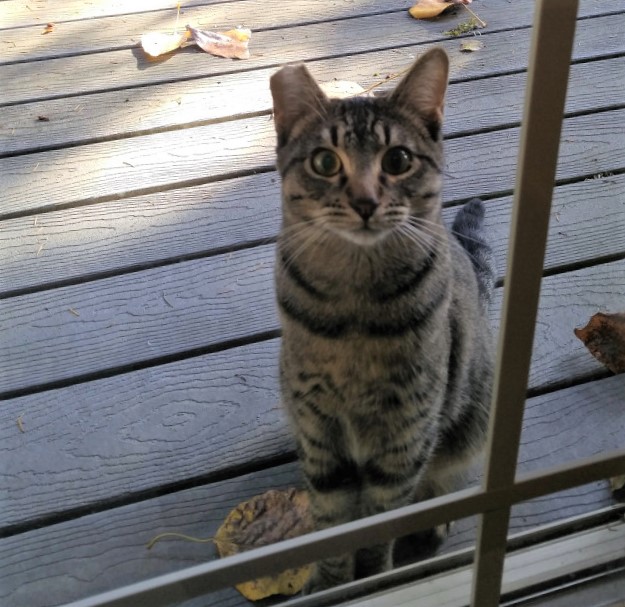
I always come in at night before it is dark because I am only a teenager. Tiger has outside dark privileges. It’s okay because I don’t like the outside dark.
I also don’t like rain. It reminds me of the squirt bottle. In my life so far there was not much rain. Now there is more and more and more. I don’t know why. I will ask Tiger if he ever decides to listen to me and answer my questions. He still hisses at me when I try to talk to him. If I jump on him to get his attention, he takes a swat at me but he is not a good aim and always misses. Maybe because he is old. Either way, I am always the one who gets in trouble not the Tiger. I think they favor him though they may not admit it.
I still like Tiger even if he is old and doesn’t want to play with me. I hope he will someday. I can’t wait for us to become good friends.
~ Benji
Dance of the leaf
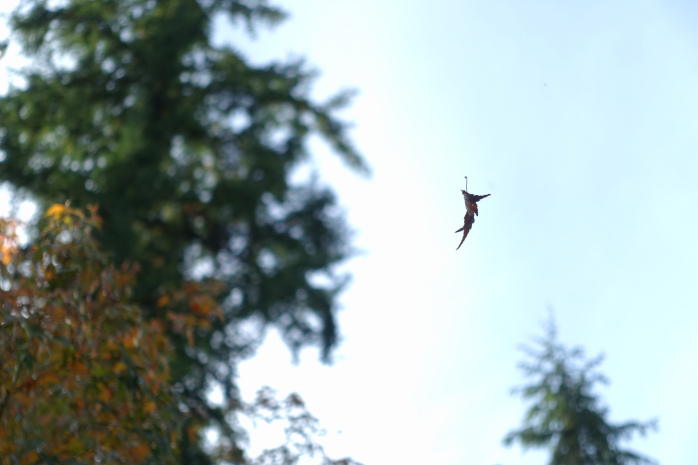
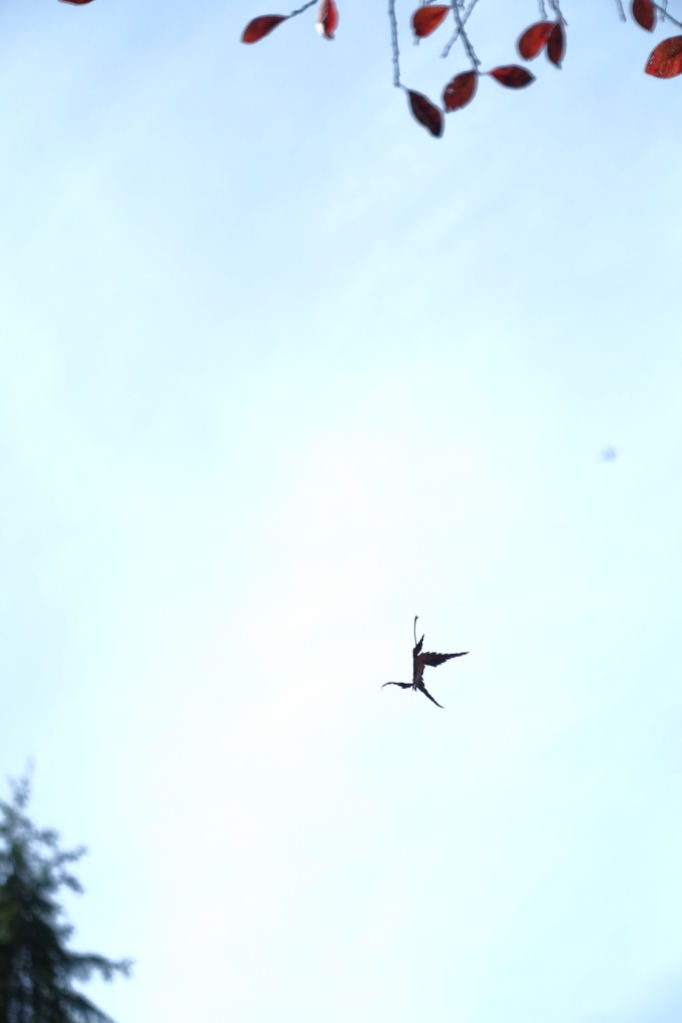
I stepped outside this morning and saw this lovely dance ..
~ Susanne
 Cats and Trails and Garden Tales