Cats and Trails and Garden Tales
Musings on cats, travel, gardens and life
The Azalea and the Mason Bees
My azaleas are blooming and lighting up the yard with purple, and the largest of them has become a bee magnet.

It not only attracts honey bees,


it also attracts mason bees and I’m only now learning the difference.
My hubby put up a mason bee house a couple years ago under the eaves of our home.
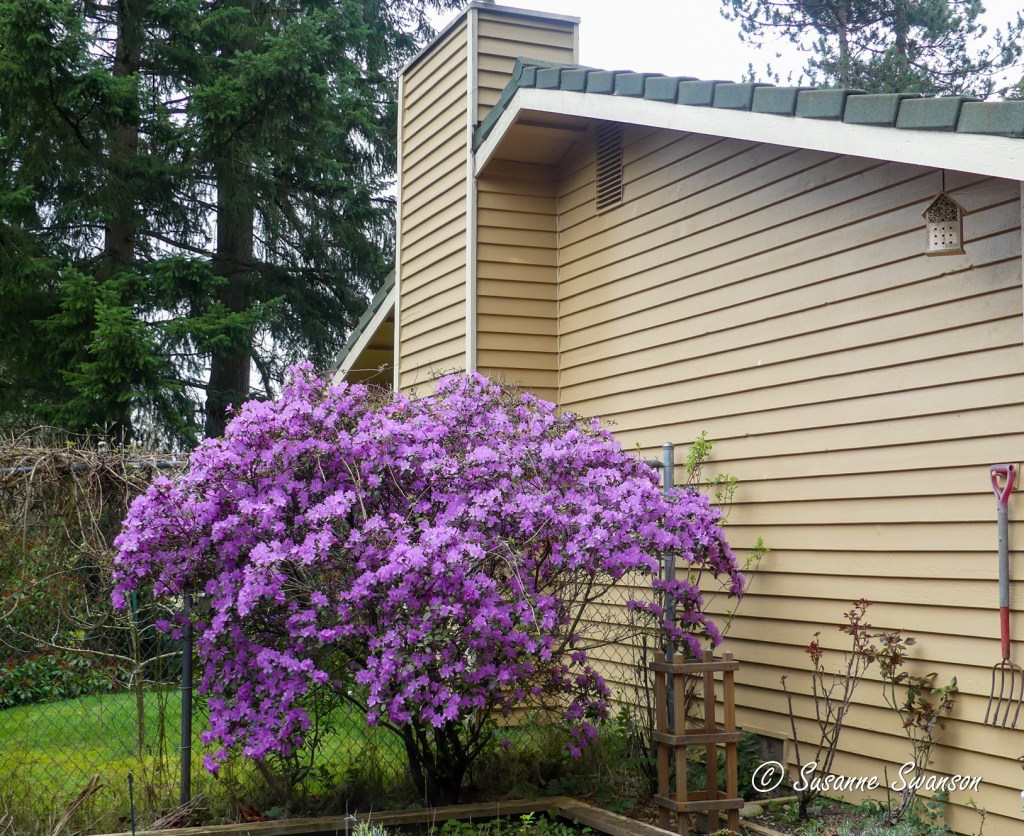

We recently noticed bees flying around it and entering the holes. Actually, my husband noticed it. I was puzzled as to me they looked like flies.
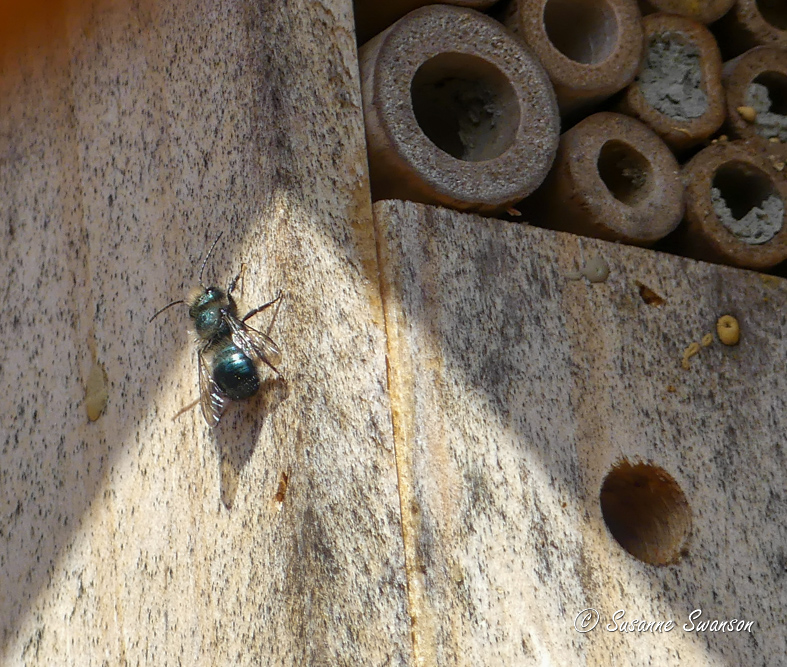
In fact, they’re roughly the same size, but these native, solitary, insects are mason bees, expert cross pollinators, of the genus, Osmia.
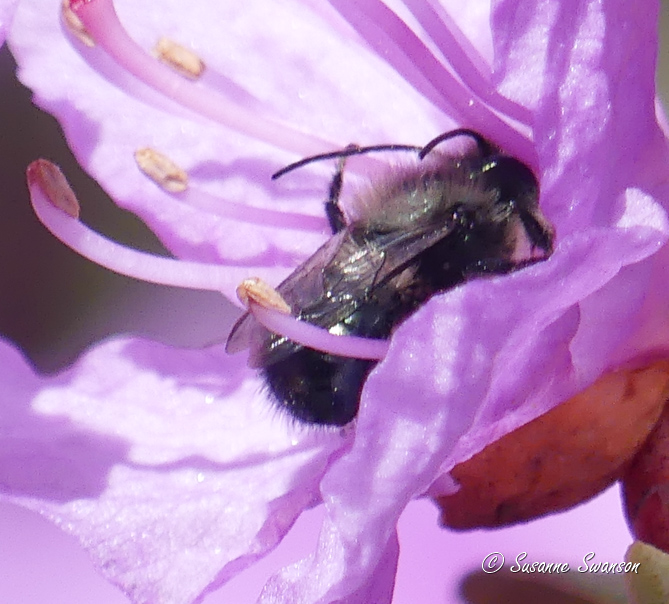

They don’t have hives and they don’t make honey, but they do gather pollen, some say, more effectively than honey bees.

Here’s the story.
When the bees hatch in the spring they emerge males first, followed by females. After mating the males soon die and the female looks for a nest.
Then she collects pollen from shrubs and flowers and deposits it inside the narrow chamber. Once she has a sufficient nugget of pollen, she lays an egg on top, then follows up with a partition of mud to seal off the compartment – hence the name mason bee.

She does this repeatedly until the chamber is filled with eggs, then plugs the entrance to the tube.
Inside, the larva eats the pollen, then spins a cocoon and enters the pupal stage, maturing and hibernating through the winter. In spring the males exit the nest first, then females, and the cycle of life continues.
The mason bees that emerged from their house recently were greeted by this giant azalea.
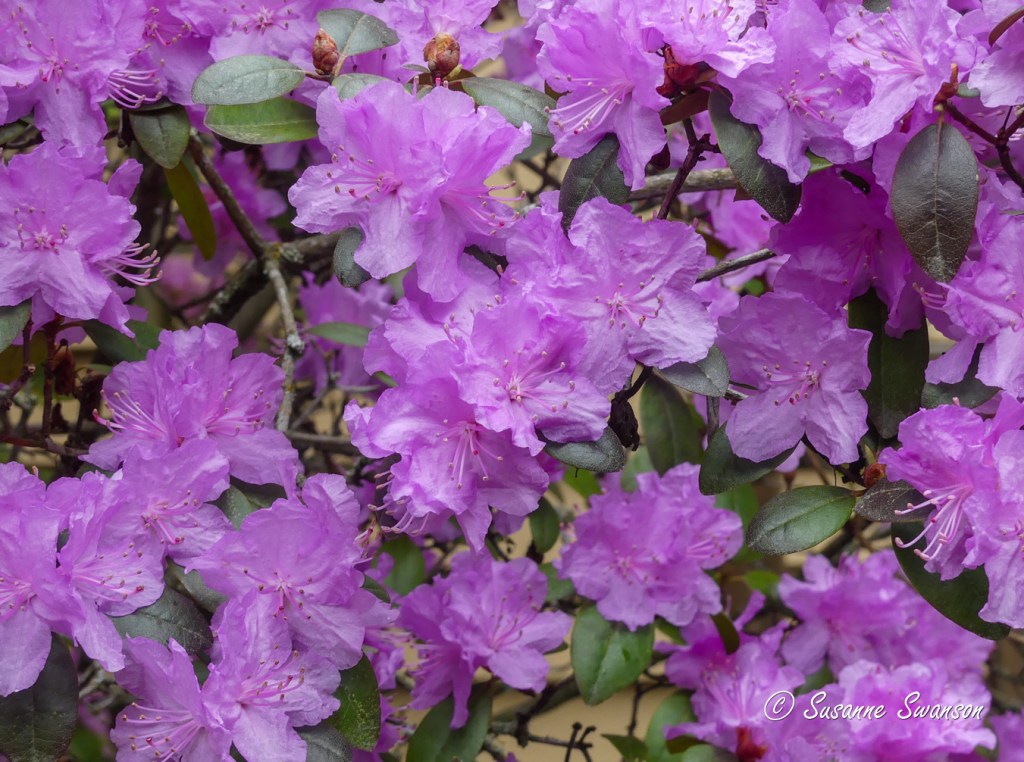


Off to a good start.
~ Susanne
Let’s Celebrate Daffodils!
I didn’t make it up to the Skagit Valley this year for peak daffodil season, but I do have many pictures to share from previous years! No law against that, right?
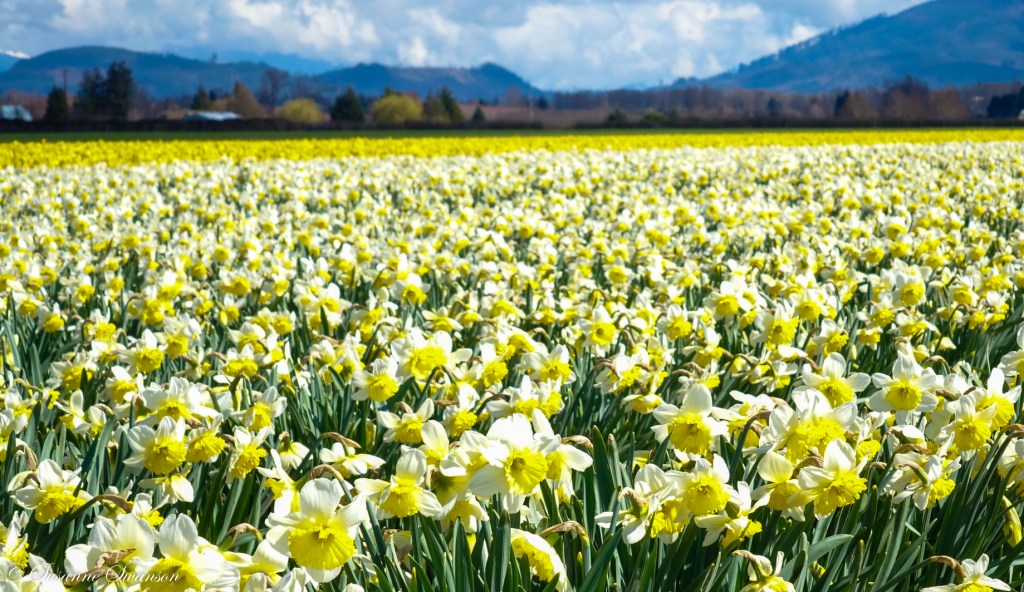

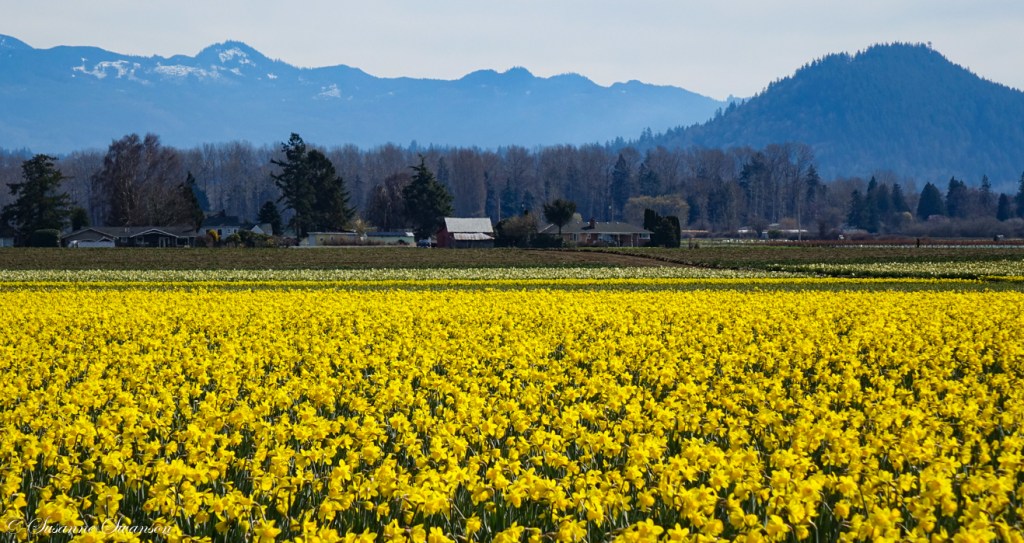


Aren’t they beautiful?
Yes, but I don’t feel comfortable going up this year, after I learned workers went on strike last week, due to low wages and unsatisfactory working conditions.
I hope it all gets resolved fairly; we depend on and value our agricultural workers!
Next month the tulips will take over the Skagit Valley. Hopefully the Tulip Festival can go on in a peaceful way, unhindered.
~ Susanne
Sorry I’m Late, Tiger
“Late for what, Sue?”
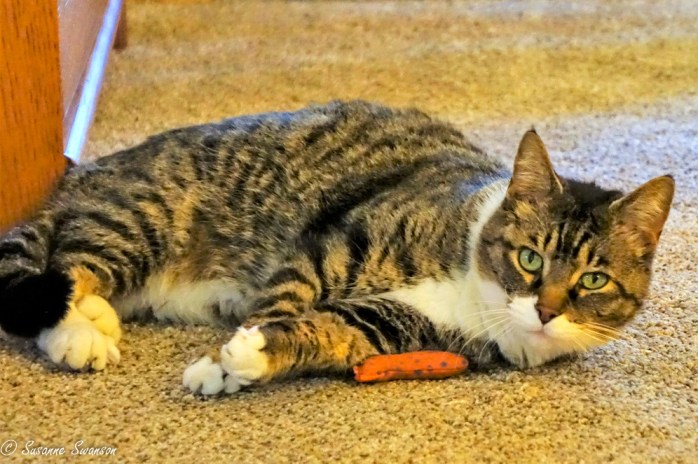
“Your birthday. I think we already passed it.”
“Don’t worry about it, Sue. I forgive you. How old am I, anyway?”

“You just turned 14. But in human years, you’re over 70!”
“Over 70! No wonder I’m so tired!”
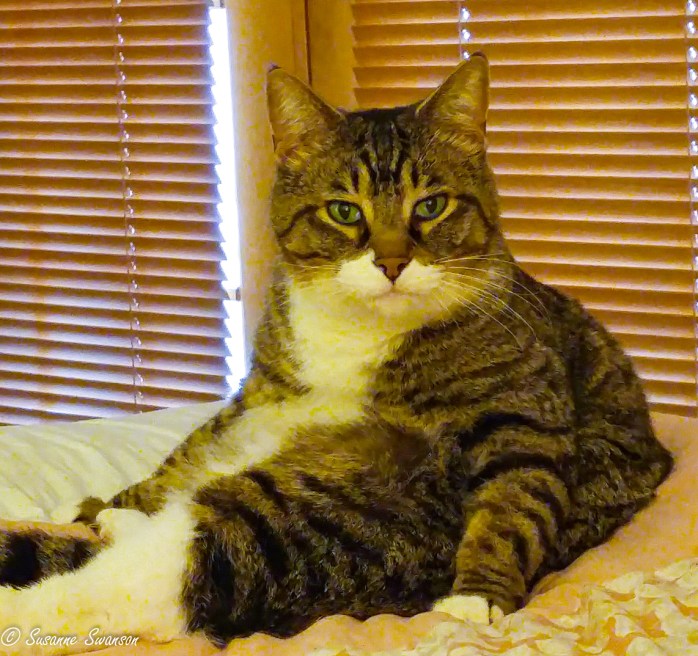
“Anyway Tiger, I just wanted to take this opportunity to tell you what a great cat you are. We love your gentle ways and sweet personality.
And how you keep Benji in check – the little rascal – we couldn’t do it without you.”

“Tiger?”
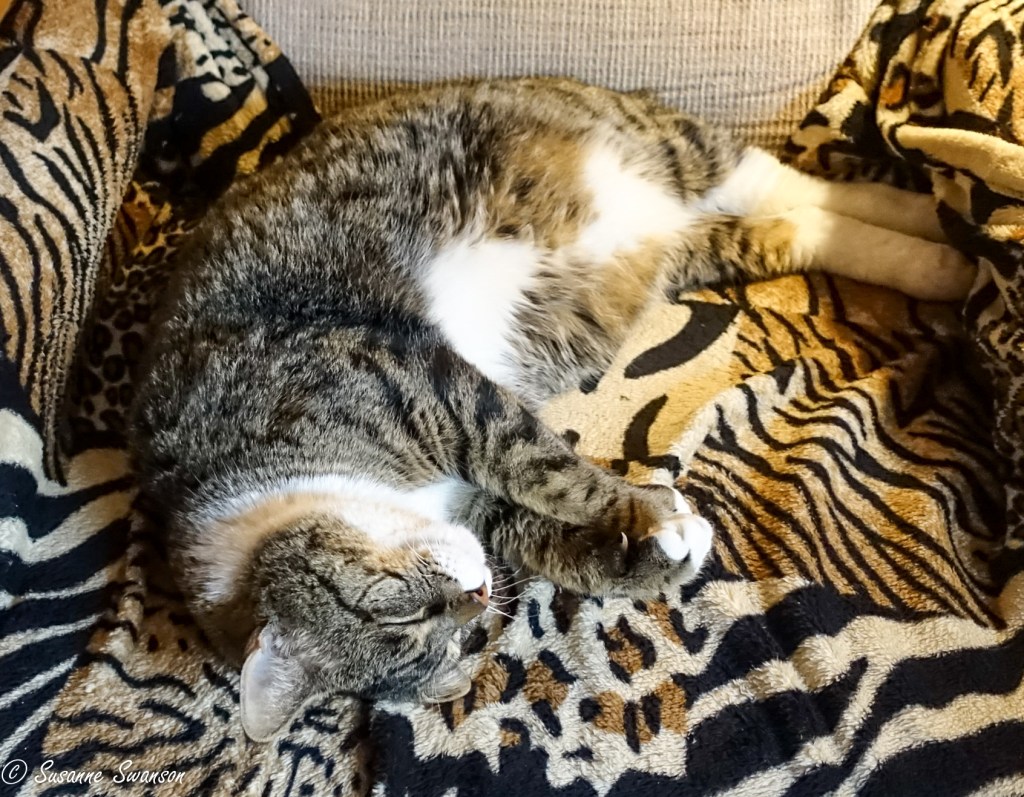
“Sweet dreams, Tiger.”
~ Susanne
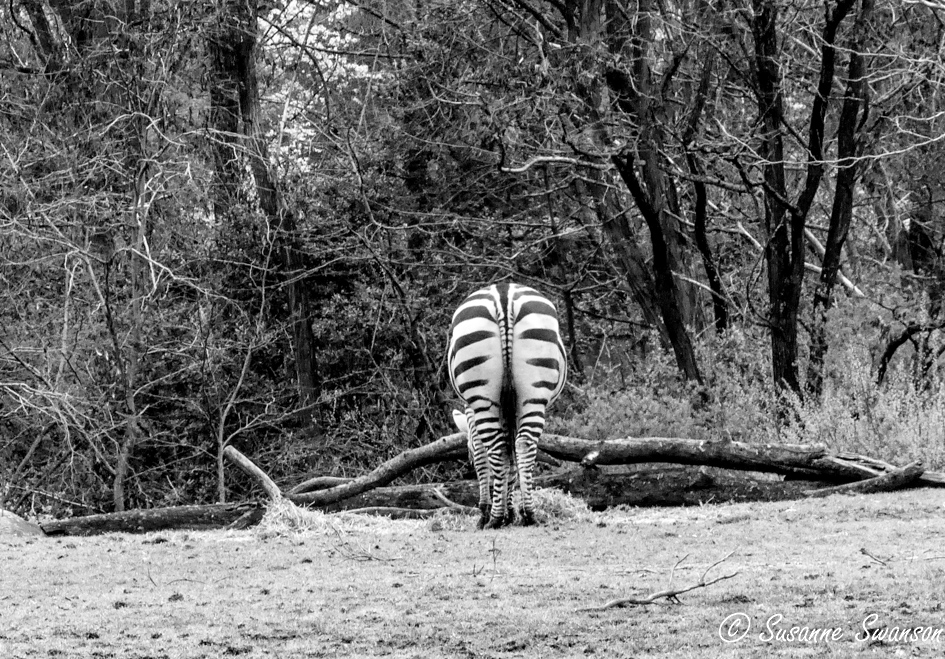
A Rainy Day at the Zoo – In Black and White
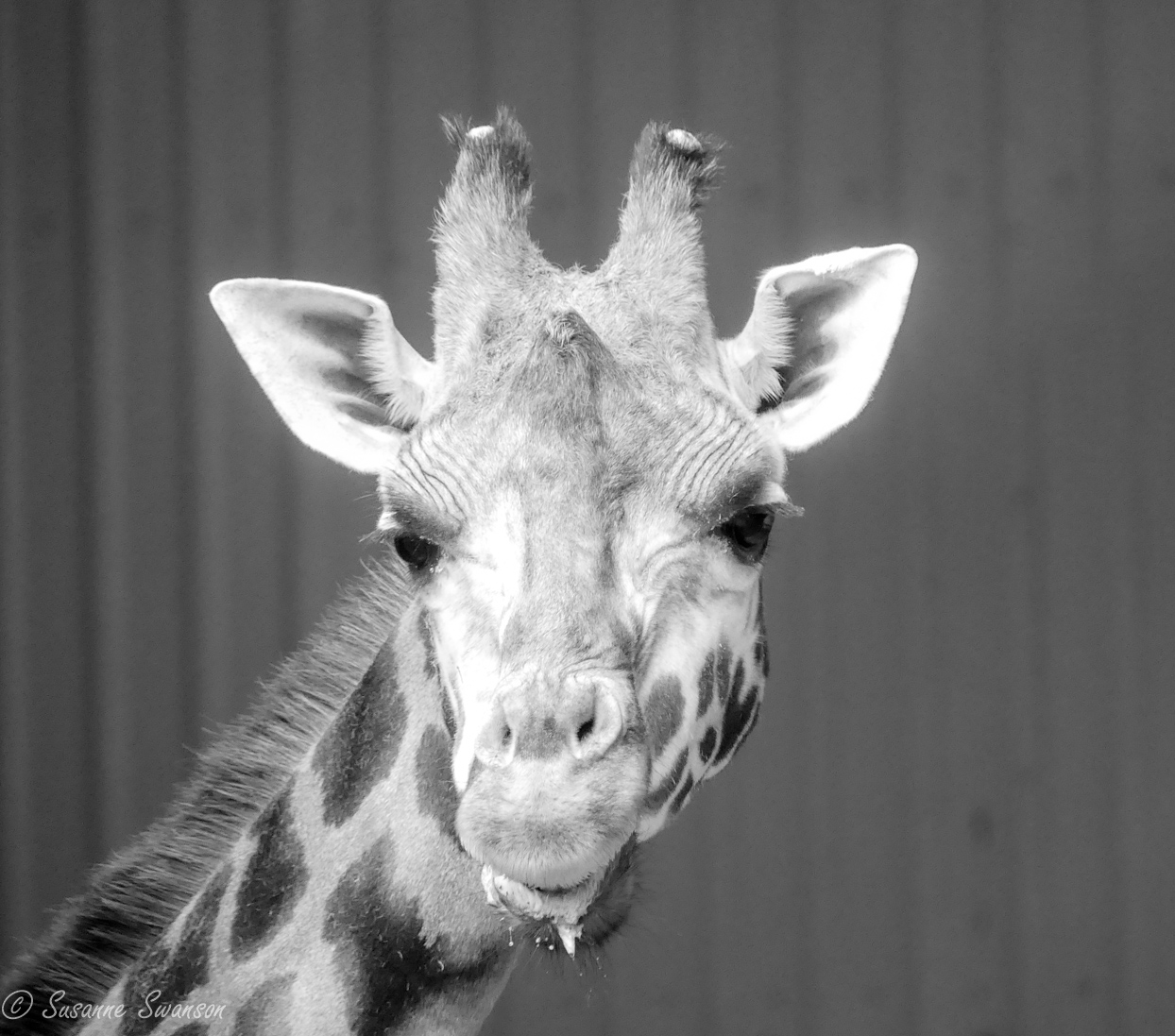
Yesterday we visited the Woodland Park Zoo in Seattle even though rain was in the forecast.
And rain it did, most of the time we were there.

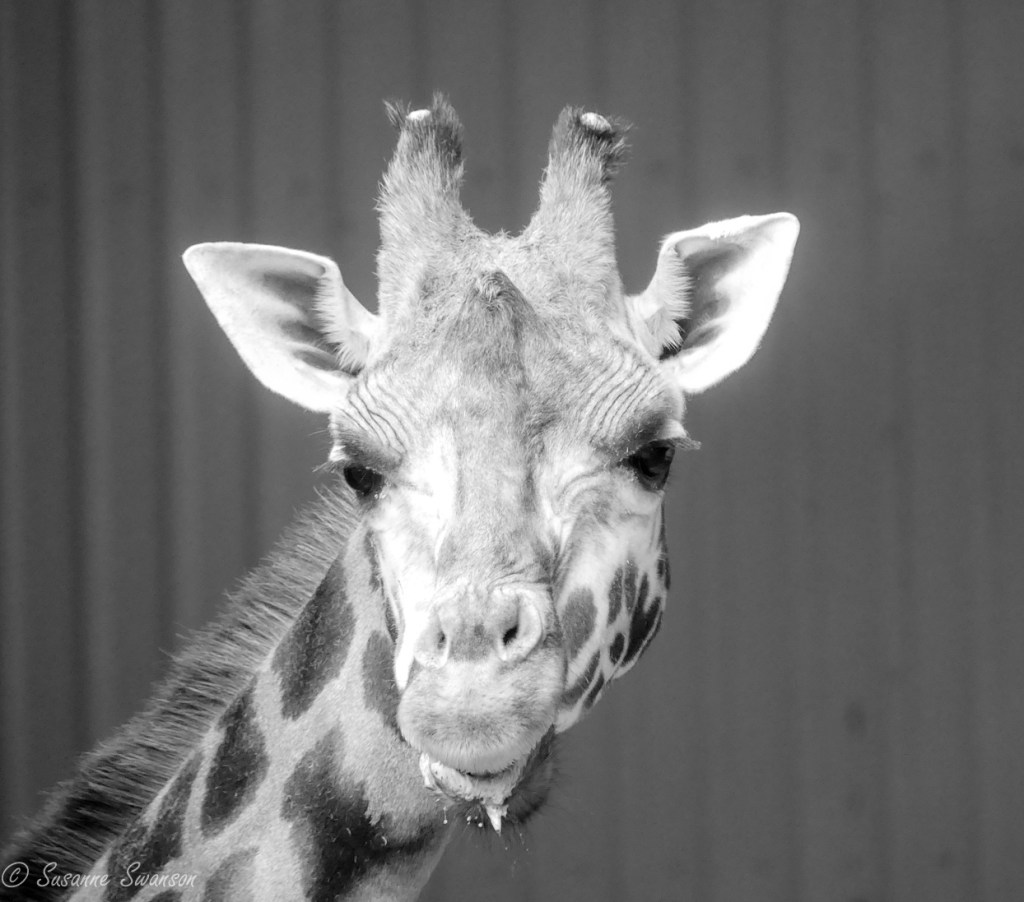
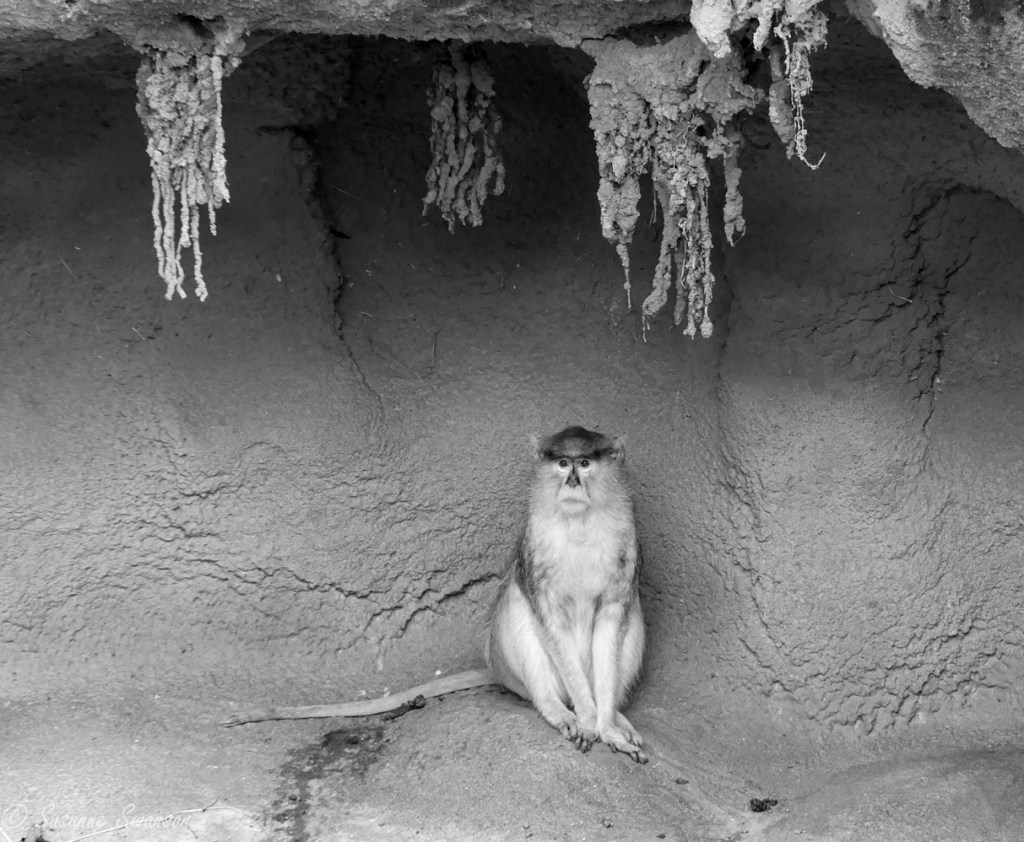
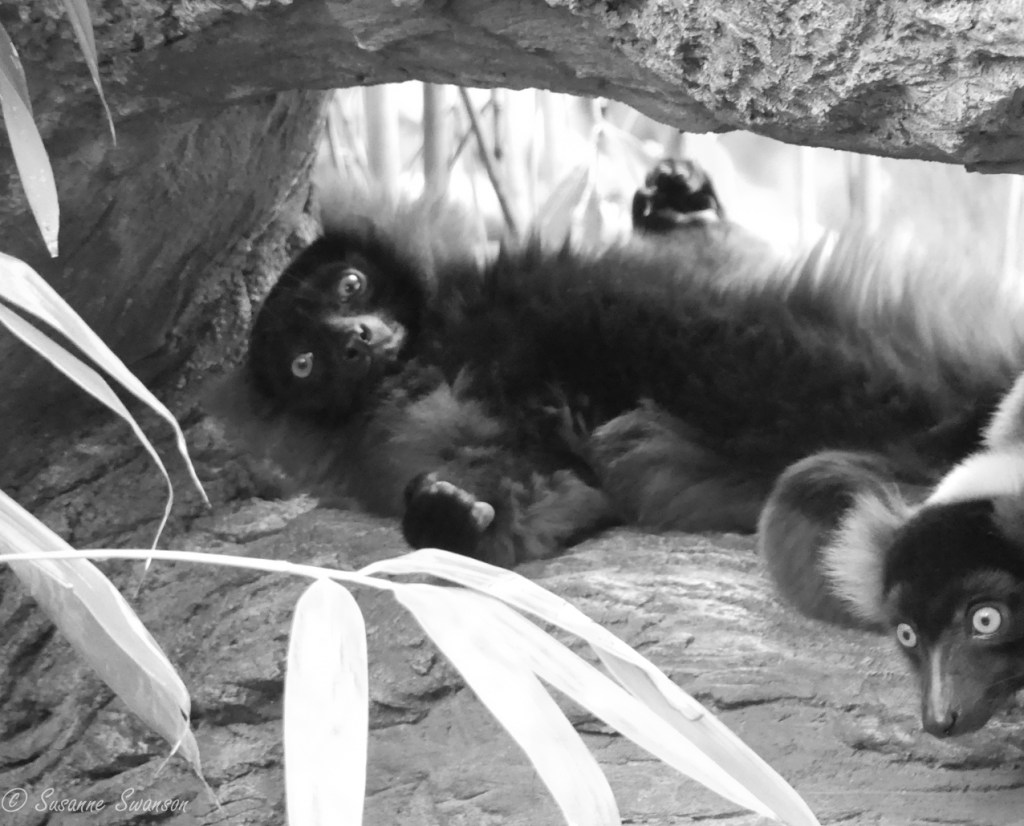
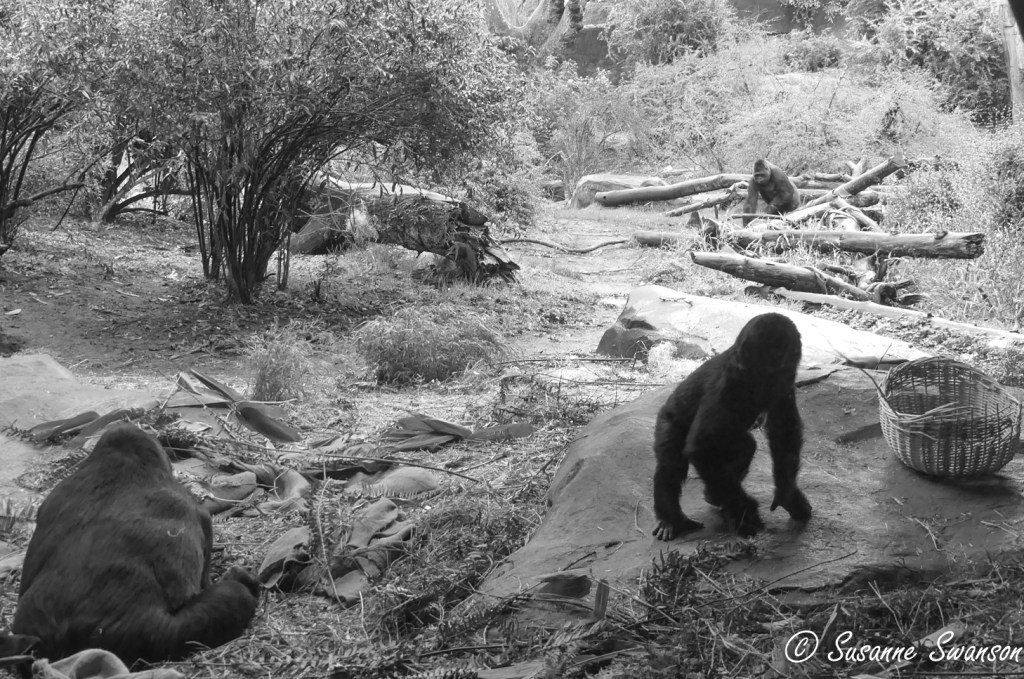
Even so, I carried my camera and managed to sneak some pictures of the animals, which I later changed to black and white for this week’s Sunday Stills Challenge.
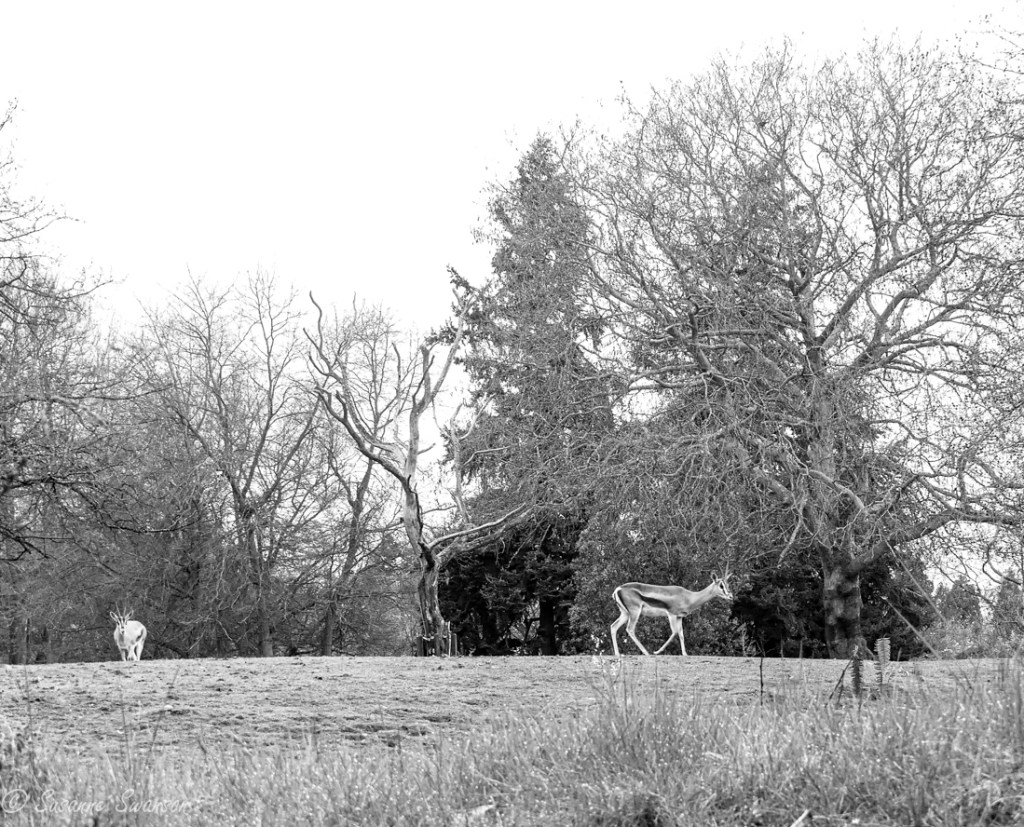
Many of them were well suited to this change including the zebra
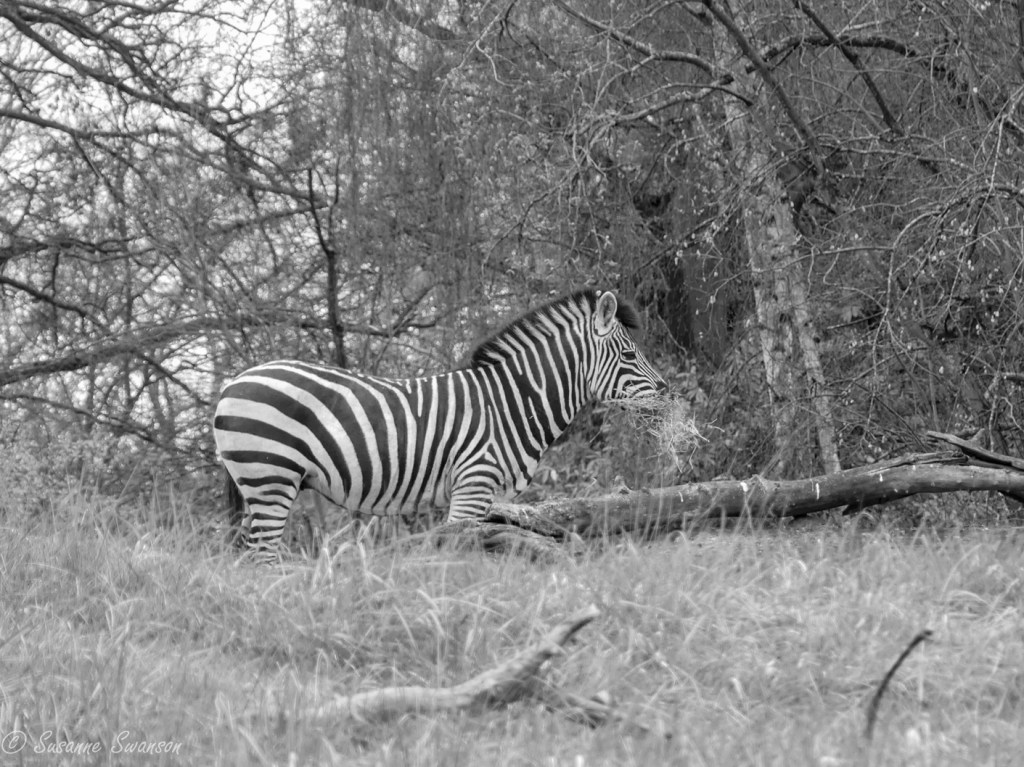
who looked good from any angle.
The giraffe stayed inside but gave us a smile while he was eating.
The monkeys stayed in their caves wondering what on earth we were doing outside,
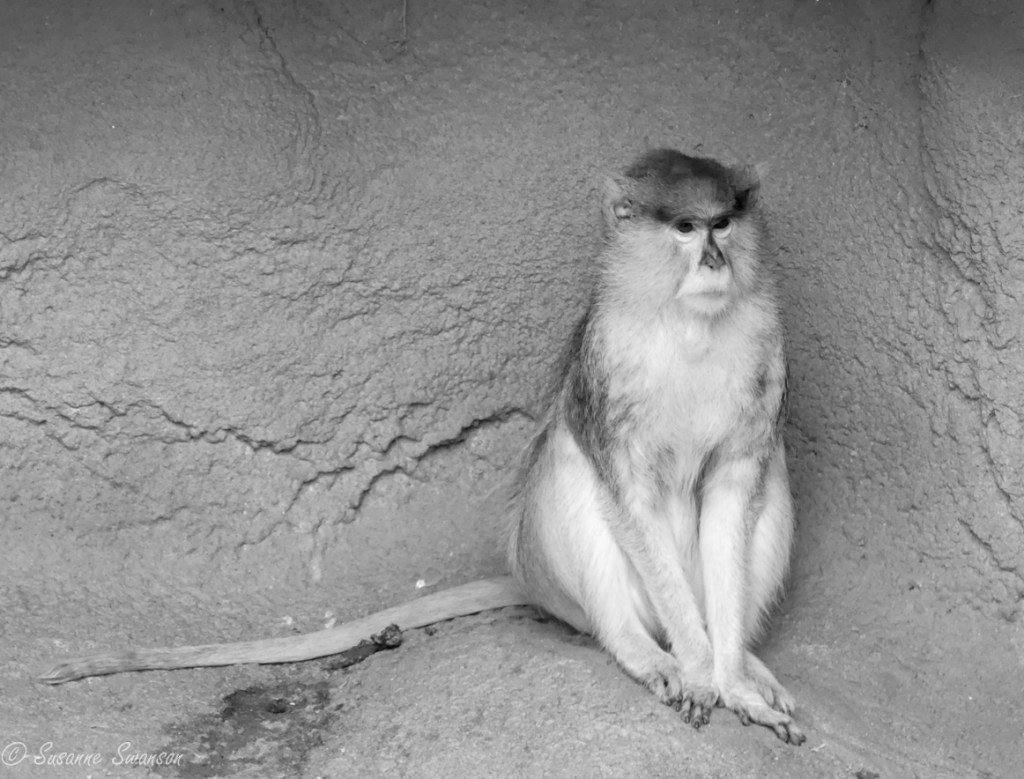
and the lemurs were also surprised.
But the big cats were not daunted.


We ended our visit with the gorillas, who went about their business taking no mind of us, for which I was grateful.
I love animals and whenever I visit the zoo, I fall in love with them all over again. Always with a mix of joy and sadness. Joy at the beauty and uniqueness of each; sadness they aren’t able to live freely in their natural habitat. And yet that habitat is disappearing. So I’m happy they have a place at Woodland Park, where efforts have been made to build homes for them as true to nature as possible.
Now before I go, I’ll leave you with the beautiful and industrious Weavers, building their nests for spring.
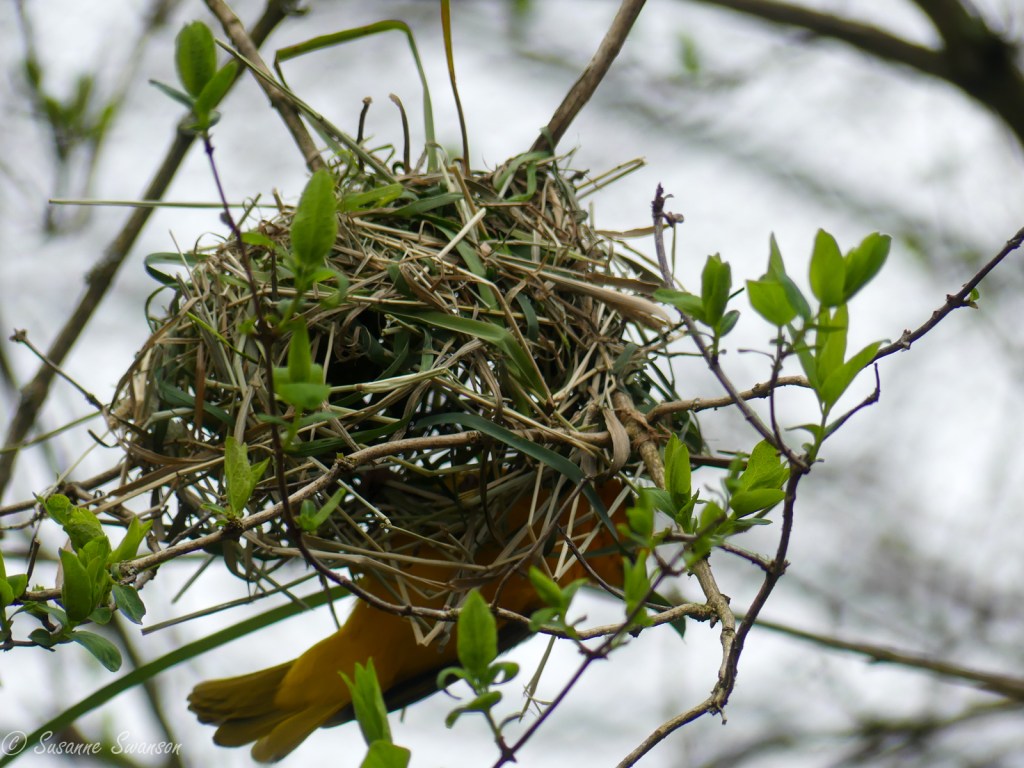
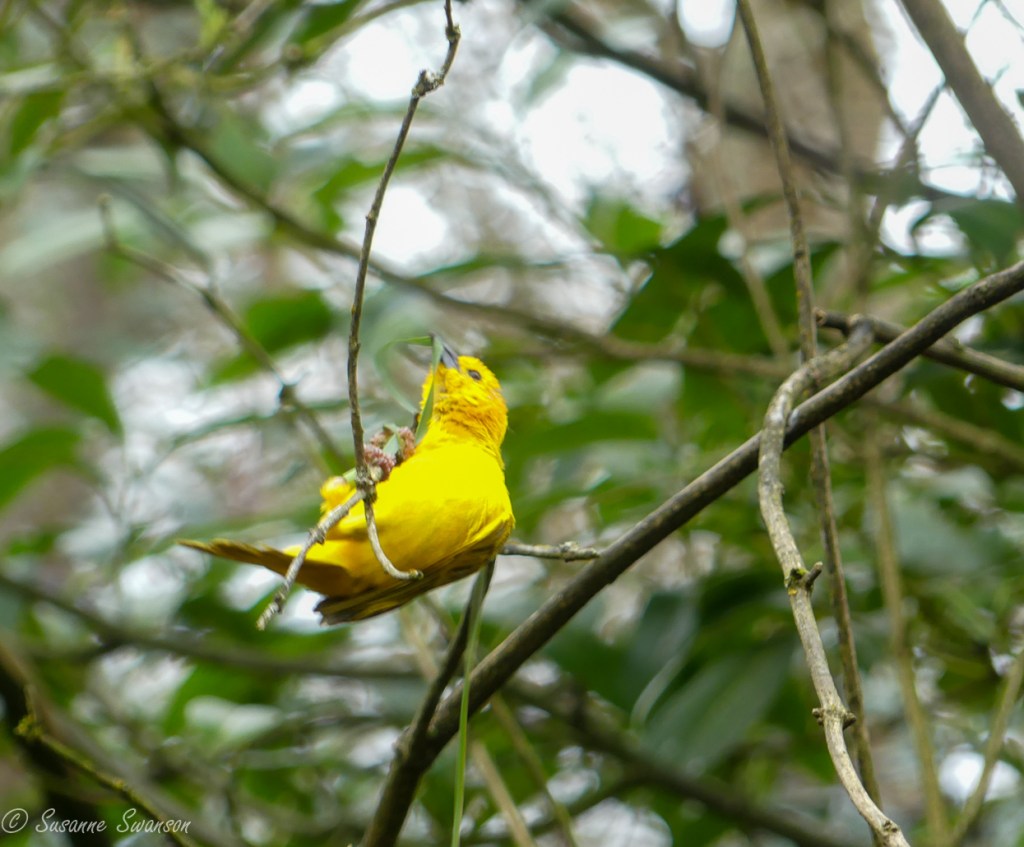
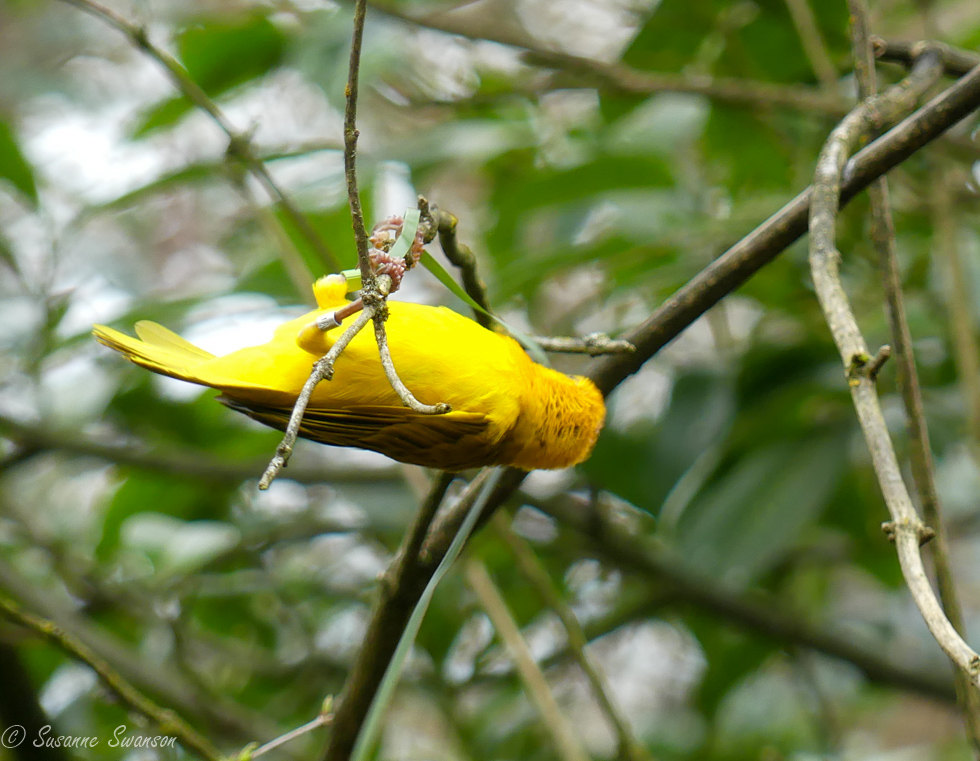
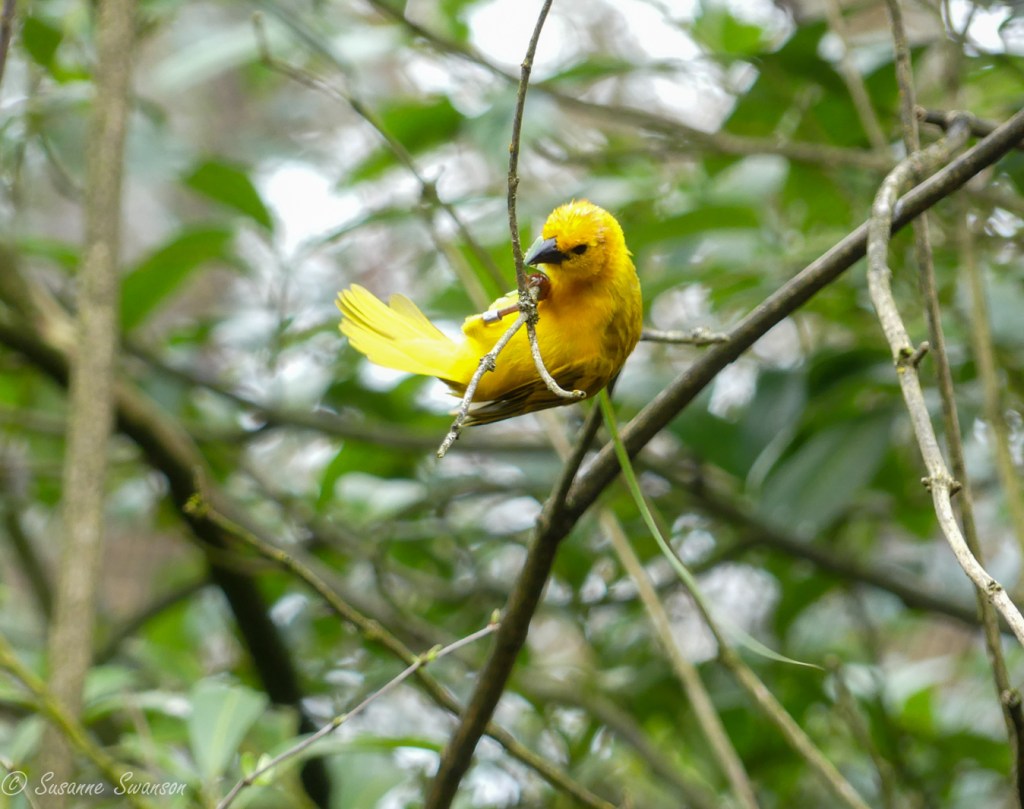
Life is better in color.
~ Susanne
Happy Home in the Snag!
I was SO thrilled to see a chestnut-backed chickadee building a nest in the snag we left standing for this very purpose!

The cavity is under the highest bare branch near the top of the tree.
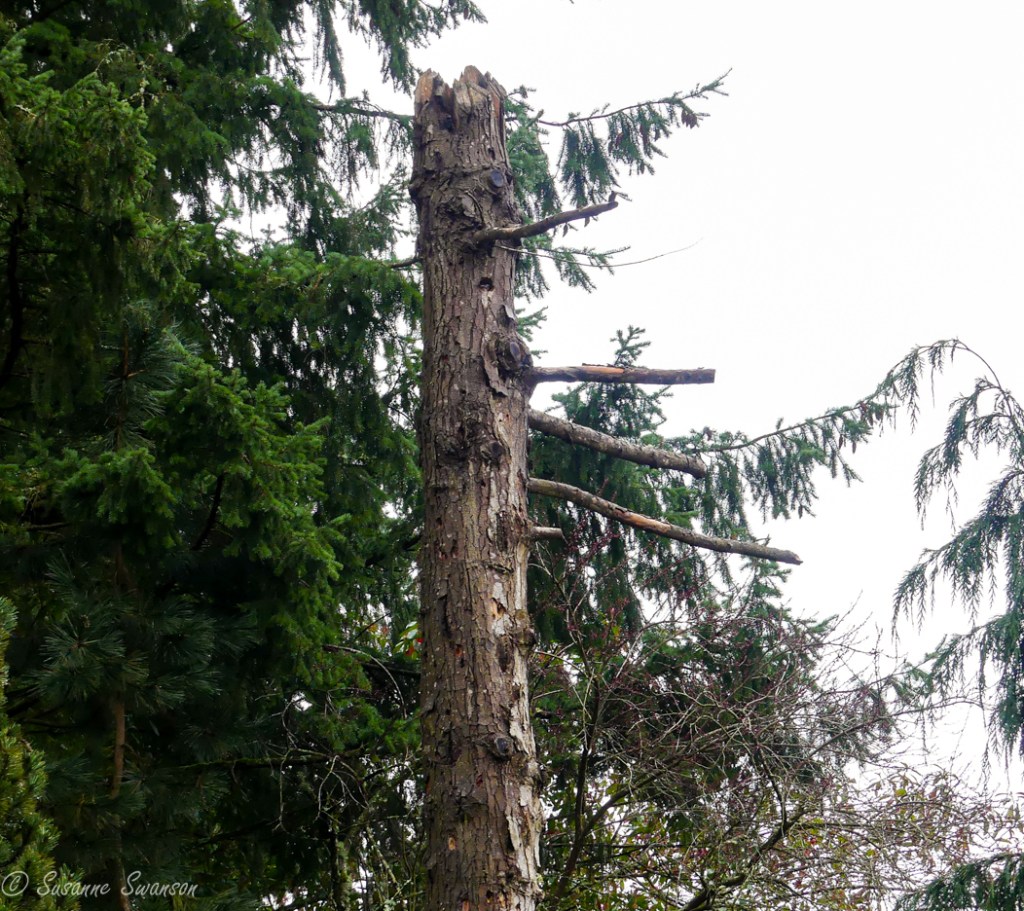

This mama was singing while busily preparing the inside for nesting.


We left the snag standing a few years ago at the suggestion of an arborist. We hired him to take down the dying Hemlock, but he encouraged us to leave the trunk and a few branches available for wildlife.
We’re so glad we did!
We’ve had owls and woodpeckers use it – see that here – but this is the first tiny nest building we’ve seen. I hope the chickadees are very happy in their new home. 🙂
~ Susanne
Looking for Beauty on a Rainy Spring Day
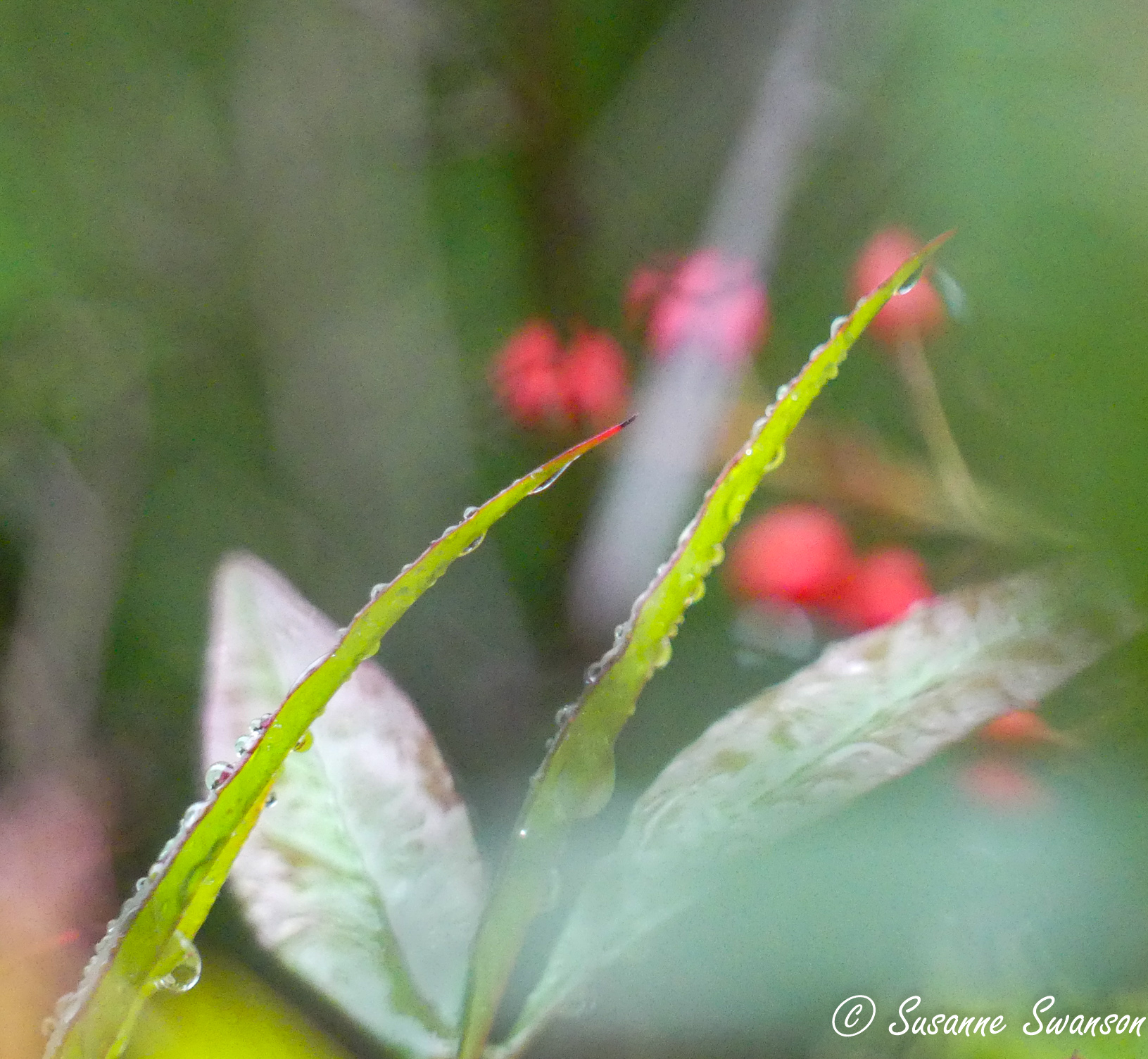
It’s another rainy day in the Great Northwest and the natives are getting restless.
The cats are confused, wanting out but not.
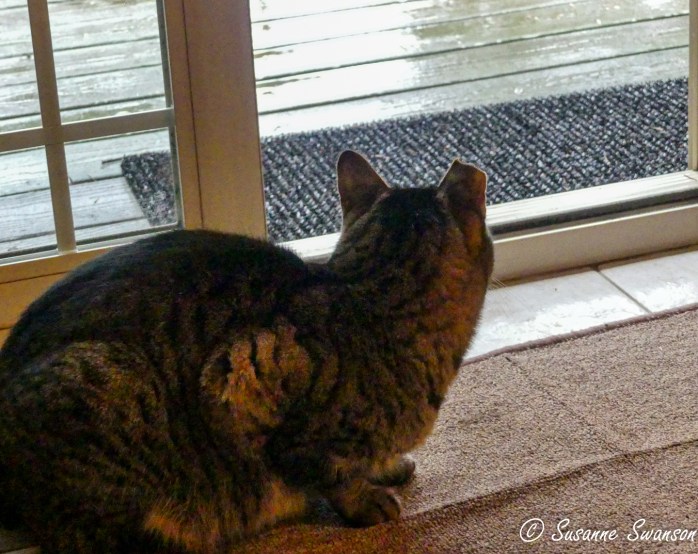
Then going out and wanting in again, an endless cycle.
“Is there nothing you can do?” Tiger asks.

“Sorry, no,” I say and Benji is dismayed.

I let them in and settle them down to sleep while I look for beauty in the raindrops and berries.
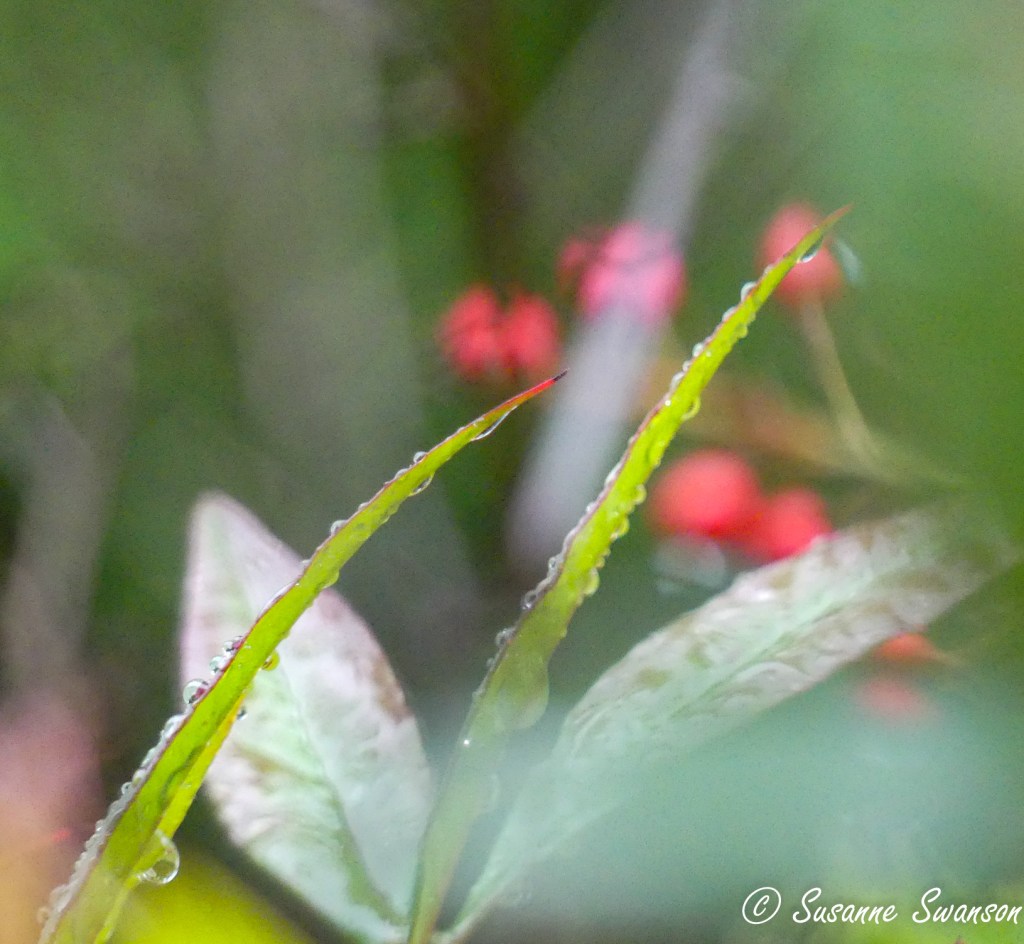
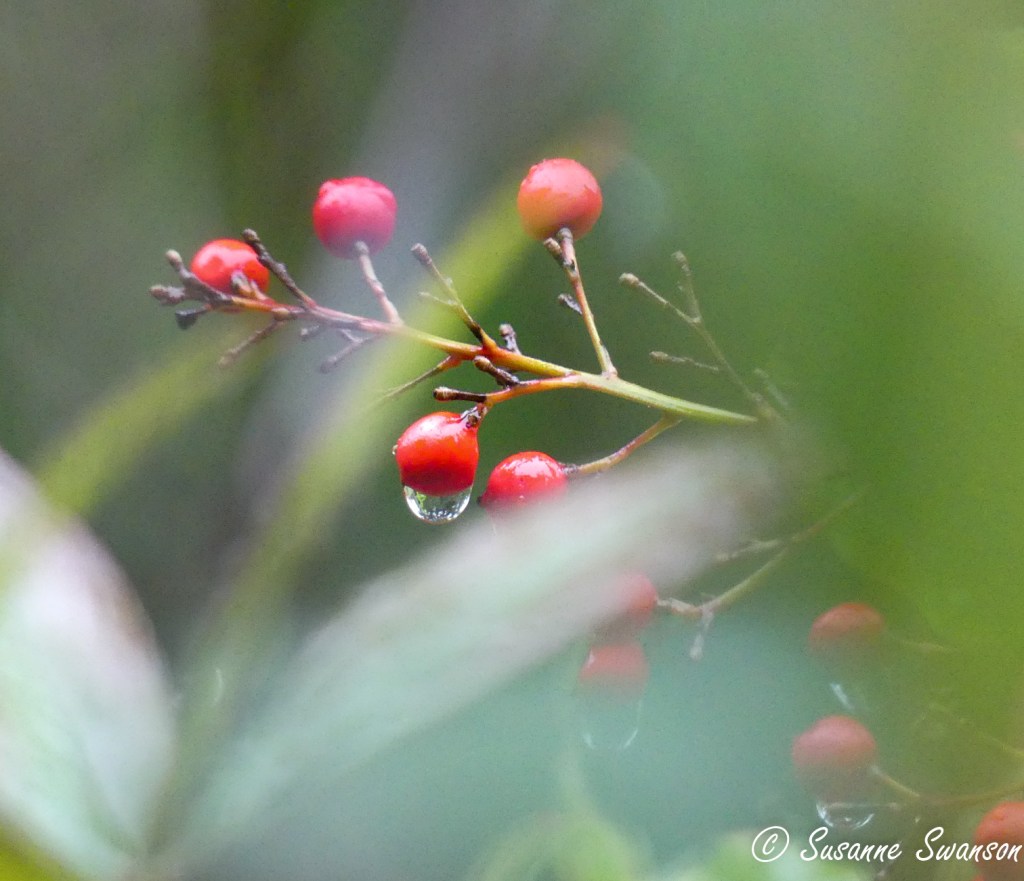
It will have to do.
~ Susanne
Celebrating the Stony Walkers of Coulon
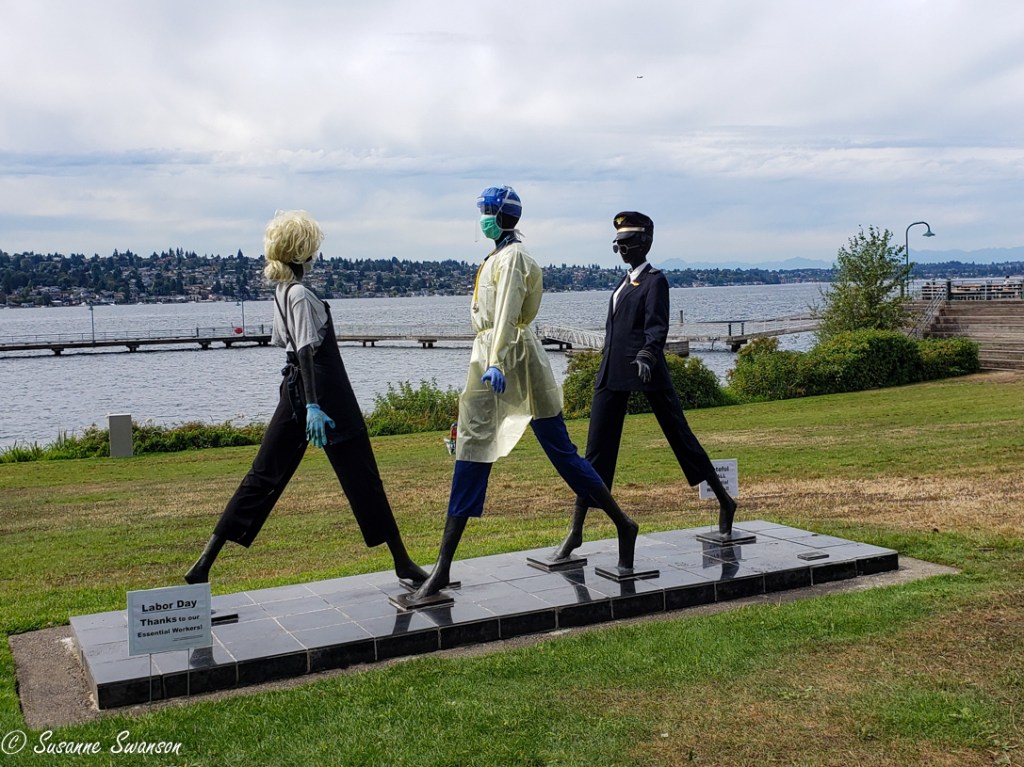
I love to walk at Coulon Park and no matter the season, I’m always joined by the stony walkers.
Here they are on a sunny day, without a stitch on,

but here they dressed for Valentine’s Day.

Here they are on Memorial Day,

and on Labor Day, honoring our essential workers.

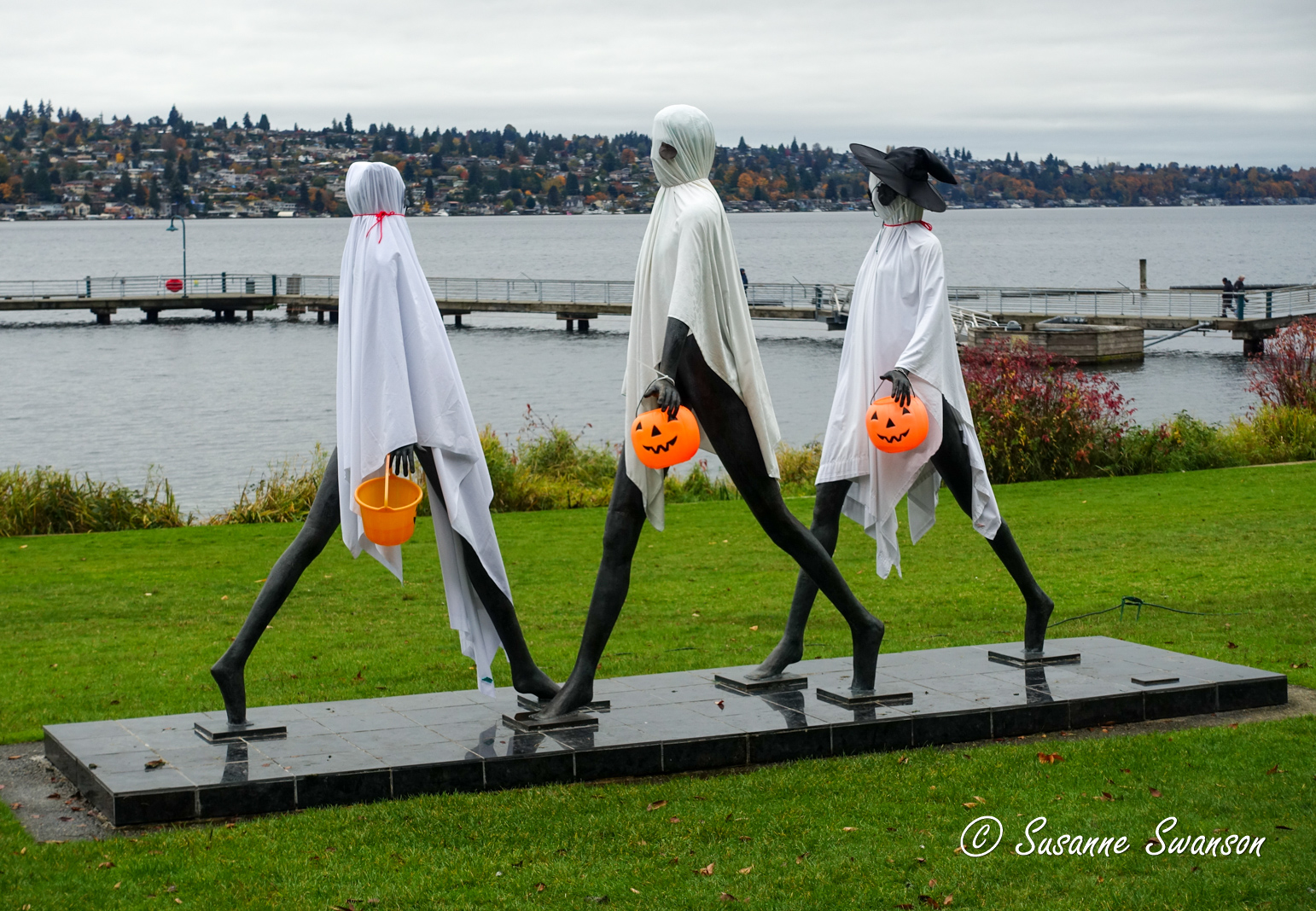
They celebrated Halloween by trick or treating,
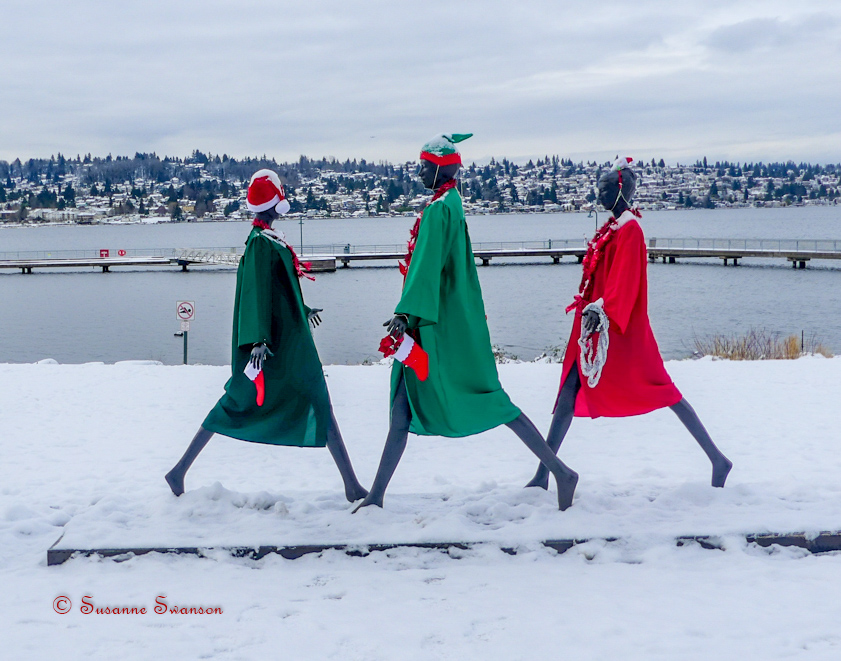
and despite the winter snowstorm, they still dressed up for Christmas.
I’d always wondered if they had some help.
Turns out they do.
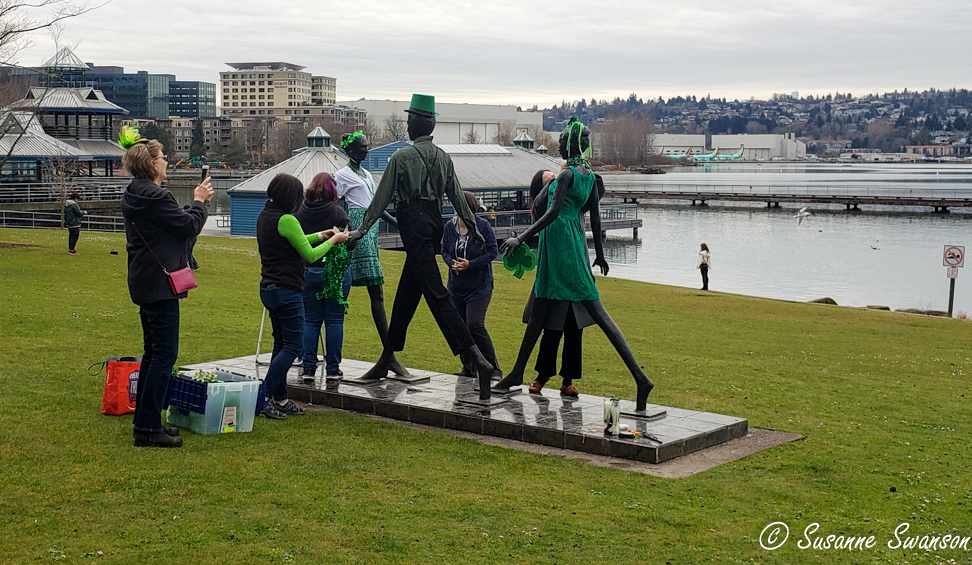
Time to give credit where credit is due.
The ones I call the Stony Walkers are actually the Interface Statue, a bronze sculpture created by Phillip Levine. Acquired by the City of Renton in 1982, the figures are dressed up on special occasions, by a group of volunteers. You can read more about that by clicking here.
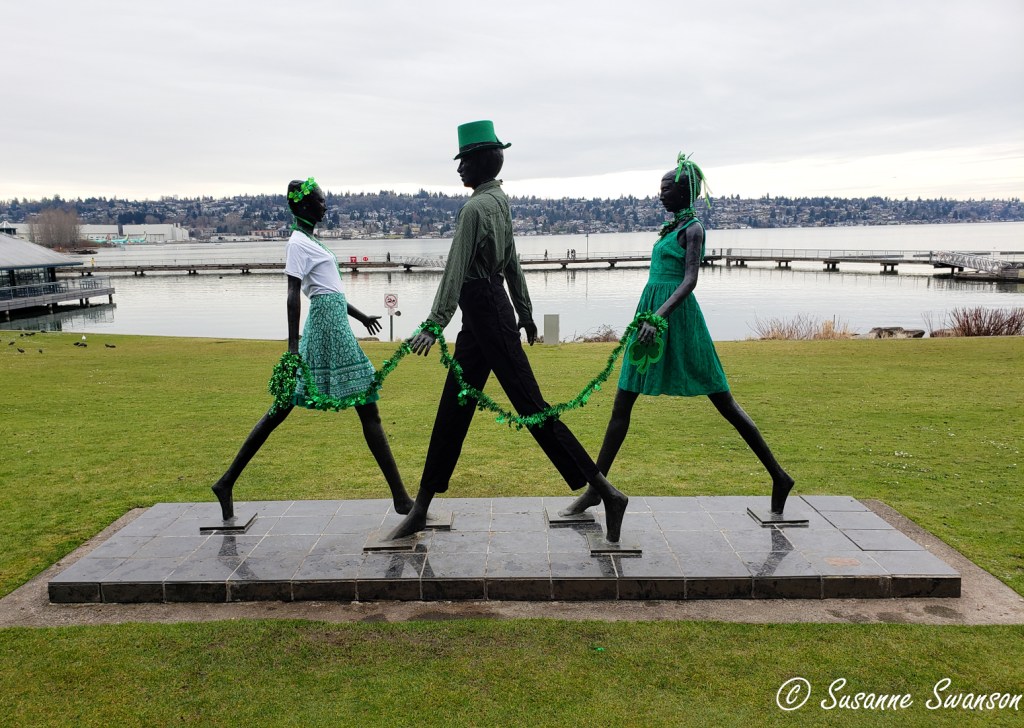
I for one, appreciate their efforts! 🙂
And by the way – Happy St. Patrick’s Day!
~ Susanne
It’s a Coffee Kind of Day

Coffee.
Because it’s another day.
~ Susanne
Are you Comfortable, Benji?
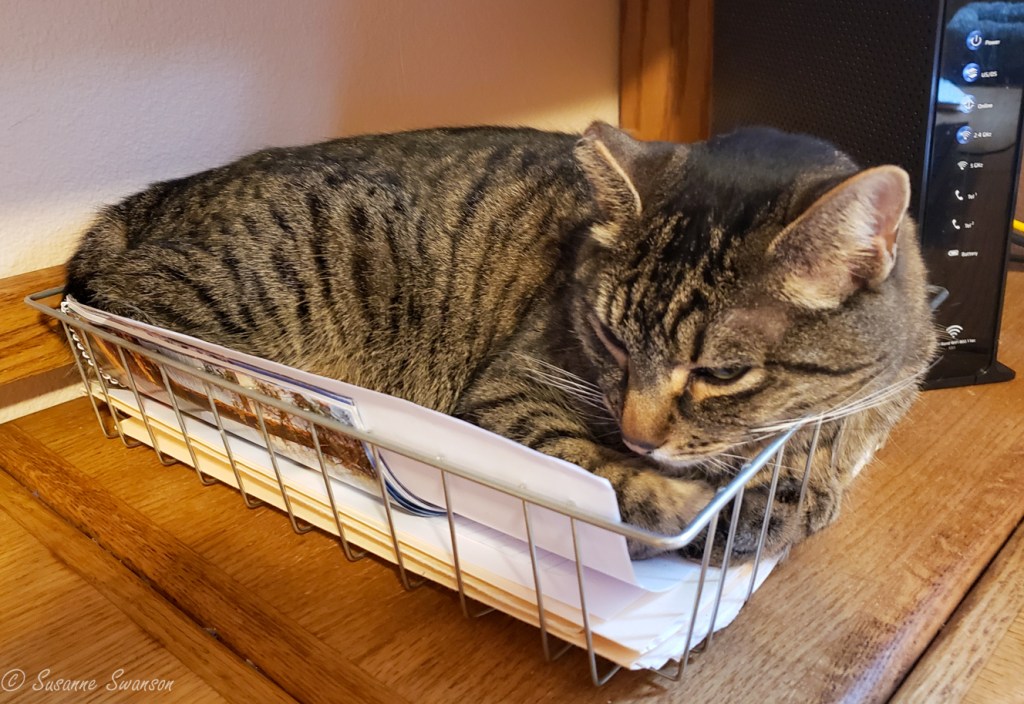
“It’s not bad, Sue. Thanks for asking.”
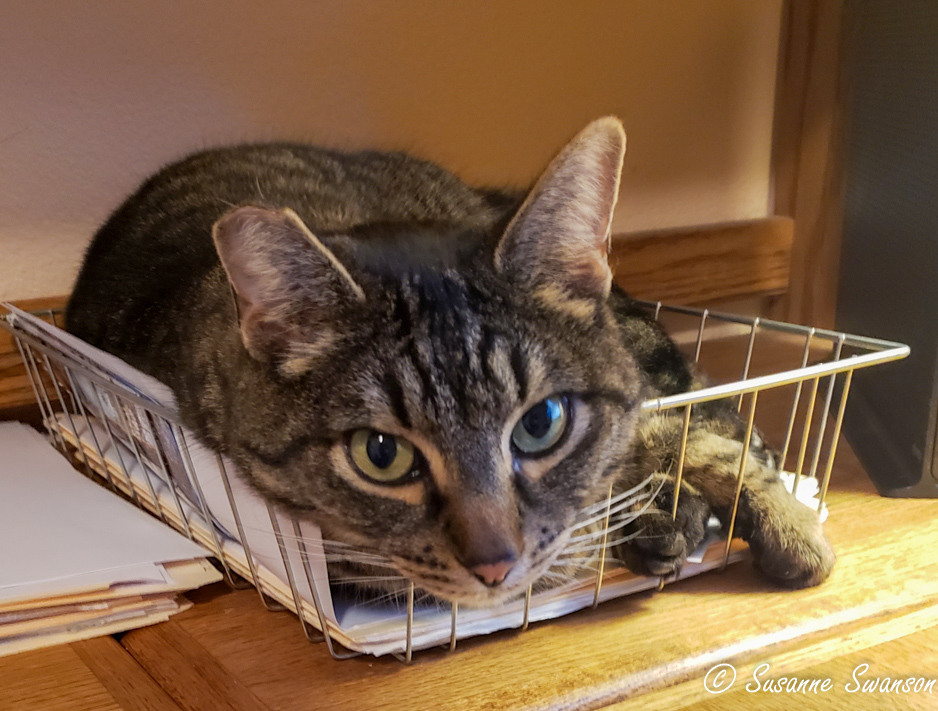
“Are you sure, Benji? There are better places to sleep than a wire basket!”
“None as close to you, Sue. But it would help if you could turn the light down.”

“Sure, Benji. My pleasure.”
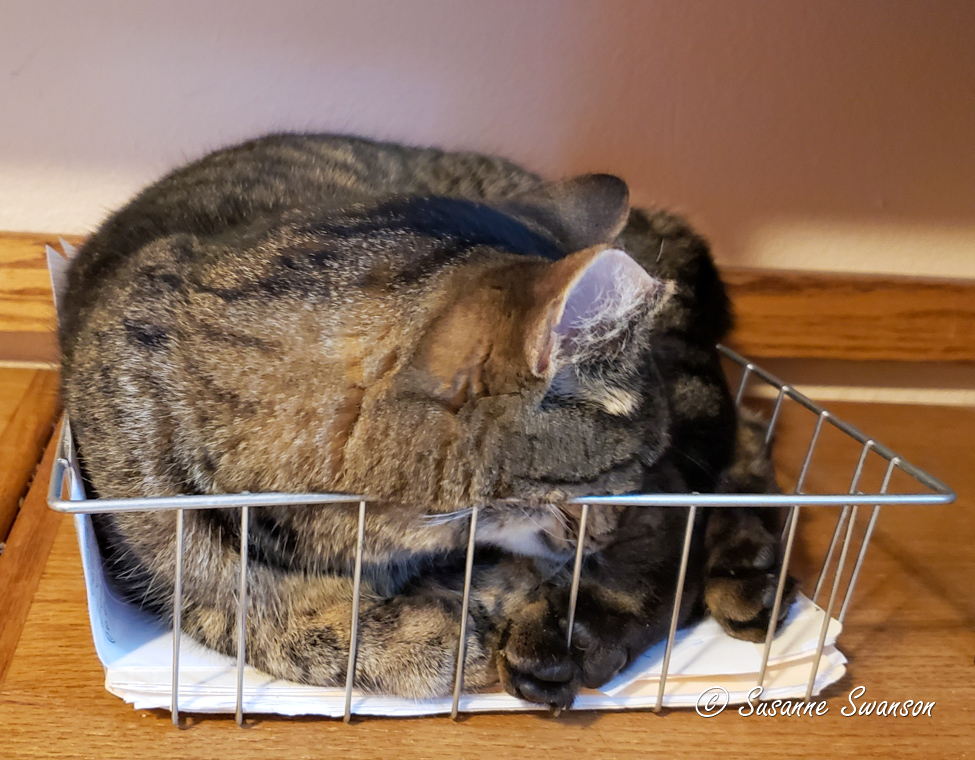
~ from the office of Susanne and Benji
Fire King, Cats, and a River!
What do these disparate things have in common? Jade green, of course!
I’ll start with Jadeite Fire King – have you heard of it? It’s collectible glassware from the 40’s, 50’s and 60’s. My first piece was a classic coffee mug which friends remembered getting for free in a box of laundry detergent! Not me, I paid a respectable $12 for mine, and it got me started collecting. I love its milky green color though I now prefer a larger cup for my morning coffee.
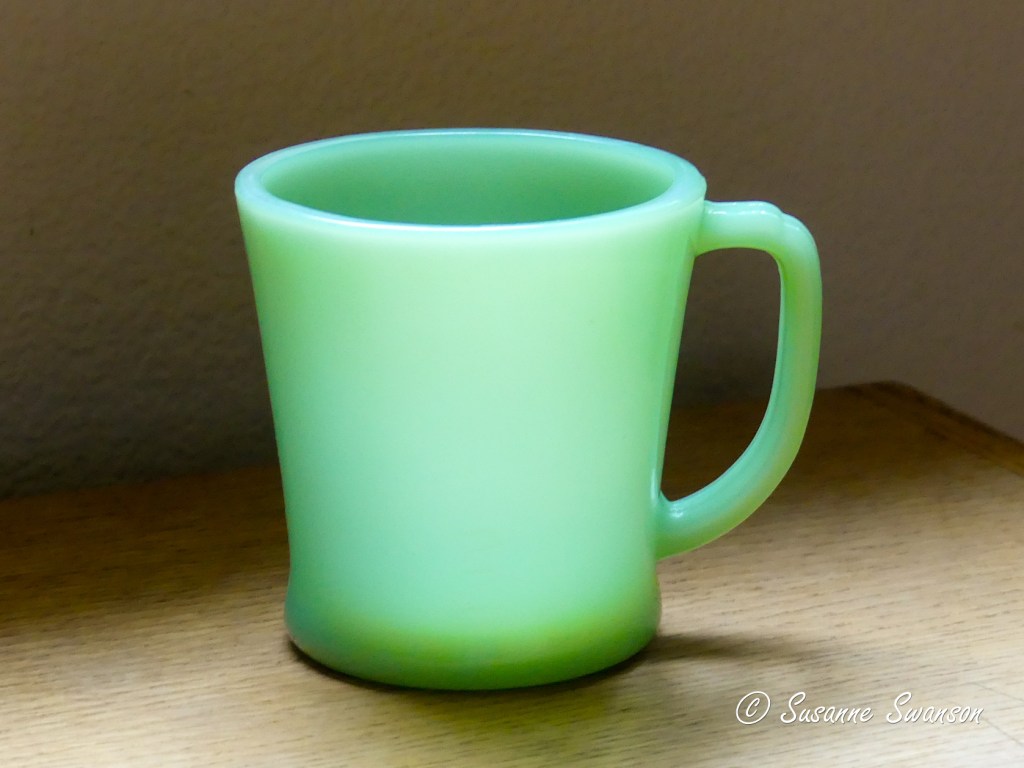
After many years I’m in the process of ‘de-collecting,’ selling off most of the dishes, bowls and mugs I’ve acquired. No place to display them! But I’m keeping a few of my favorites including the batter bowl, a gift from my mom, which my husband uses for making pancakes and waffles.

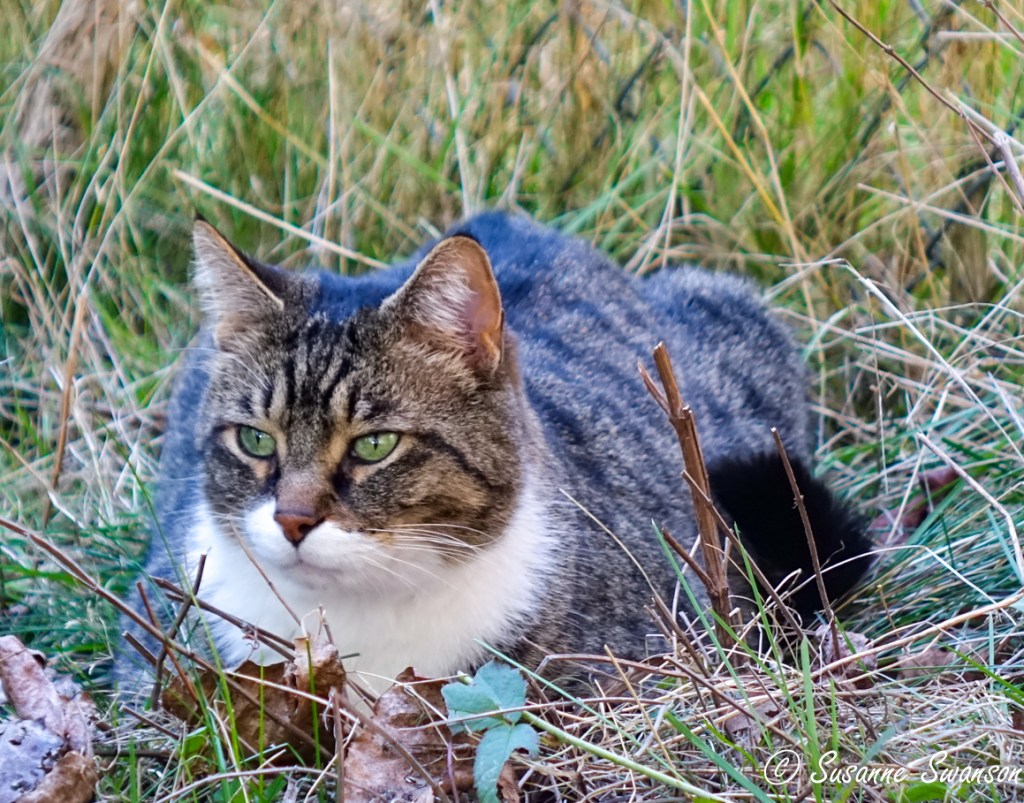
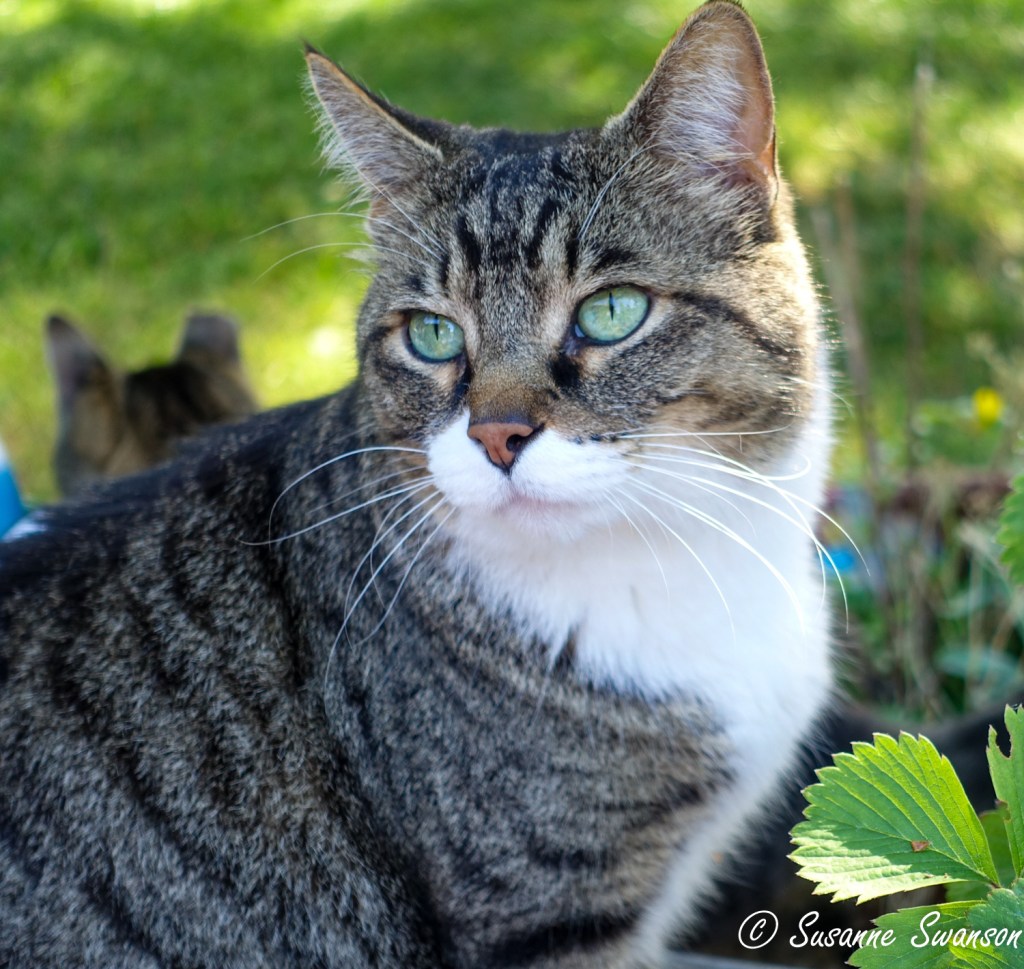
Next up are my two favorite felines – Tiger and Benji. Did you notice their green eyes?
I never miss a chance to showcase them. Why not? They inspired this blog.


I’ll close with some shots of the appropriately named Green River, which flows 65 miles from the western slopes of the Cascades before emptying into Puget Sound.
I took these pictures of the river at Kanaskat-Palmer State Park earlier this year. No matter how many times I see it, I’m always amazed at its gorgeous color!
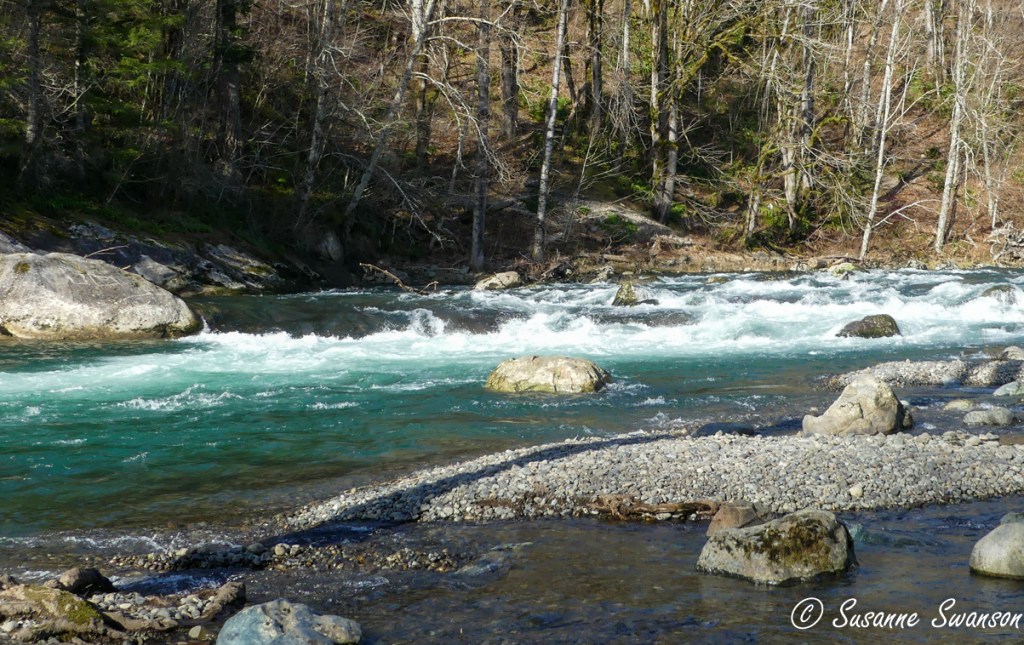

Kanaskat-Palmer is downstream from the Green River Gorge; I shared some of its secrets here if you missed it.
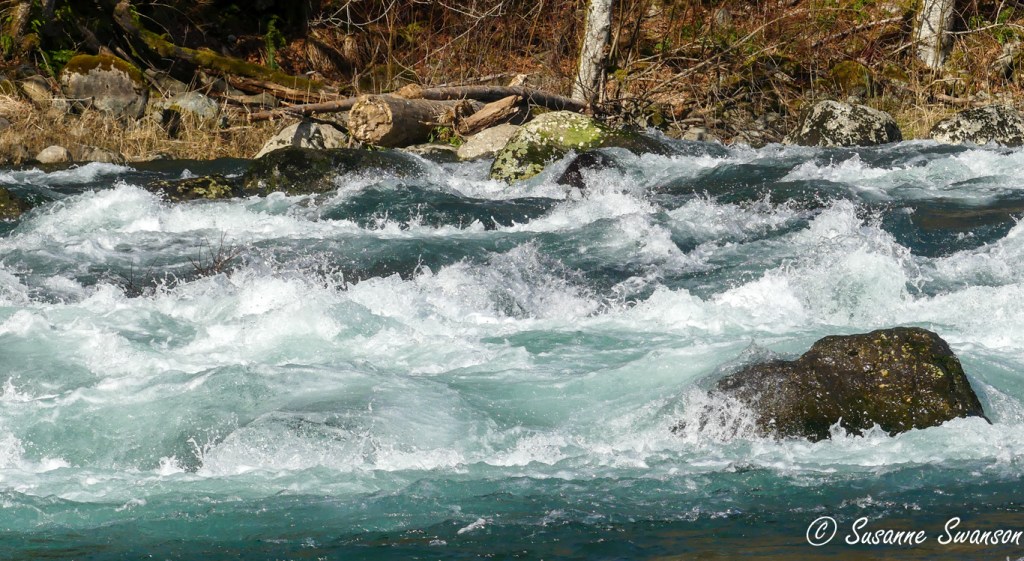
And that’s enough green for today!
Sharing with Sunday Stills Monthly Color Challenge, Jade Green.
~ Susanne
 Cats and Trails and Garden Tales