Cats and Trails and Garden Tales
Musings on cats, travel, gardens and life
Hummingbirds in the Garden
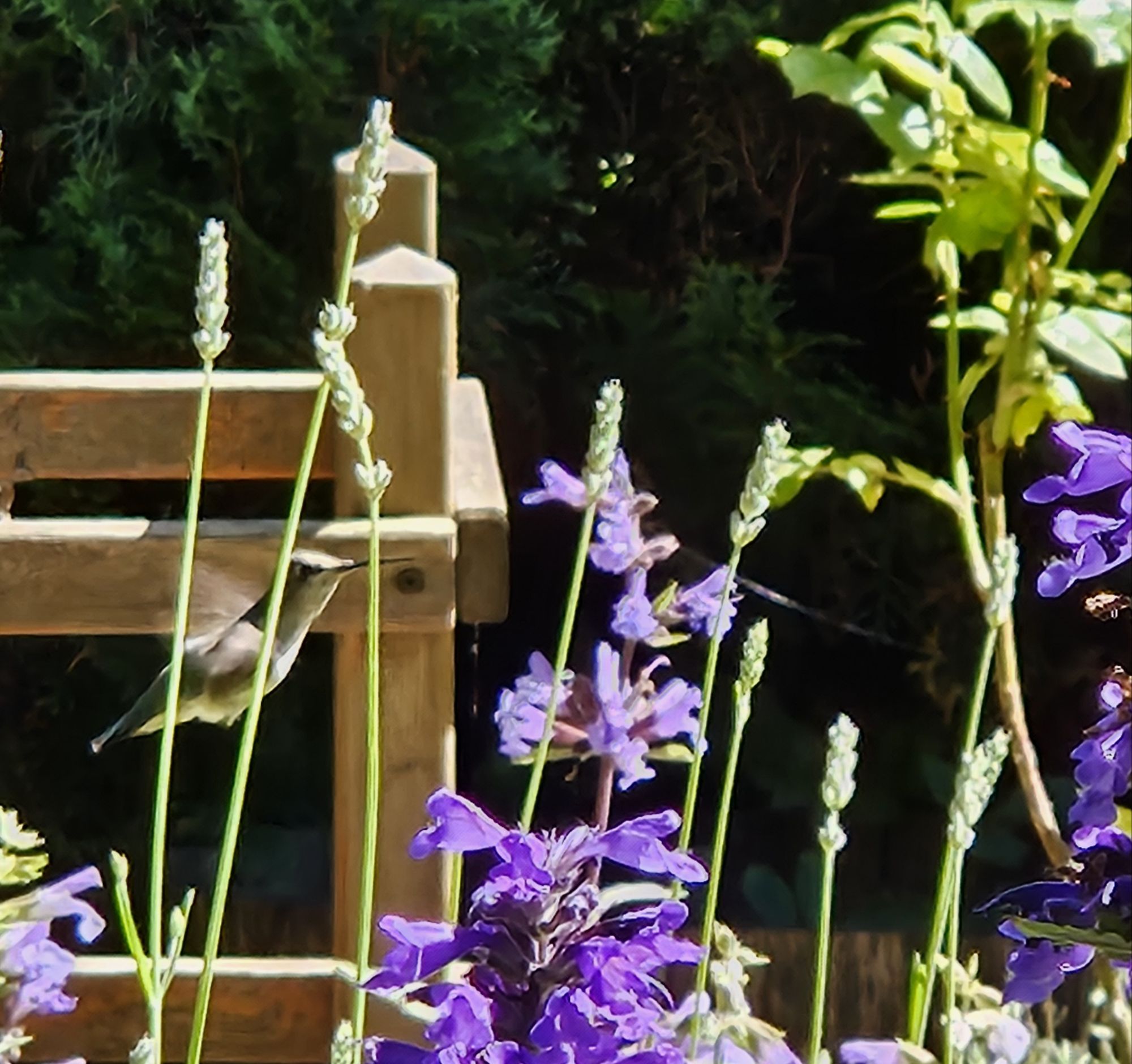
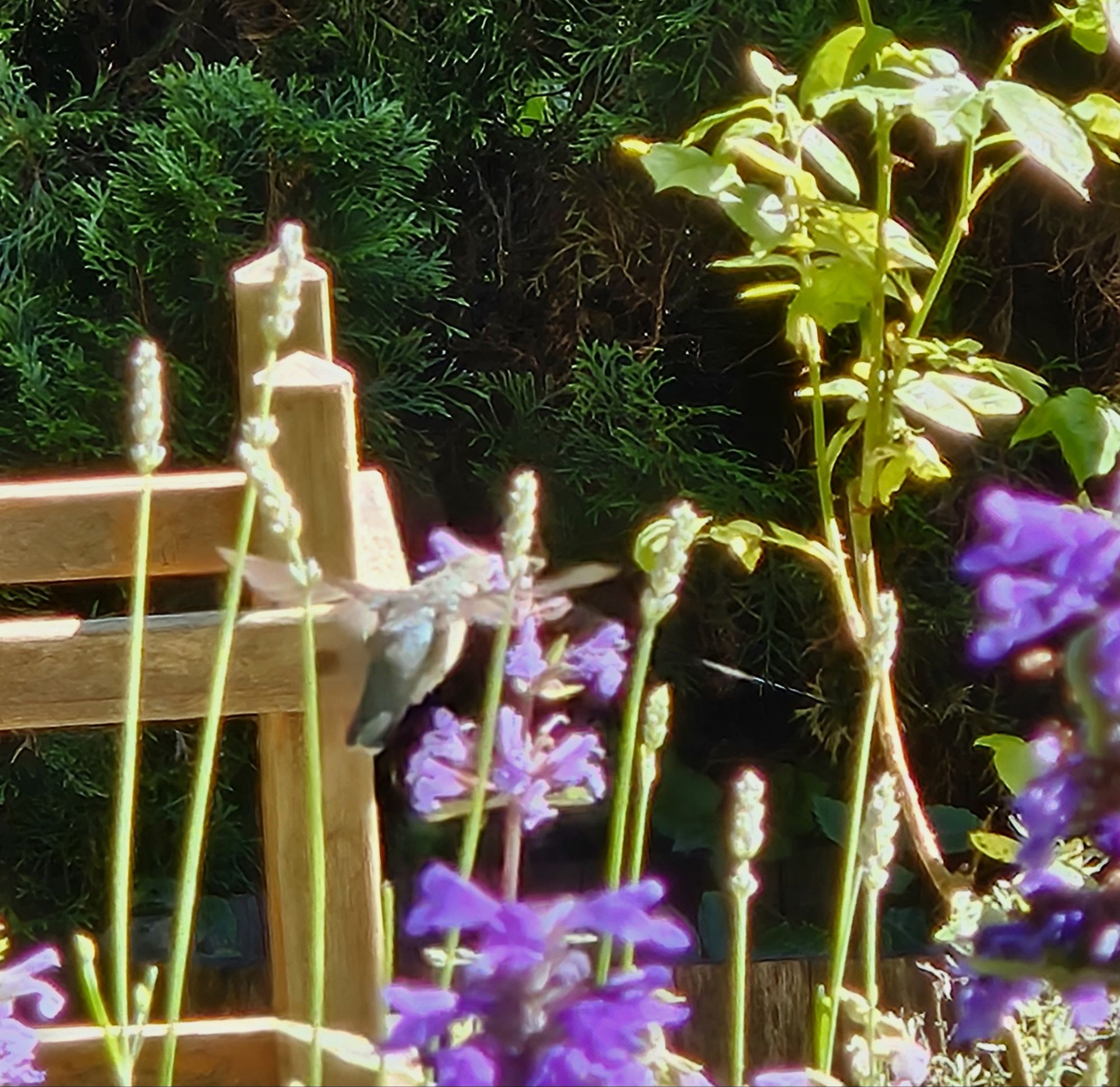
I’ve been waiting for the hummingbirds to drop by my garden beds while I have my camera in hand and yesterday, they obliged.
Sorry, so many pictures, I couldn’t pick my favorites.
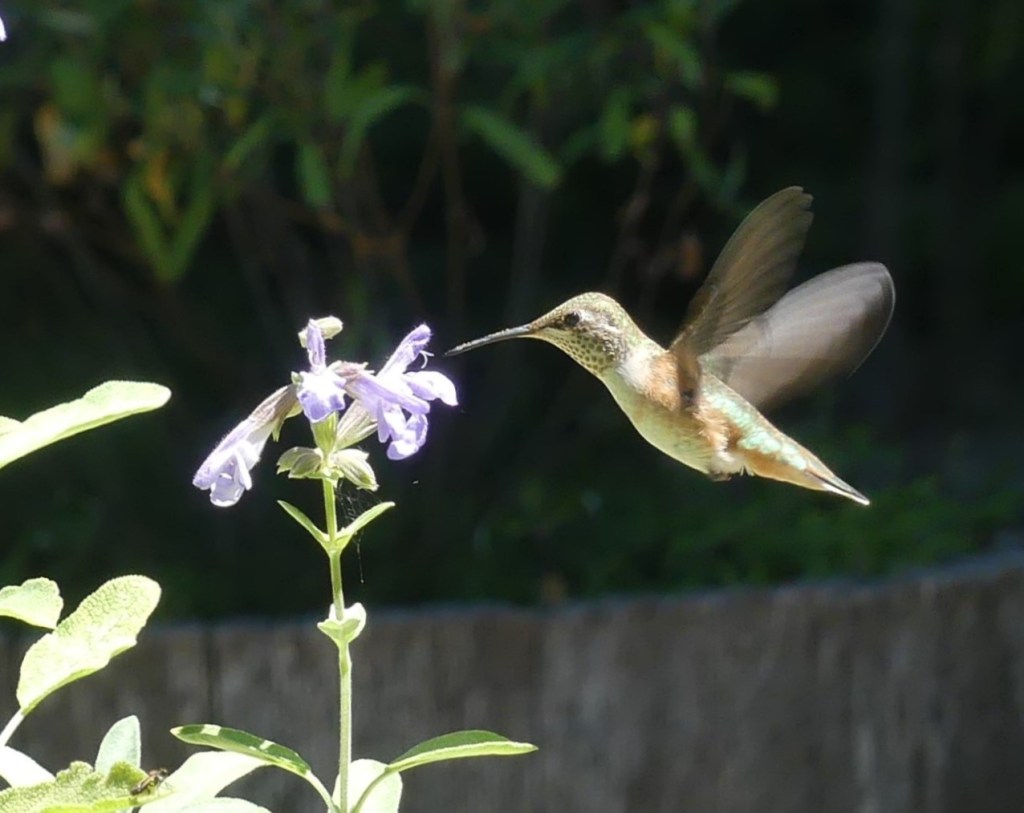
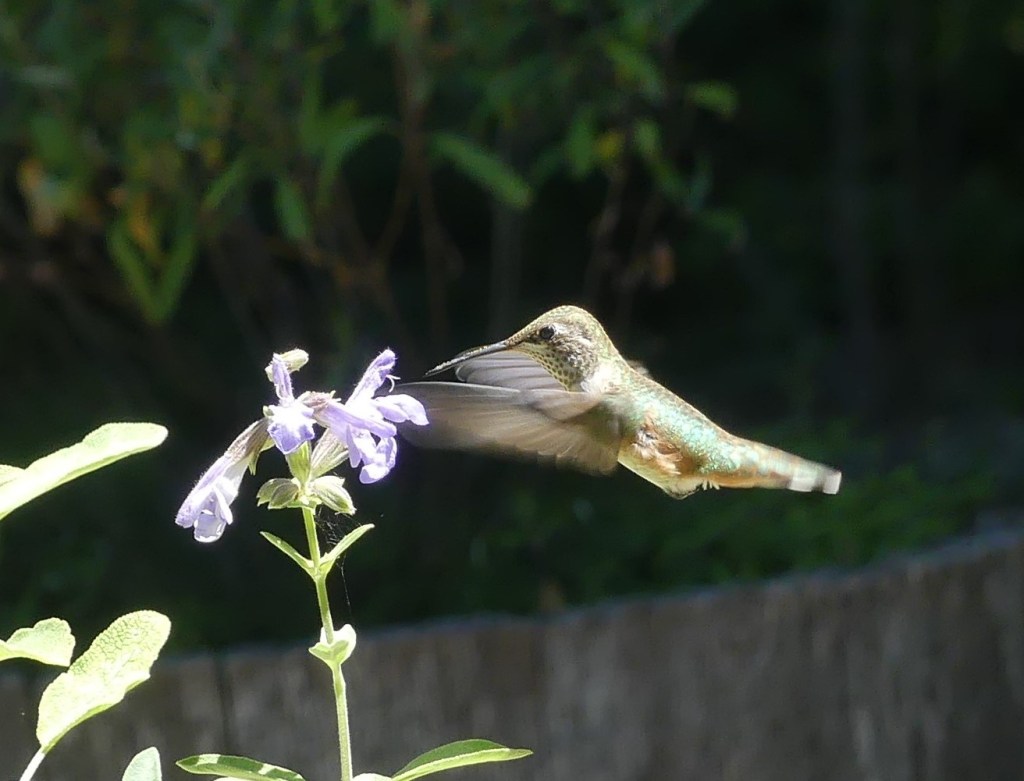


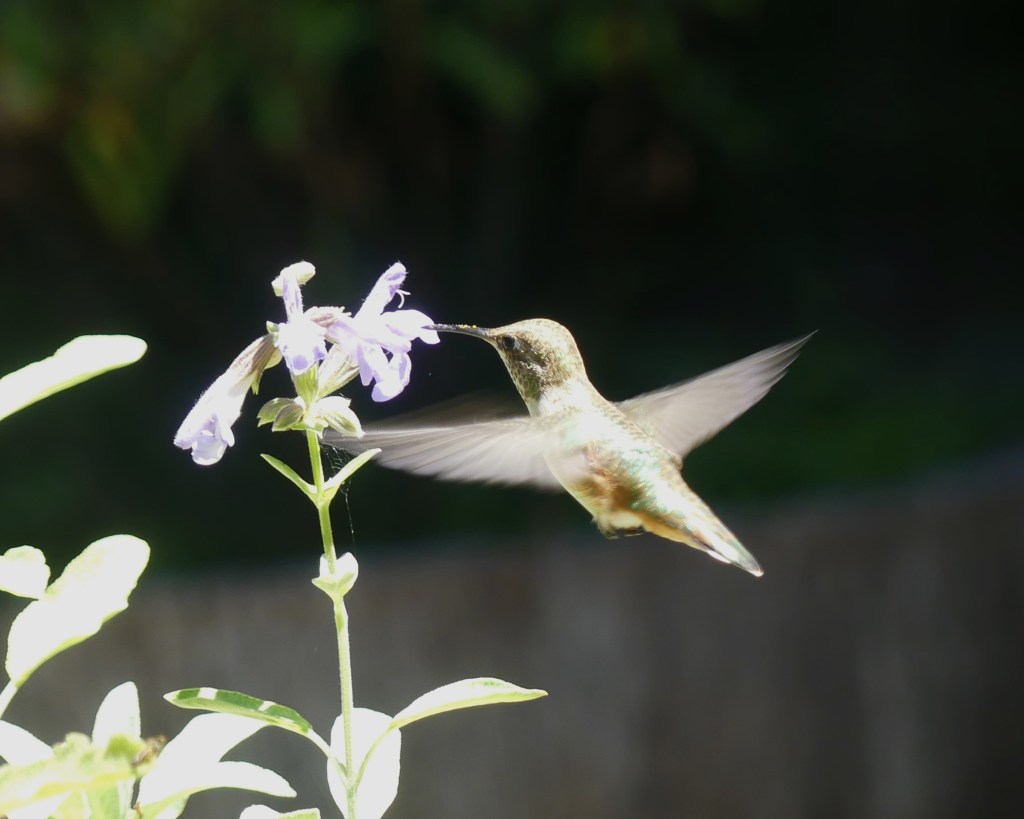
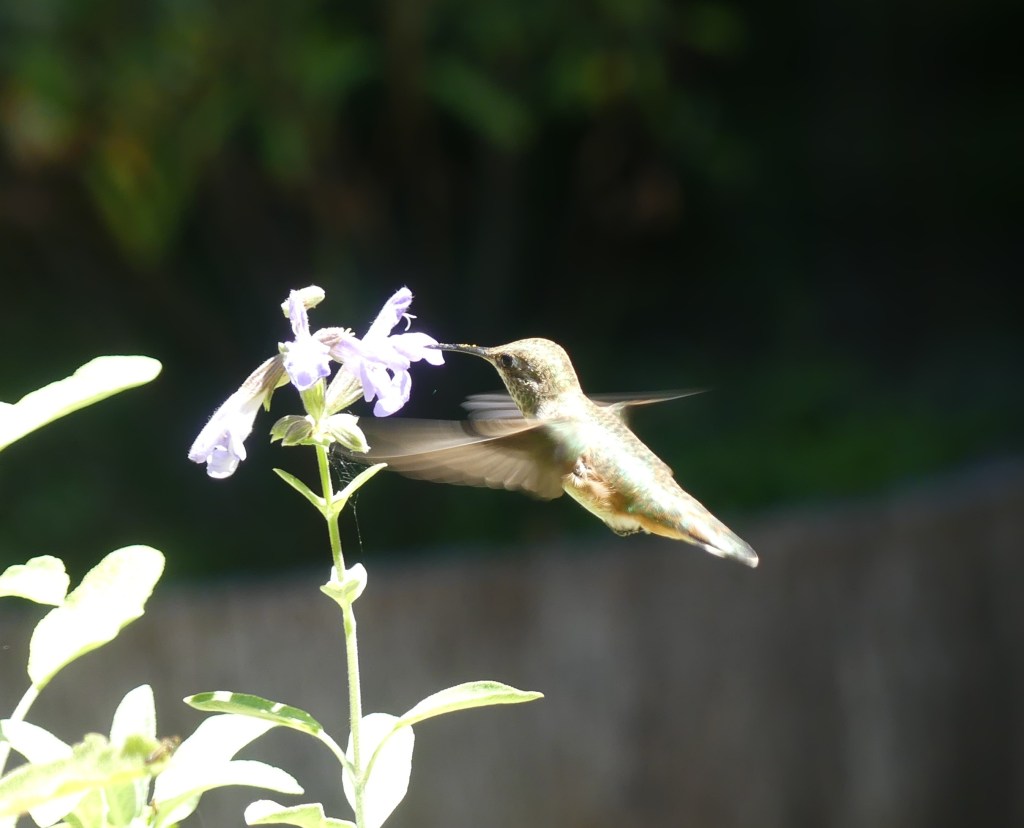

These last two are somewhat blurry but I liked the different angle.
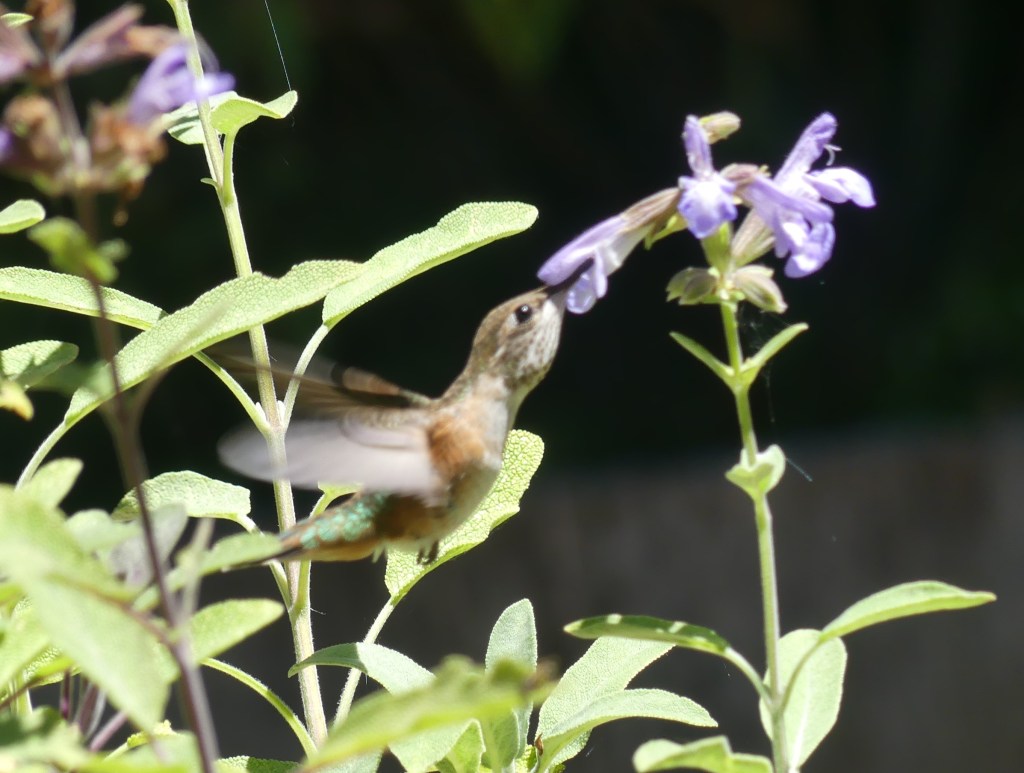
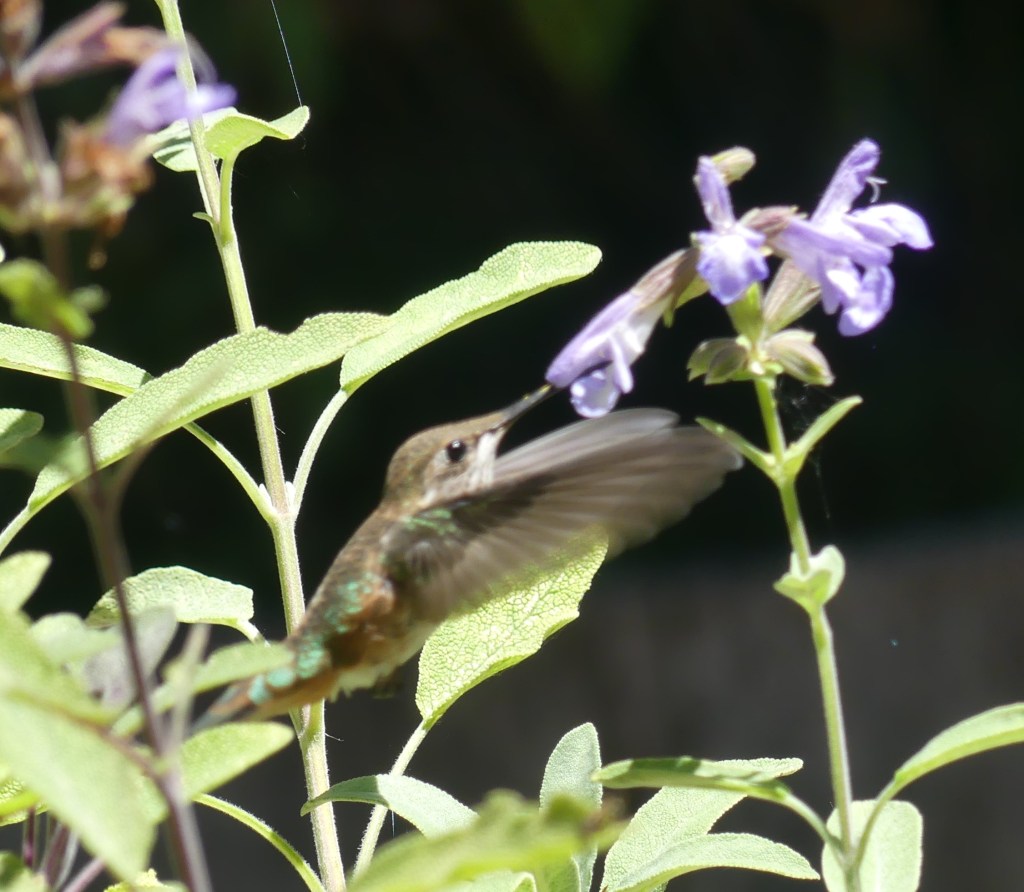
After watching, I began to wonder, do they feed until they’re full? Does the nectar ever dry up? Are they good pollinators? I did some research to learn more about their feeding habits.
Hummingbirds are specially adapted for eating nectar from flowers. They have long beaks and long tongues for consuming the nectar. The tiny birds can maneuver easily around flowers because they fly backward as well as forward and can hover in midair. This hovering ability makes it easy for them to feed from flowers.
Hummingbirds get nectar from plants, and plants get pollinated by hummingbirds. When the birds feed from flowers, they brush against them, and the pollen sticks to their heads and throats. As they go to the next flower to feed, they transfer some of the pollen to that flower. While bees and other insects also pollinate plants in this way, some plants have evolved so that hummingbirds are their main pollinators. Such flowers tend to have petals joined into long tubes and long stamens (the part of the plant that holds the pollen). Stamens are arranged in such a way as to brush against the hummingbird when it feeds on the nectar.
I also learned from other articles that nectar producing plants replenish their nectar daily, some even hourly. I don’t know for sure, but I do know the bees and hummingbirds visit my garden beds many times throughout the day, moving from flower to flower, perhaps after the nectar has run dry.
~ Susanne
Independence Day? Not yet for Benji
For the past month or so, we’ve been letting Benji out into the great outdoors of our backyard. You think he’d be happy with that, and he is, but what he really wants is freedom.
Freedom to explore outside the confines of the fence.

And though we keep blocking the outlets we are aware of, he keeps showing us more of them.
Bob built a new fence cutting off what appeared to be an escape route; he’s finding other ways to access the forbidden territory.
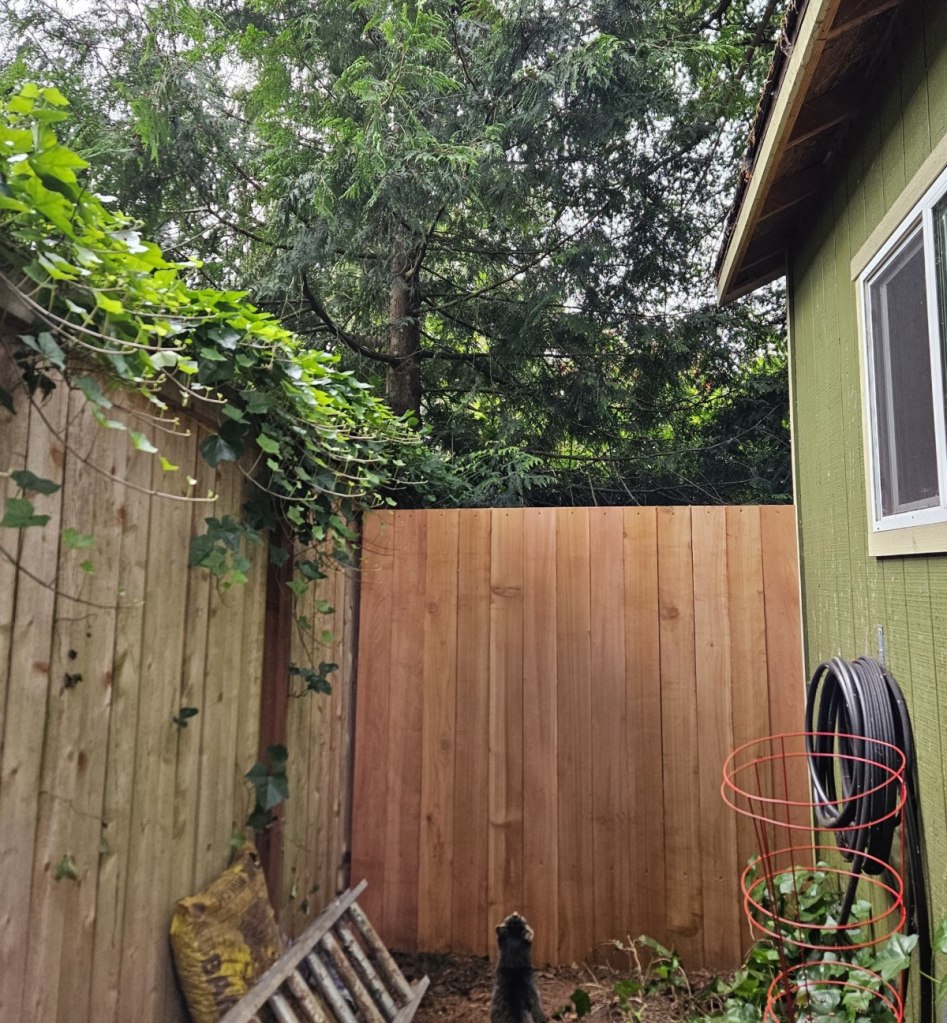

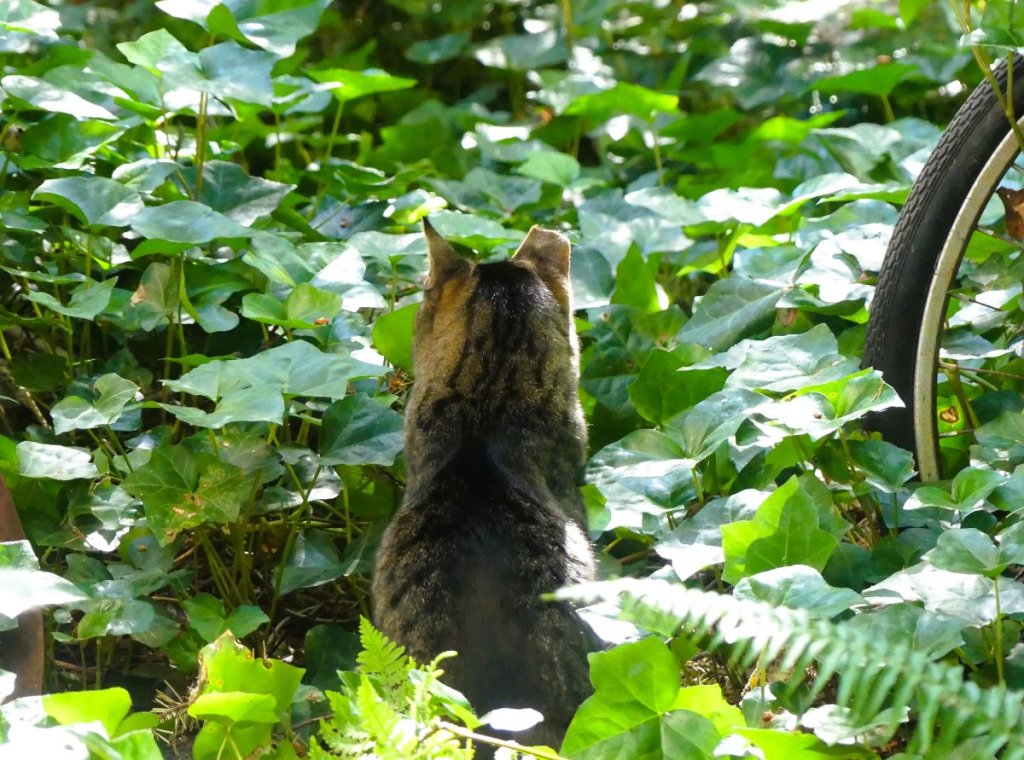
I watched him yesterday in the opposite corner that I thought was safe, but he disappeared a few minutes later into the neighbor’s yard. Thankfully, I was able to go out front and retrieve him; he’s willing to come when called.
I told Bob and he plugged what I thought was a gap in the corner. Unfortunately, minutes later, we saw Benji climbing up the fence post next to it, and if that’s possible, it’s futile!
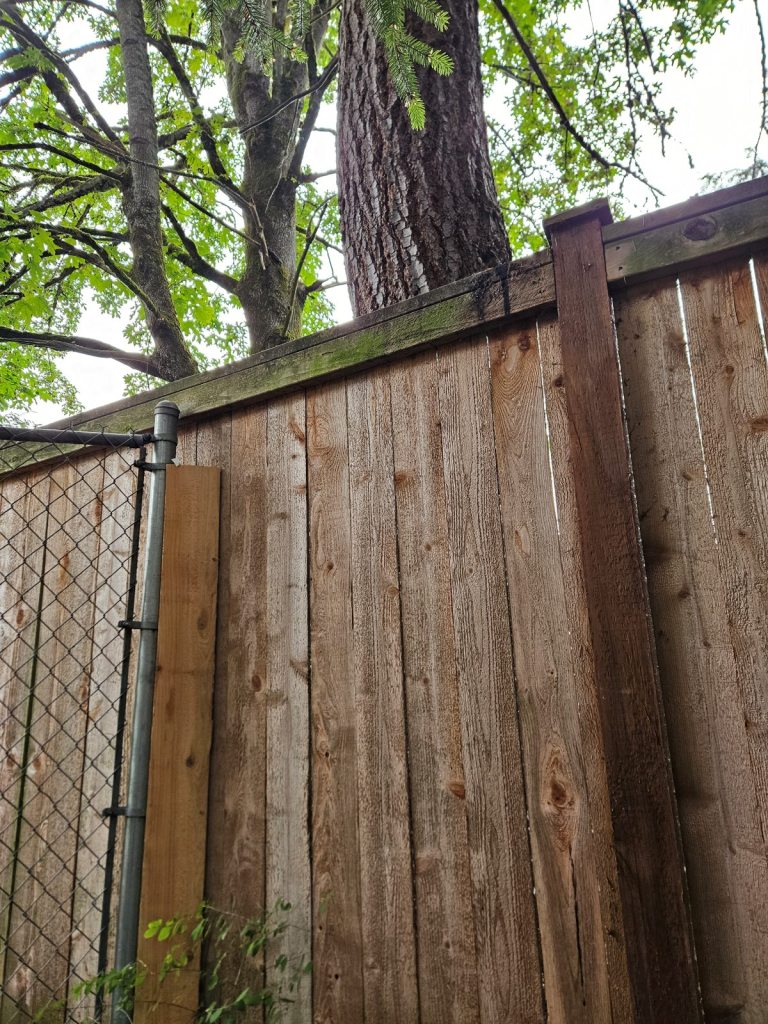
So Benji is back to normal, minus one leg. We’ll continue to do our best to protect him, but in the end, freedom will win, even though it’s fraught with risk. I guess it’s innate in the species. Maybe ours too.
Happy 4th of July!
~ Susanne
Landscapes of Olympic National Park – Staircase
On our recent trip to Hood Canal, we ventured into a remote corner of Olympic National Park, that surprisingly, we’d never been before – Staircase. We drove south on 101 from our campsite at Dosewallips State Park to Hoodsport, then west, past lake Cushman and into the wilderness on a rugged logging road, full of potholes.
It was worth it.
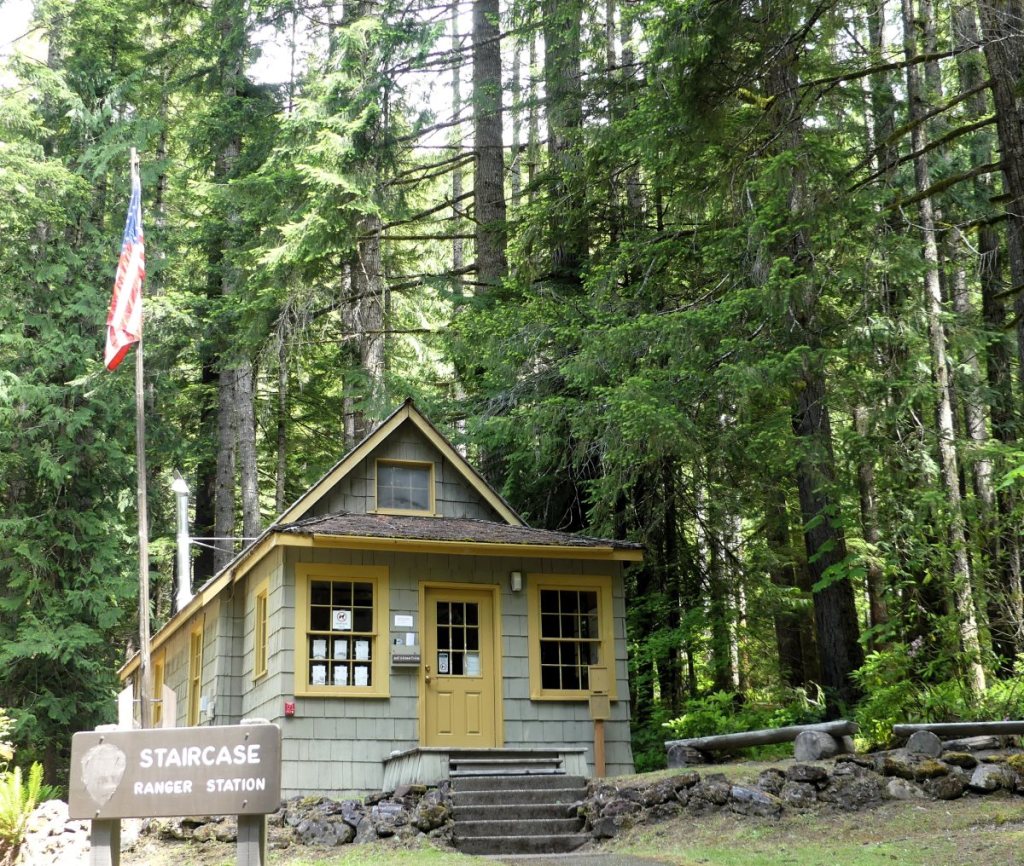
We had our sack lunch with a view of the Skokomish River, before heading out on the Rapid Loops trail.


The trail through the forest was marvelous and well maintained.

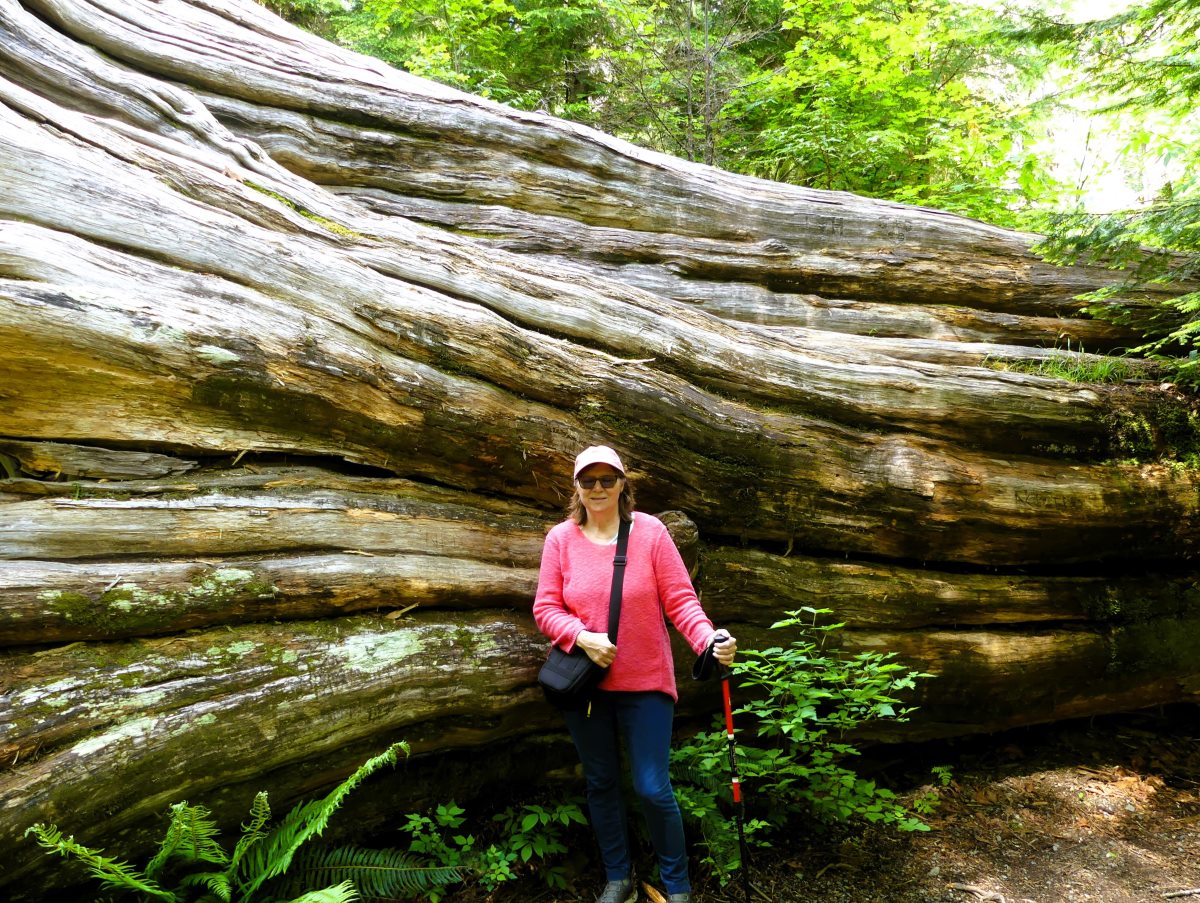
We stopped to pay our respects to a giant fallen cedar tree, 14 feet in diameter.


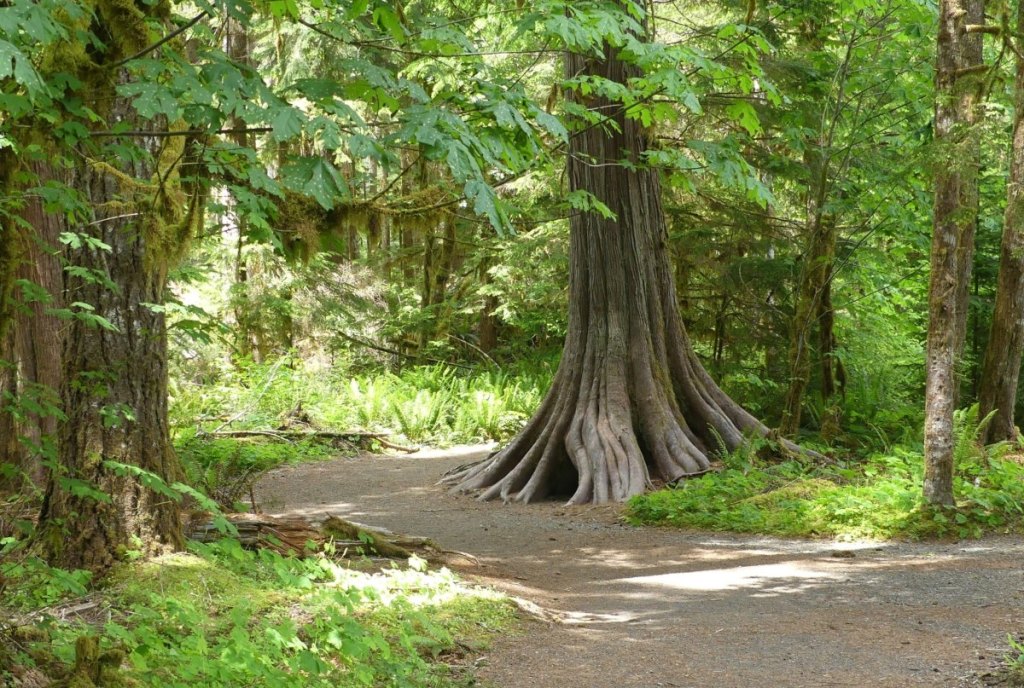
There were plenty of other cedars still standing, including this one with the beautiful feet.
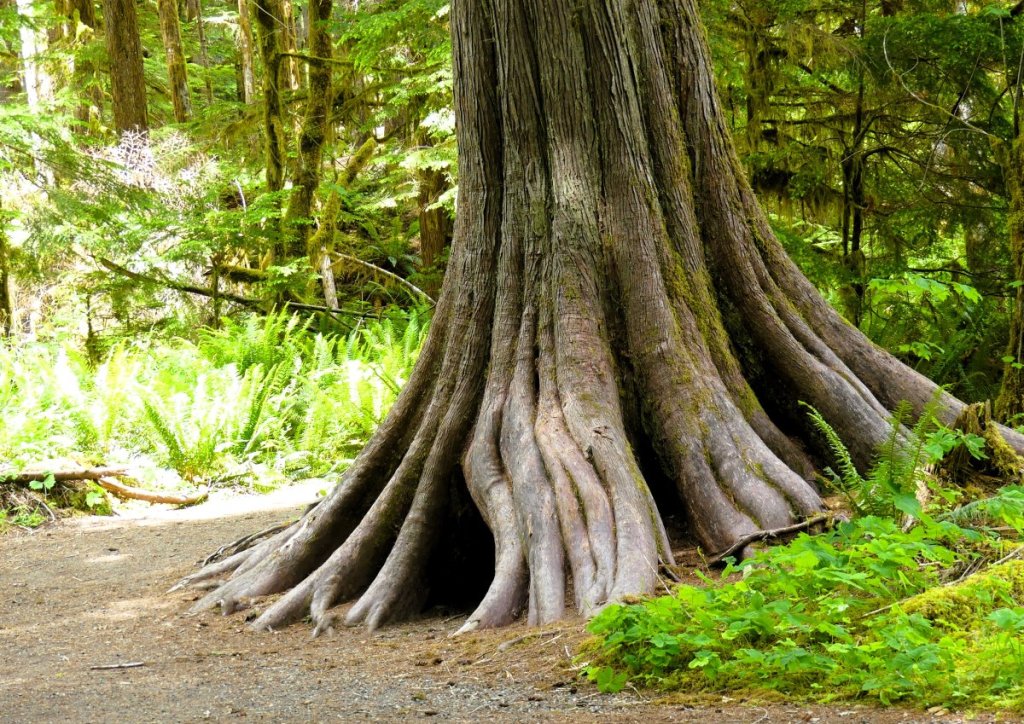
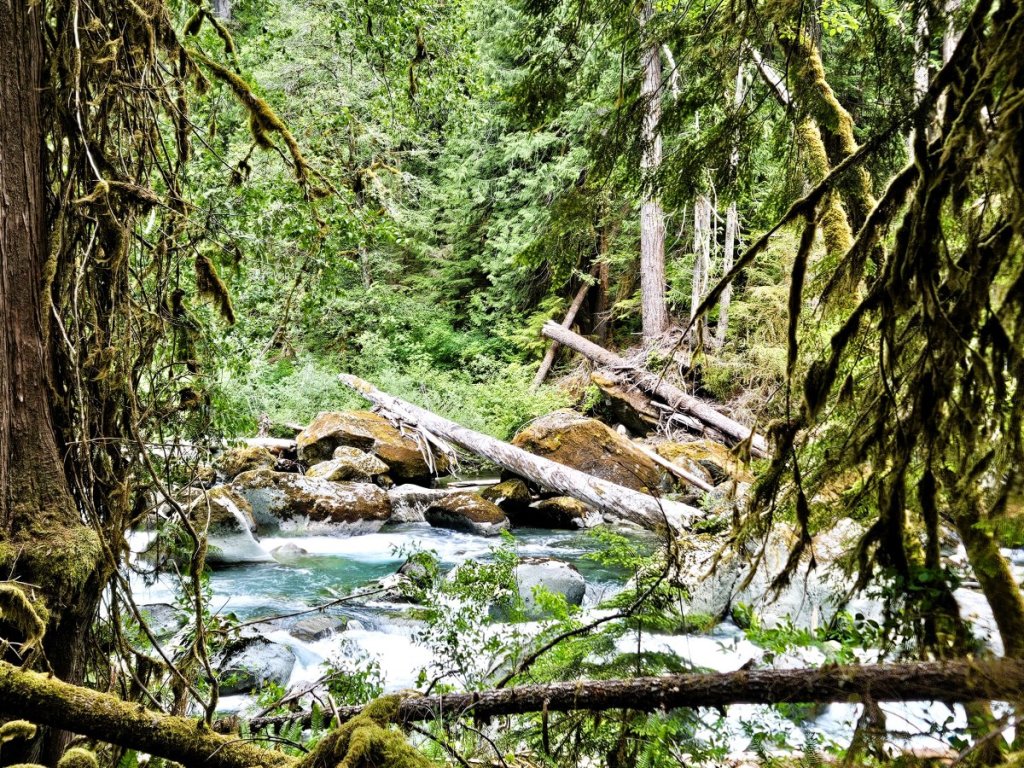
It wasn’t long before the trail began to follow the river.


Glimpses of the rapids through the trees, to me looked rather like art.
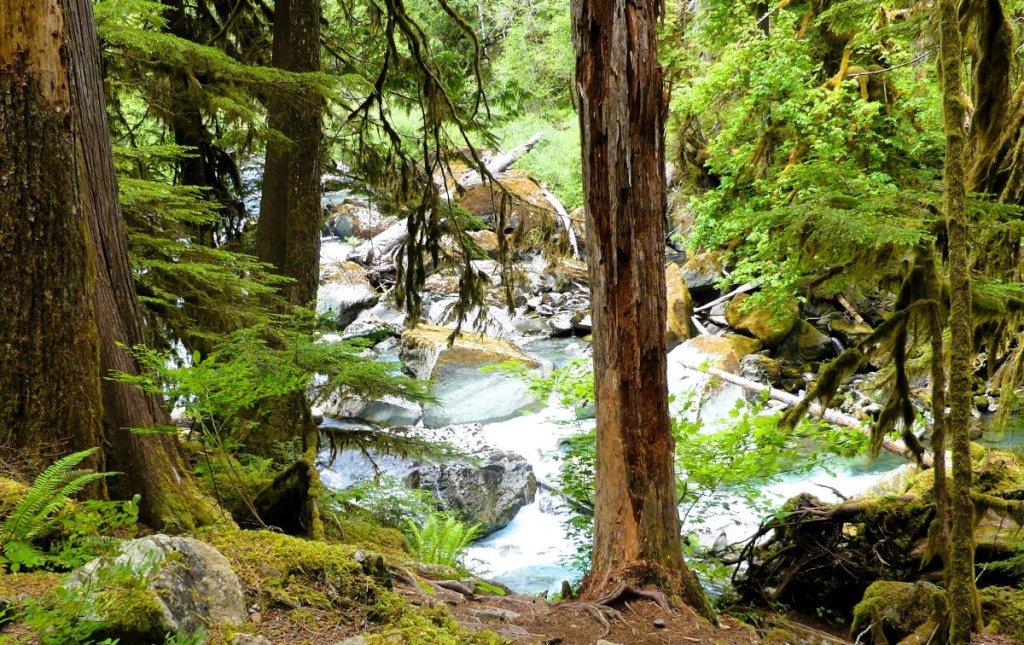


We arrived at the suspension bridge at the top of the loop and paused for more river views.
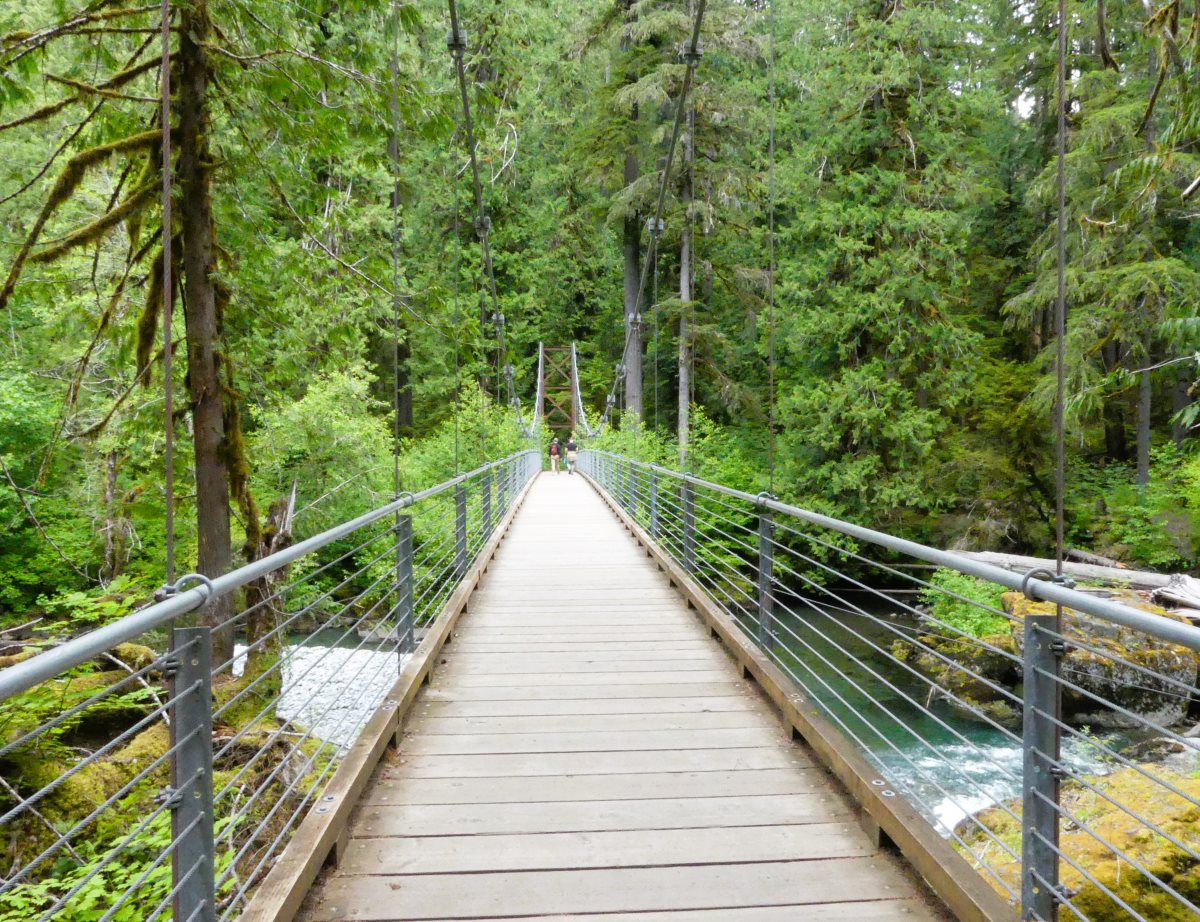


The trail back from the other side was easier and downhill, so it wasn’t long before we arrived back to where we started and headed down the bumpy road to highway 101 and Hood Canal.
We’d heard of ‘the Staircase’ for years but never visited, preferring the westernmost areas of the park with the lakes and beaches. Surprisingly, (or not, for it’s truly wilderness,) there’s no direct connection to the west side from Staircase (You can see Staircase on the lower right section of the map from the Olympic National Park website, here.)
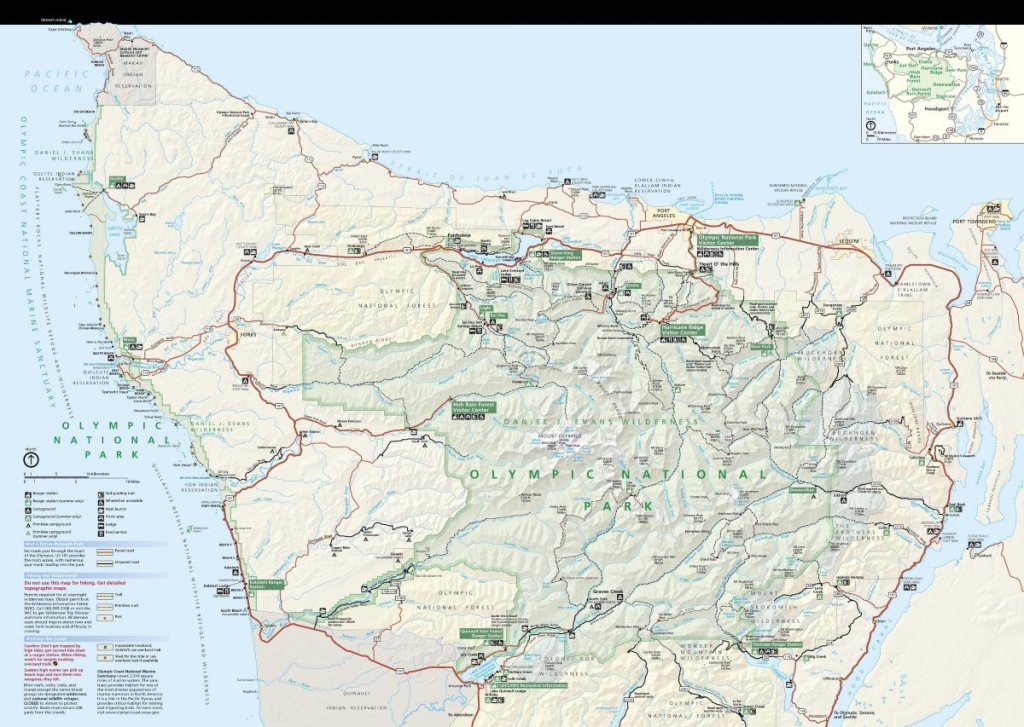
Its closer and just as beautiful and there are other hikes we’d like to take.
Now that we found it, we’ll be back.
Sharing with #Sunday Stills, Landscapes of the Great Outdoors.
~ Susanne
Now that was a hike! Big 4 Ice Caves
Never was there such a payoff for such a short hike, 2.2 miles round trip!
A drive north on the Mountain Loop Highway brought us to Big 4 Mountain, known mostly for its (dangerous) ice caves. I remember hiking to those caves once on a very, rainy day, sometime in the last century, but totally missing the mountain above shrouded in clouds.
Not this time; it was clear and sunny, a perfect day for a hike.
We first stopped for a look at the mountain, at the site of a resort that stood here back in the 1930’s. Only part of the old fireplace remained standing.

We made our way to the trailhead, warned not to venture near or into the caves, which we did not intend to do.

The trail took us across the Stillaguamish River and into the forest.


It wasn’t long before the face of the mountain was in full view, and even these seasoned hikers were a bit awestruck.


We stopped at the end of the trail not venturing further out, though some did.


Look closely and you can see tiny people. The ice caves were still buried under the snow, not usually visible until August.

If you’re ever in the neighborhood (that would be in the great state of Washington,) I highly recommend you swing by Big 4 to see it for yourself. Even without the ice caves visible, the mountain is a sight to behold.
~ Susanne
Mornings in the Garden with the Cats and the Birds
I’ve always enjoyed spending time outdoors, in my garden, and lately it starts earlier in the day.
As a tripod, Benji must be supervised outside, and I’ve been yielding to his demands first thing in the morning, only fair since he lost his night out privileges (that got him into trouble in the first place.)
I make my coffee, grab some reading material, phone and camera, and settle down for an hour or two. Mornings are special with a cool breeze and birdsong; don’t know why I didn’t think of it before.
So what’s in my garden? Plants, of course and lots of them, a tangled mess of herbs in my garden beds to be enjoyed by cats and birds alike.

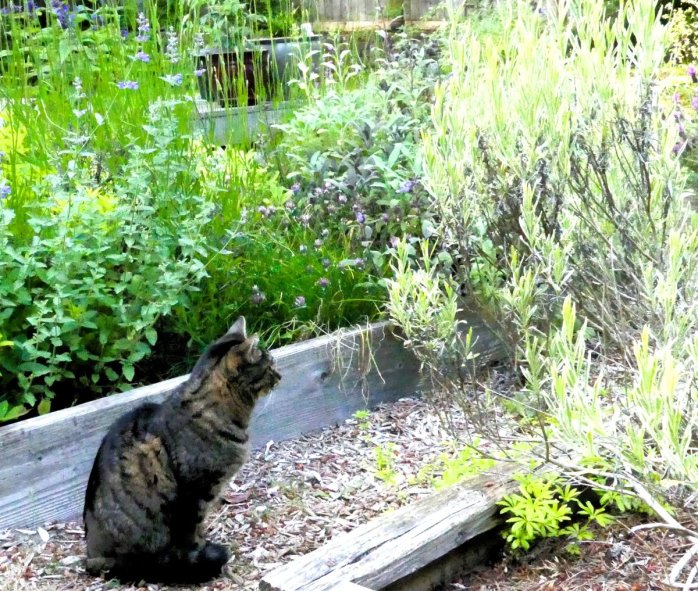
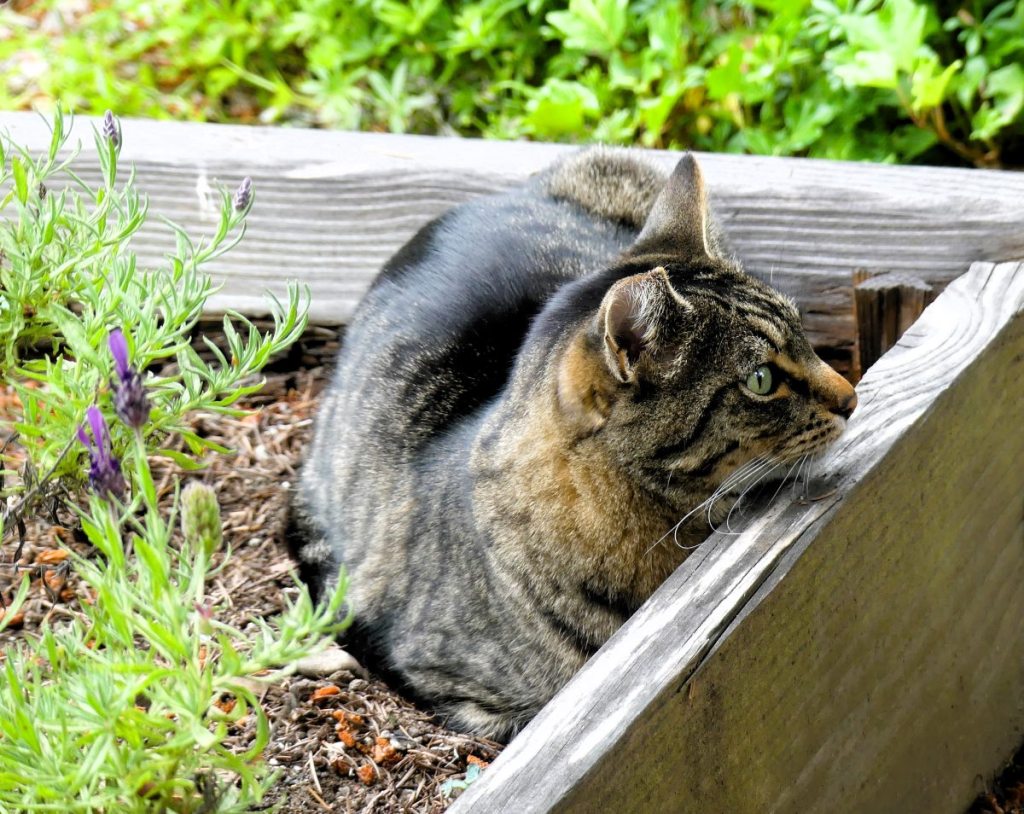
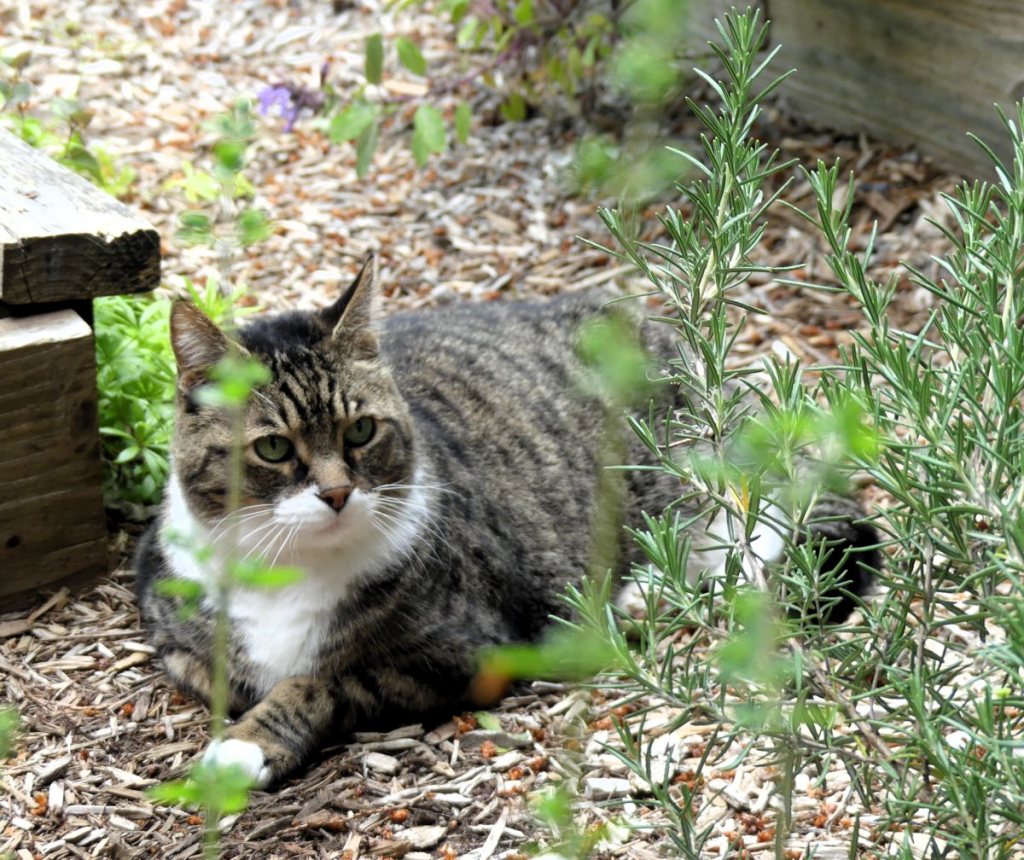
Next to it, is the shady corner bounded by the garden shed, trees, and a stream, built by my husband.
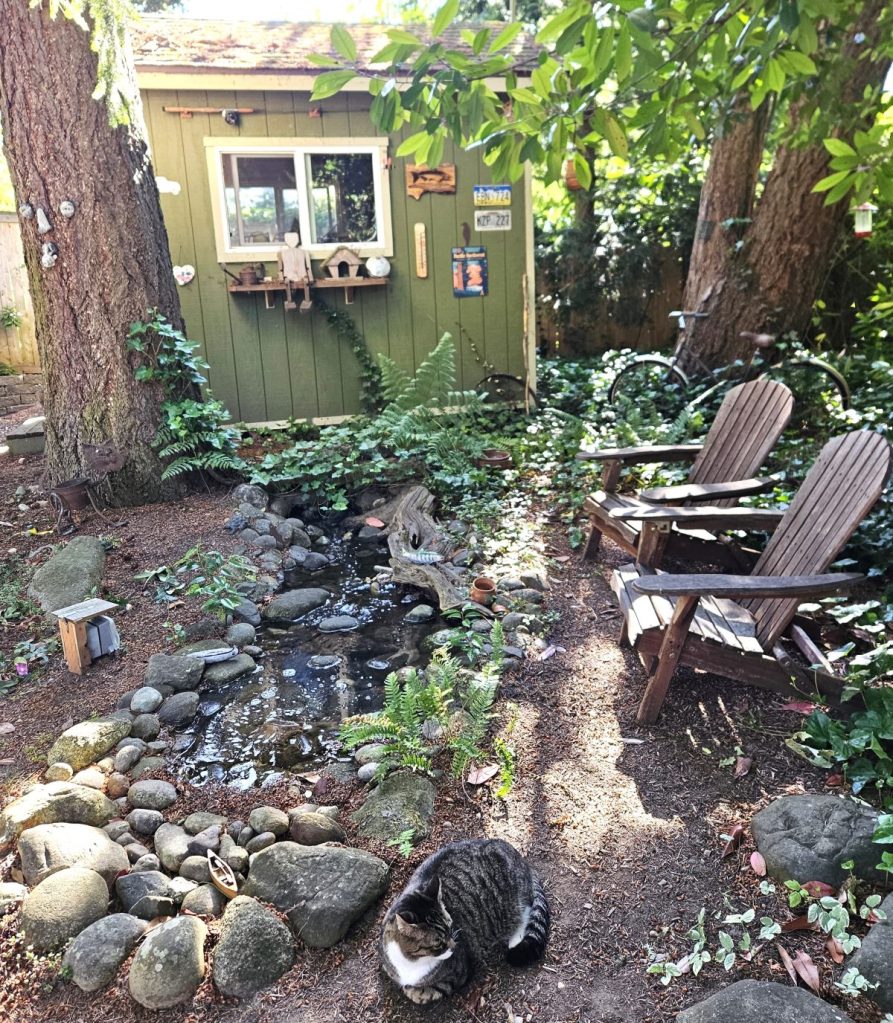
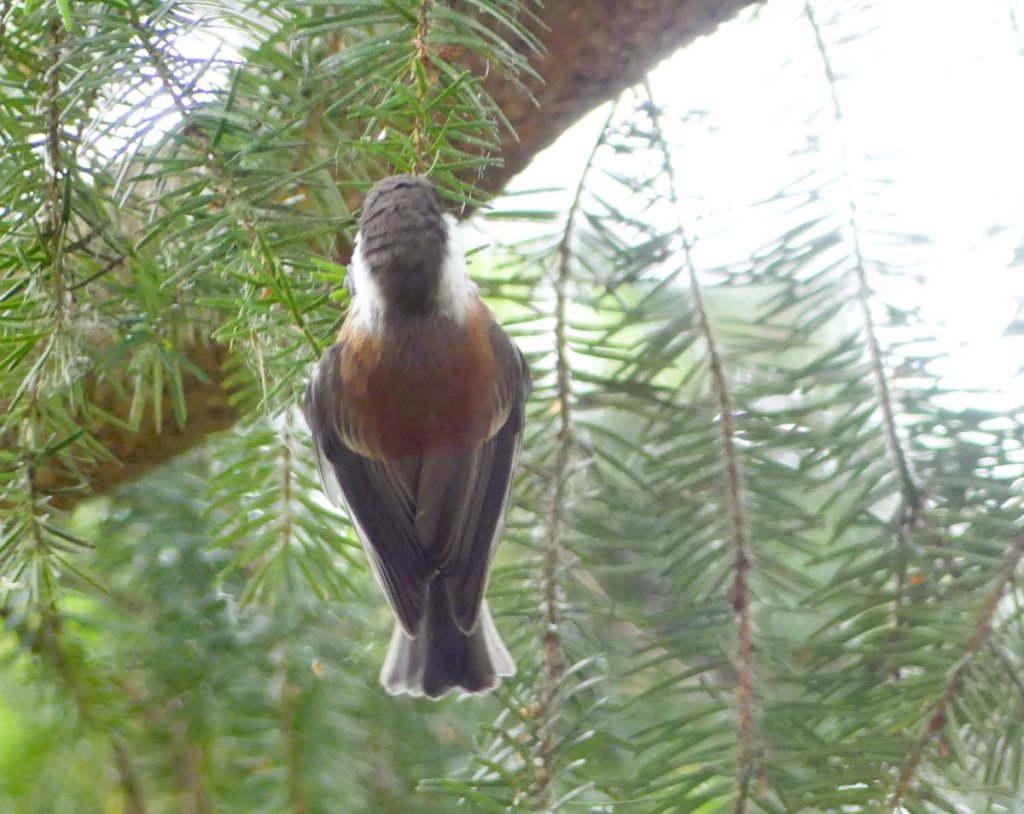
It’s a favorite spot of the birds. This chestnut-backed chickadee hangs from the branches of the Douglas Fir above, while feasting on insects.
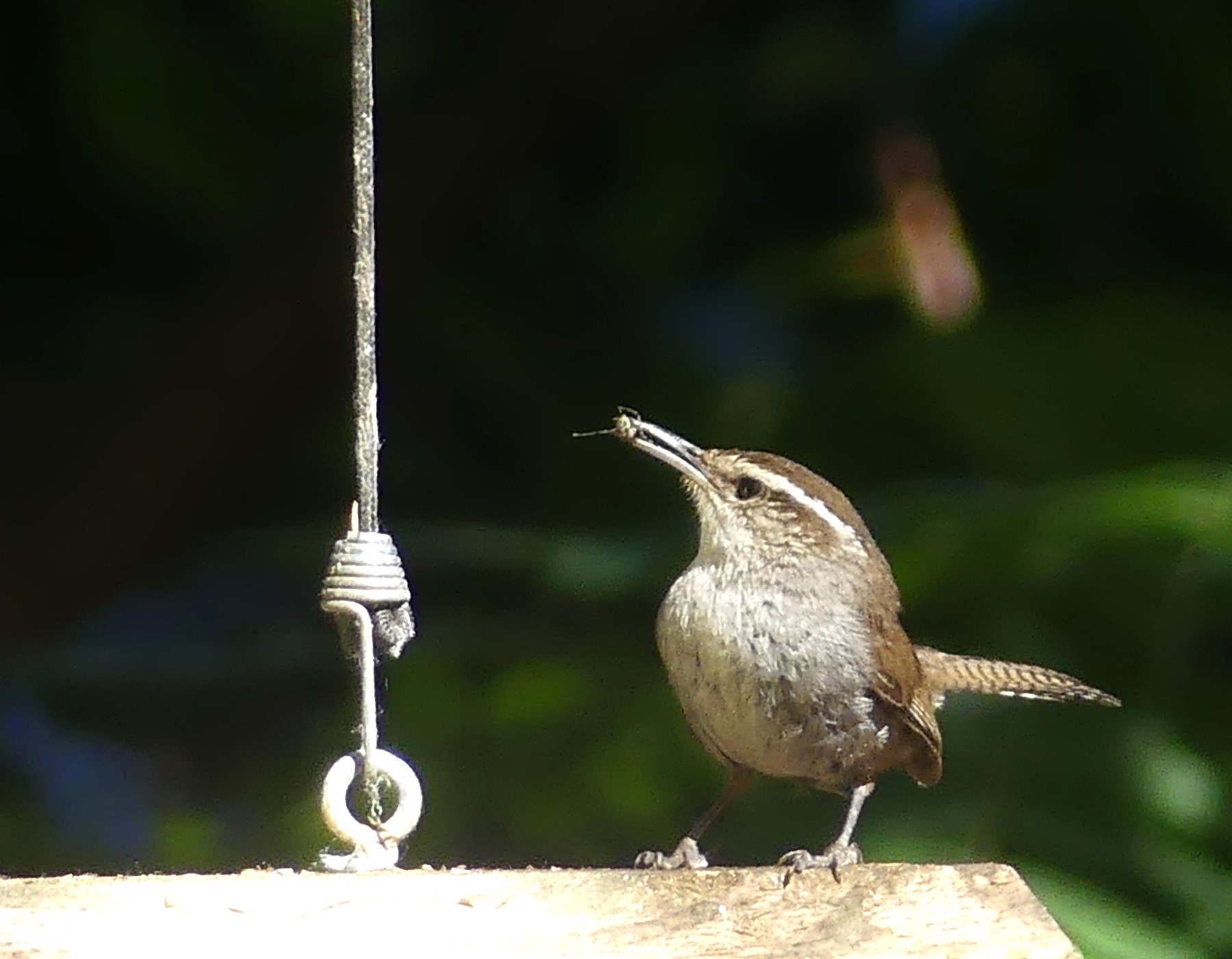
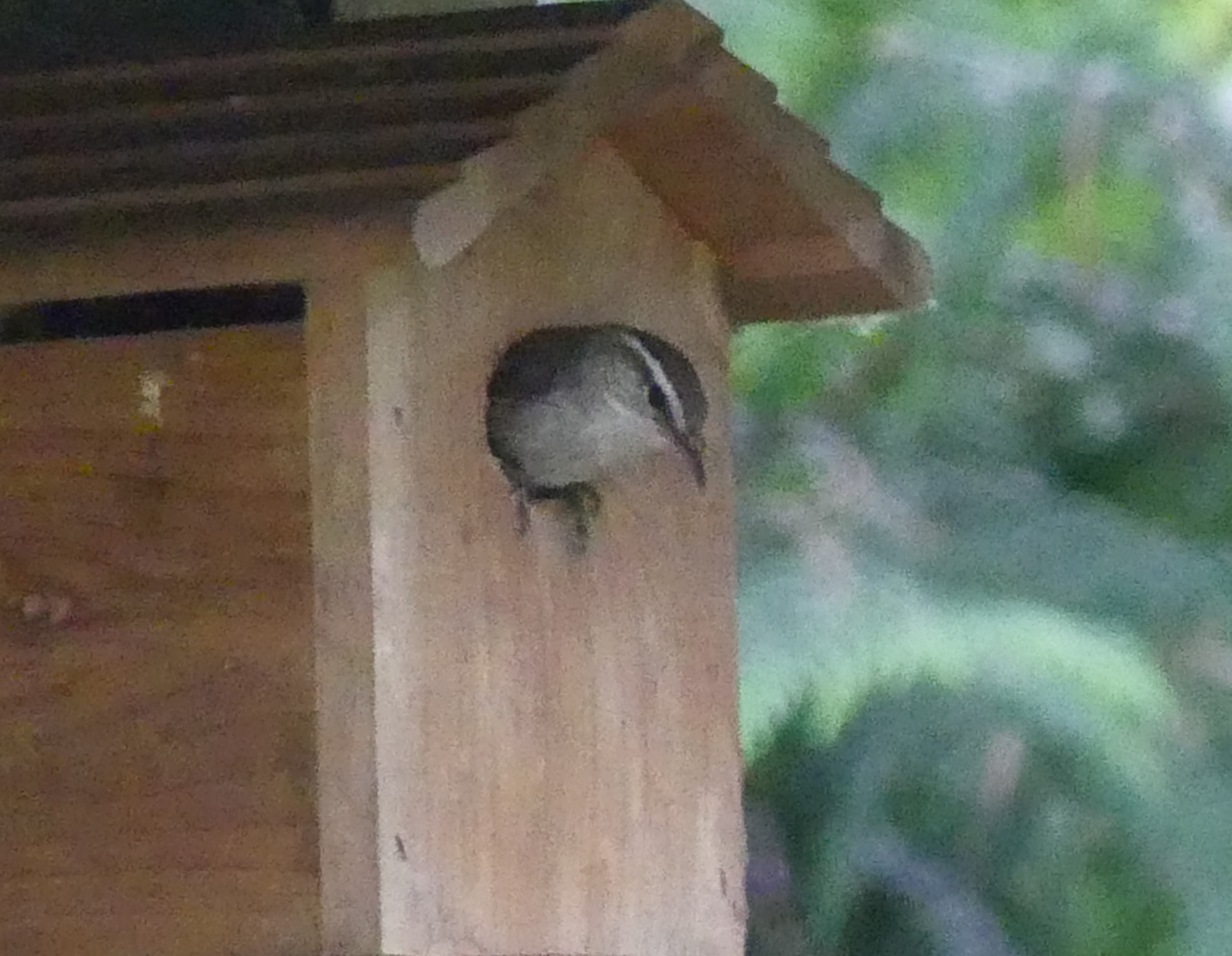
Recently, I caught sight of a wren, collecting dinner for the young back in the birdhouse. I hadn’t even realized they’d been nesting in there.
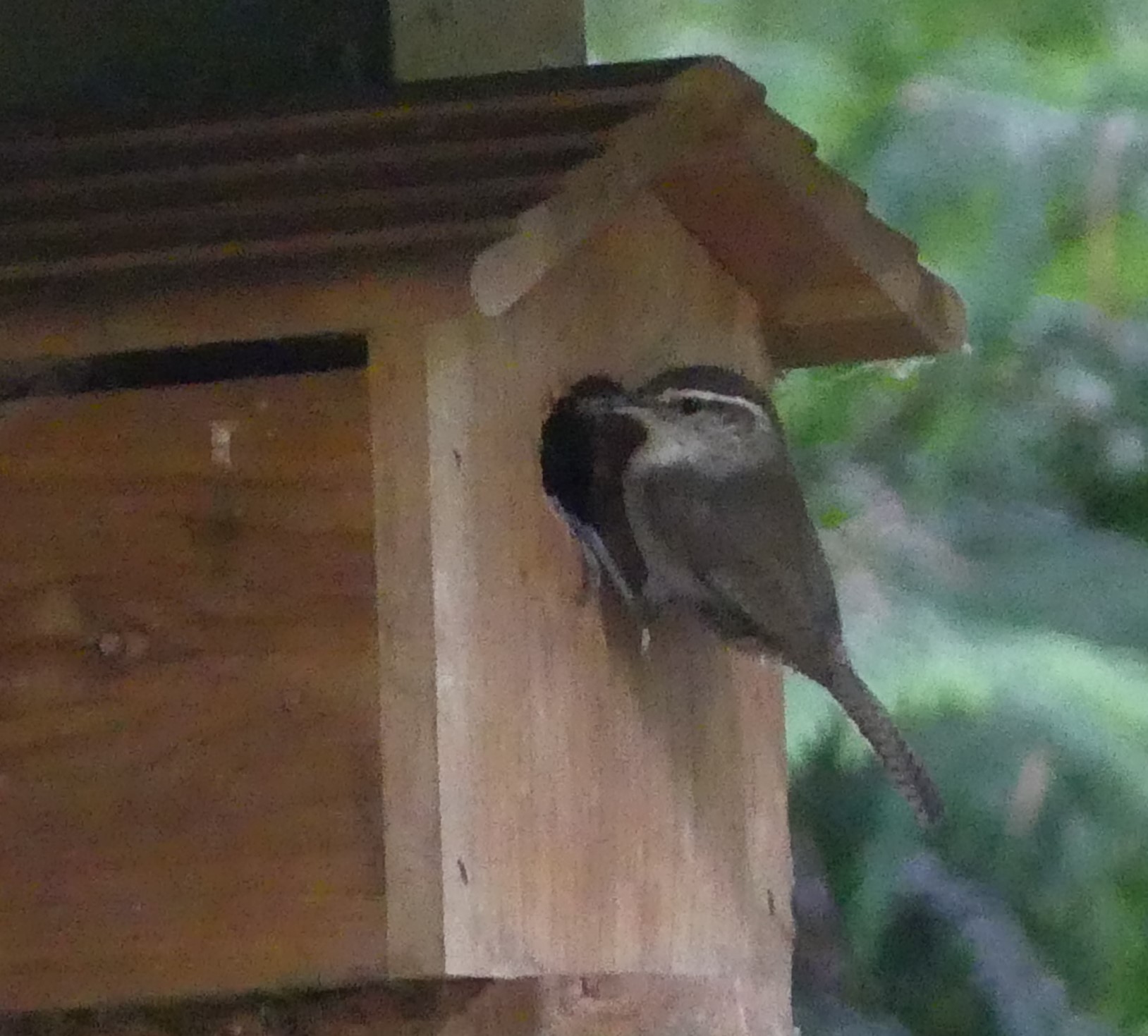
All these are regulars as are the hummingbirds that visit throughout the day, starting at the feeder.
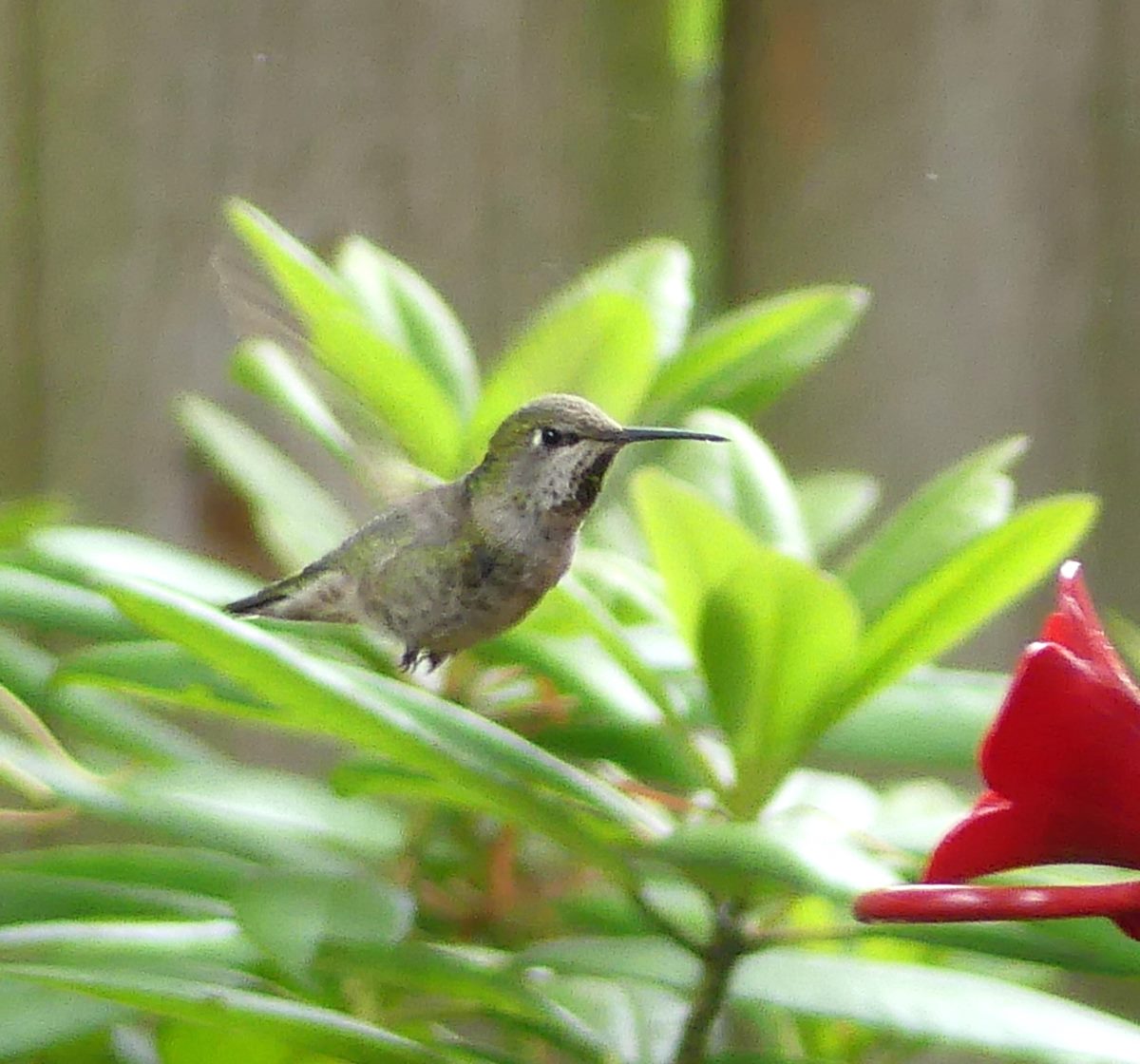
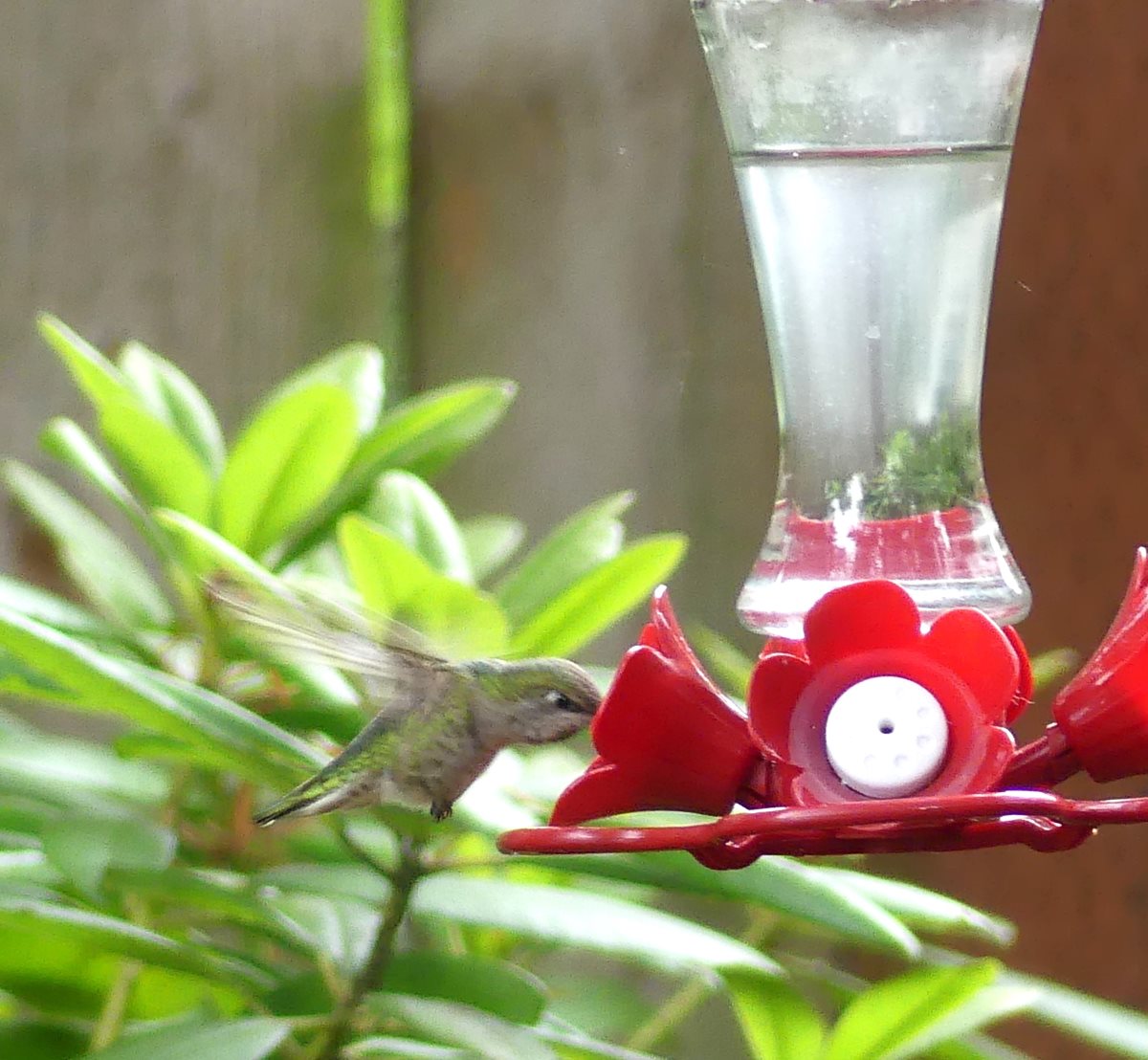
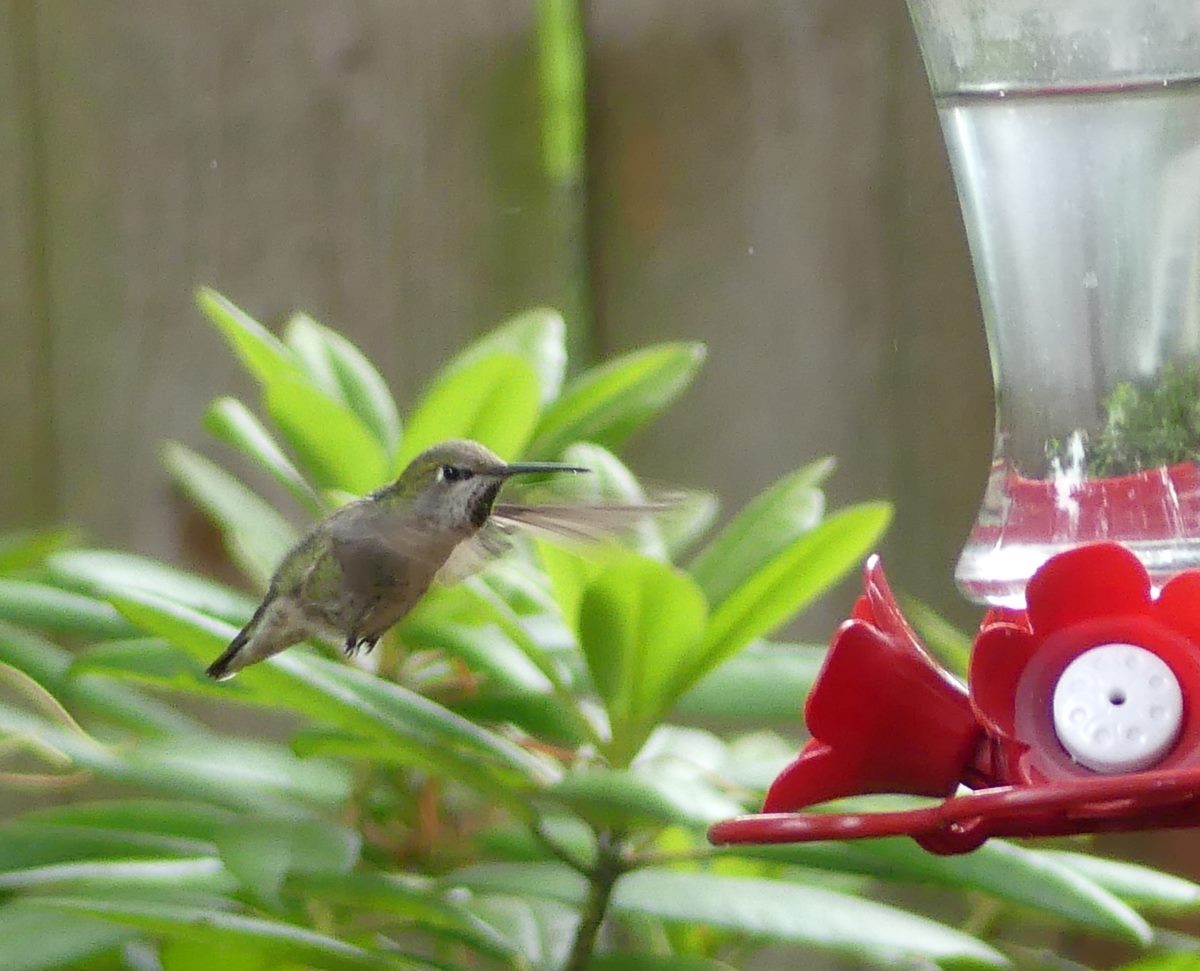
Afterwards they swing by the garden beds and hover, so delightful to watch, as they move about from blossom to blossom. I’m often sitting nearby, unfortunately without my camera. At least I had my phone with me this morning to capture them as best I could.
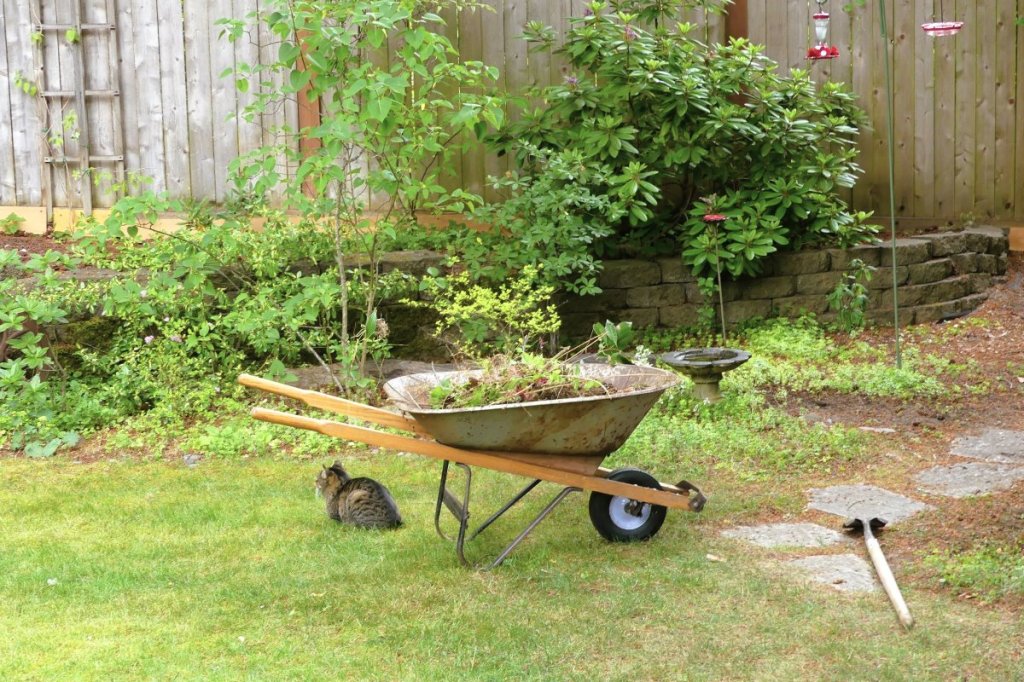
Finally, I look around and see work to be done and dig in; amazing what a little bit each day can do.
Sharing with Sunday Stills, #Plant Life in the Great Outdoors.
~ Susanne
Thank You from Benji
When my sweet boy was injured and became a tripod kitty (here if you missed it), I received many wonderful well wishes from cats and humans alike.
“Tell them, I appreciate it, Sue.”

“Absolutely, Benji. A big thanks to all!”
And a special thanks to our friends at 15andmeowing for sending catnip infused gifts!
“I love the blanket, Sue.”
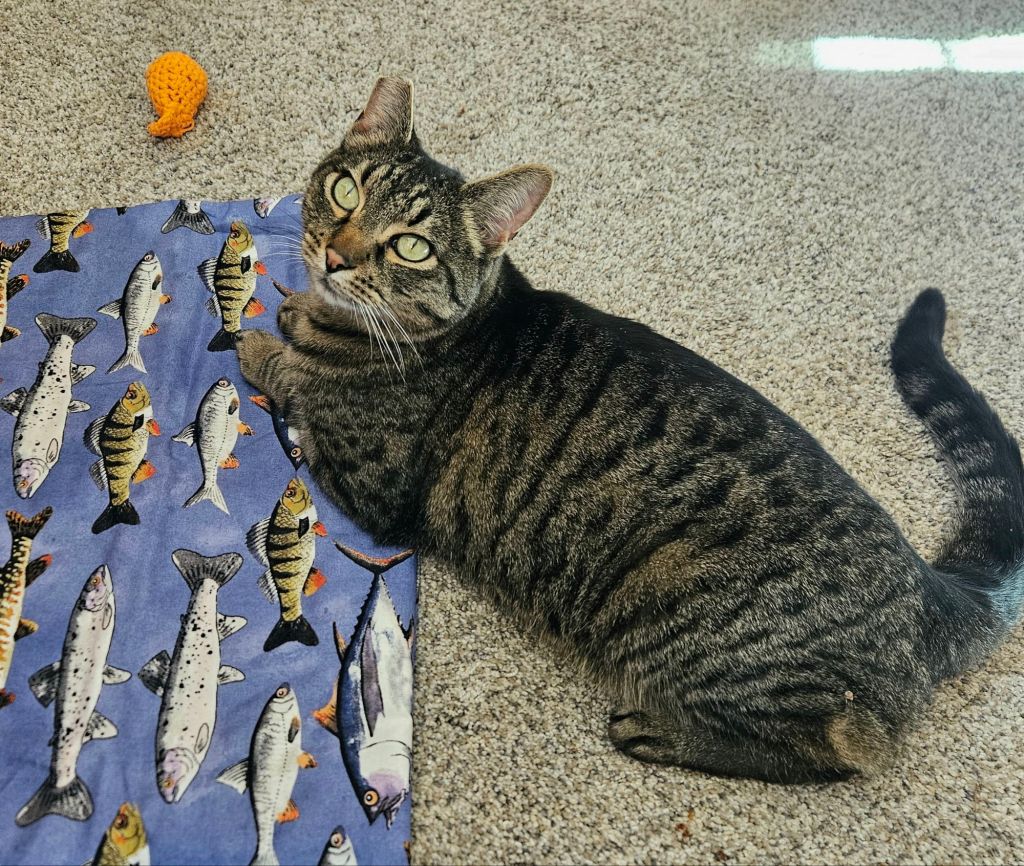
“I know you do, Benji. So does Tiger. Thank you for sharing it with him, even though he has all four paws.”
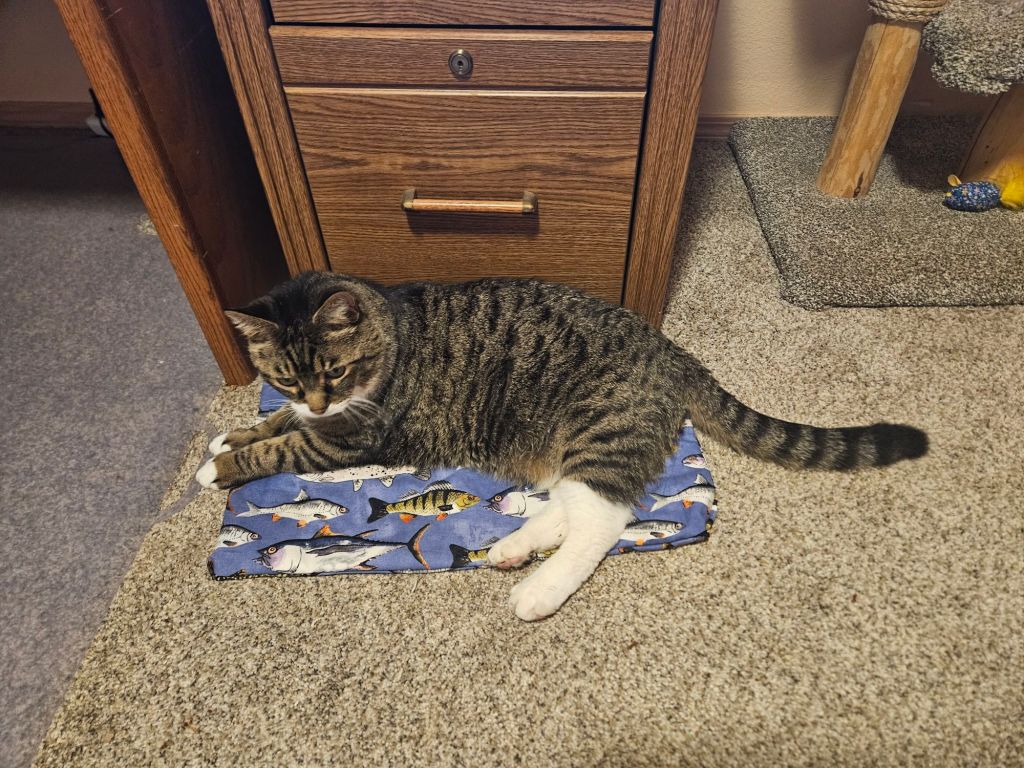
Benji has adapted well to his new world, navigating inside normally, running up and down the stairs faster than his older brother. He still craves the outdoors and I take him out every day for an hour or two, starting first thing in the morning, like today, the hottest day of the year.
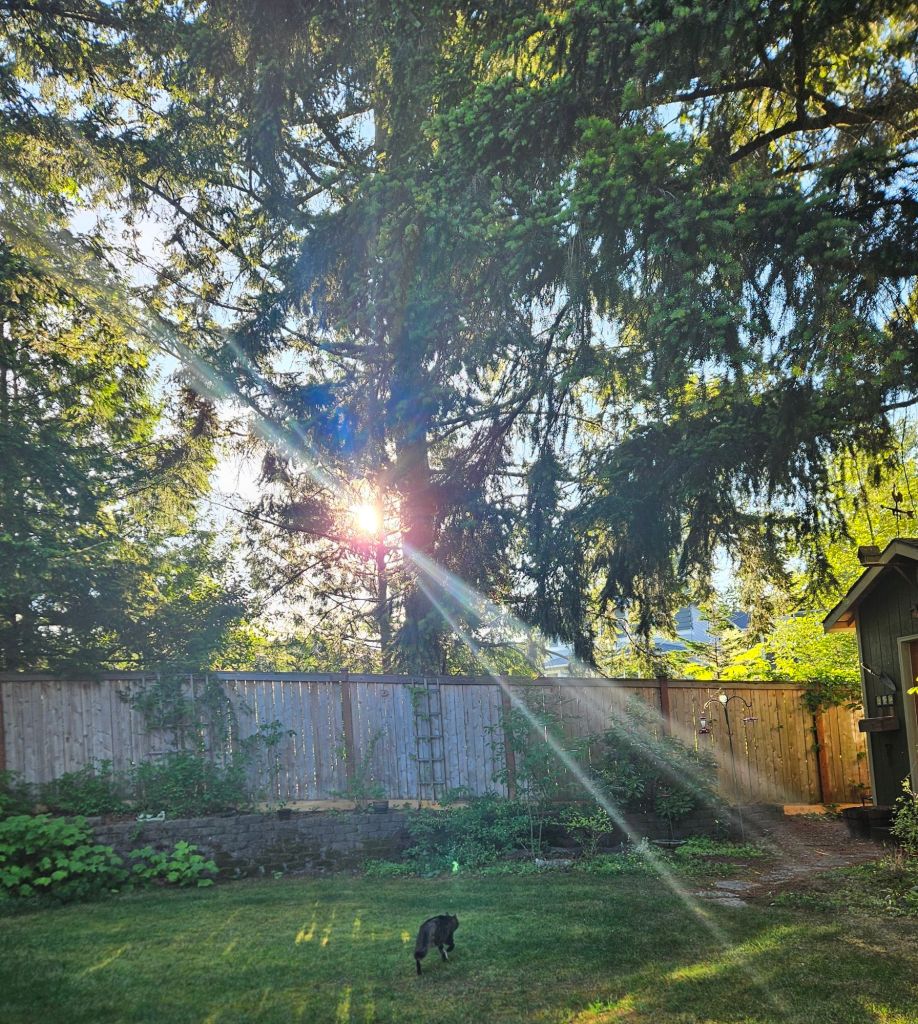
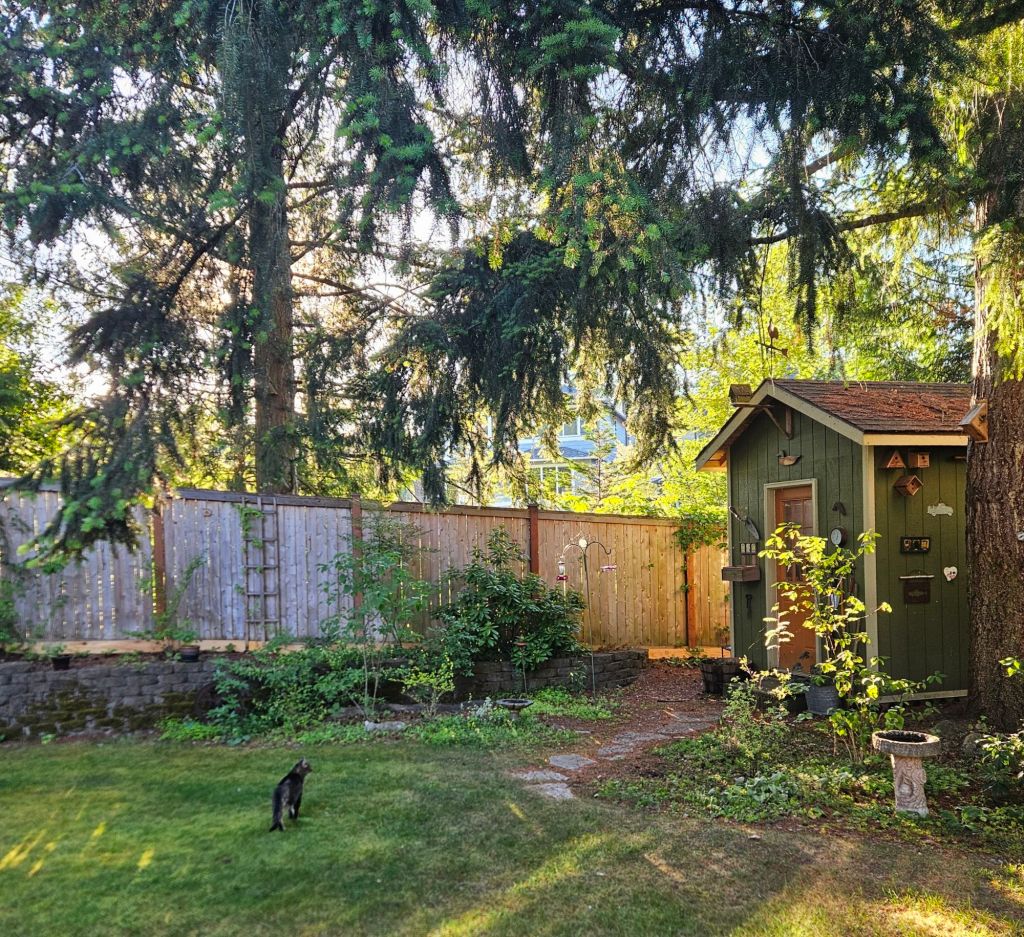
I’m still working on keeping him both confined and happy in the yard, and that has been the biggest challenge. I see him look longingly at the fence and wonder how long it will be till he tries to scale it. And so, I continue to monitor all his visits outside. It will have to do for now.
~ Susanne & Benji
Wildlife of Hood Canal – Elk, Eagles, Seals, and Surprised by Killer Whales!
On our first camping trip of the year, we parked our trailer at Dosewallips State Park on Hood Canal and enjoyed a bonanza of wildlife, some expected, some not.
Roosevelt Elk welcomed us our first night; we often see them here.


There were oysters galore, lining the beaches, no surprise,


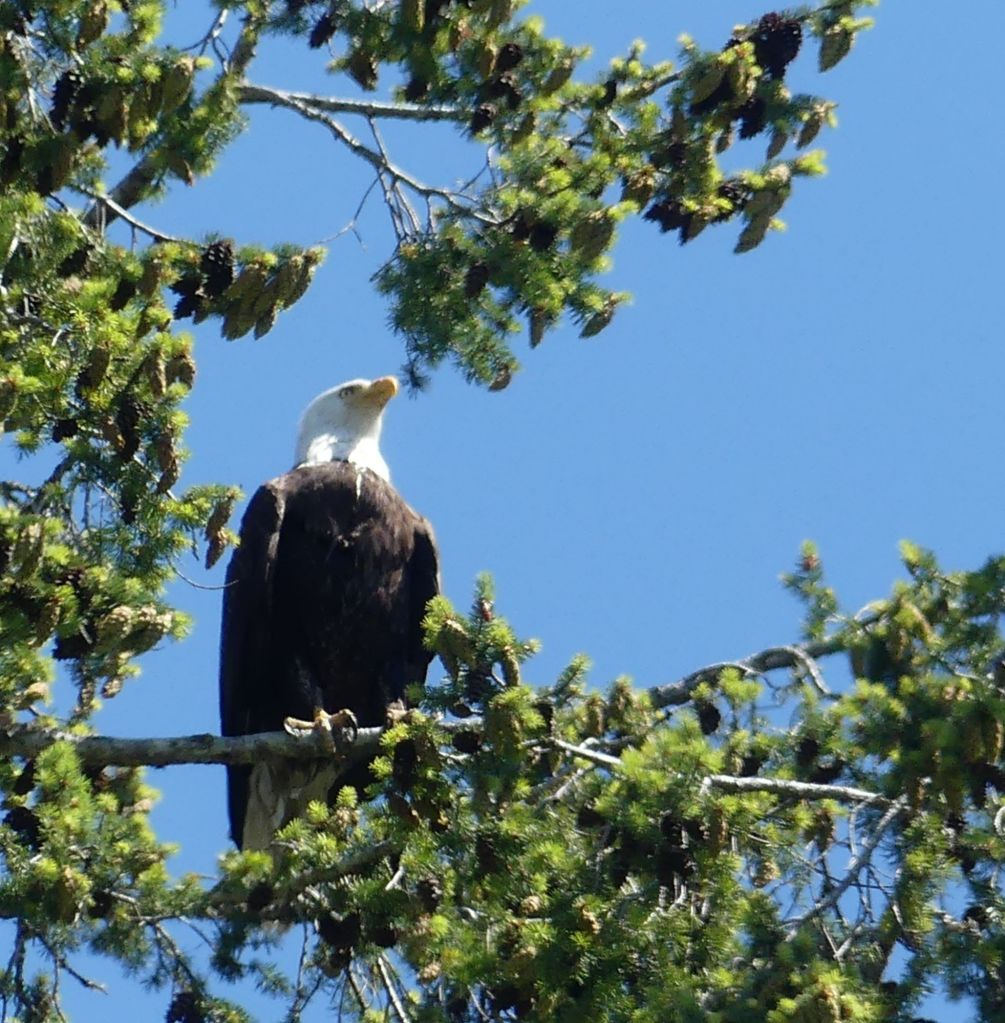
and there were seals and eagles, both expected.
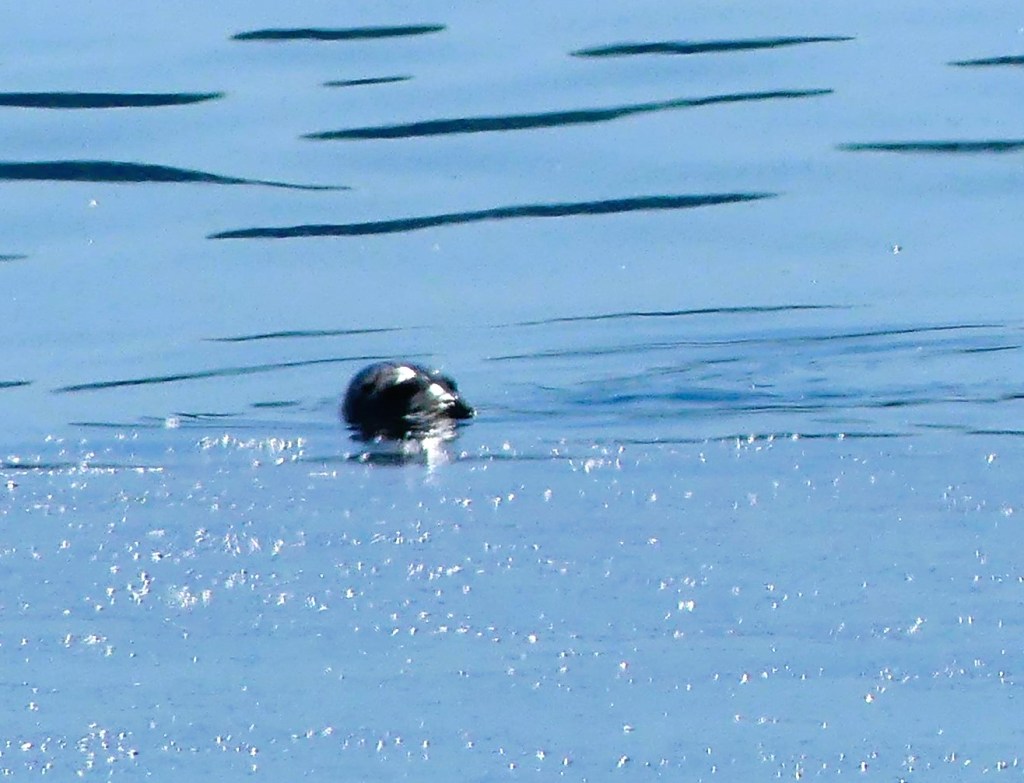
And then we got a treat, finally seeing orcas in the wild, swimming in the canal (which is not a canal at all but a fjord just so you know.) We pulled over where other cars had stopped, and I managed to snap a few photos as the orcas kept moving in the opposite direction. And though the pictures aren’t great, the experience was!

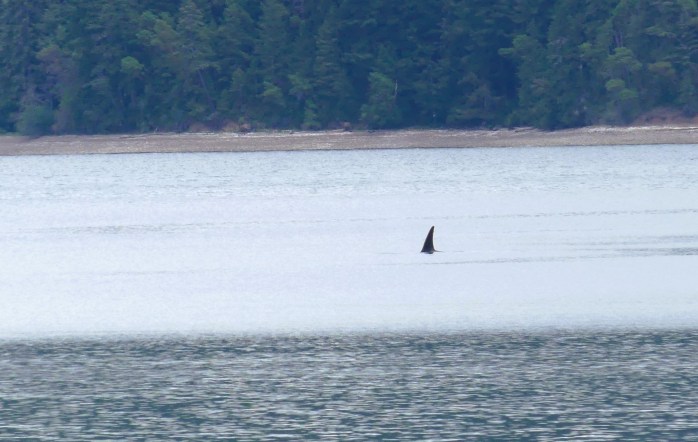

I’ve lived in Washington state my whole life and killer whales are regularly spotted in the waters of Puget Sound and the Salish Sea, but not by me. What a surprise to find them in Hood Canal, apparently not residents but transients drawn by the abundance of seals.
Honestly it made my day and the whole trip special. Back with more, later.
Susanne
P.S. For those who wondered where Hood Canal is, I’ve added a map.
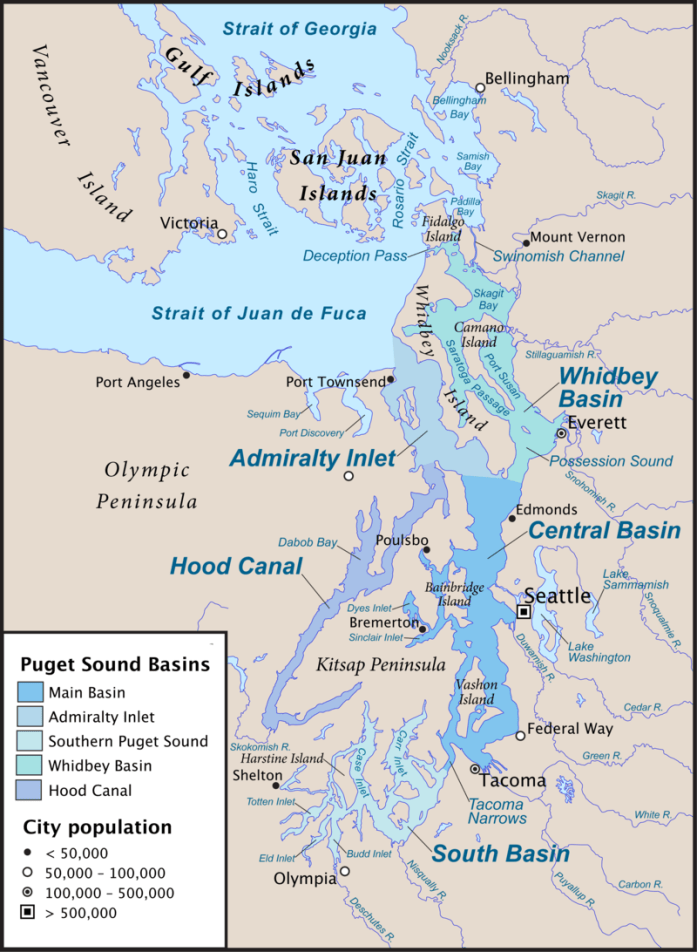
And a link to an earlier post of Childhood Memories from Hood Canal
Take a Memo, Benji
“Ready, Sue.”

~ From the desk of Susanne and Benji
In the Garden with the Cats and the Birds
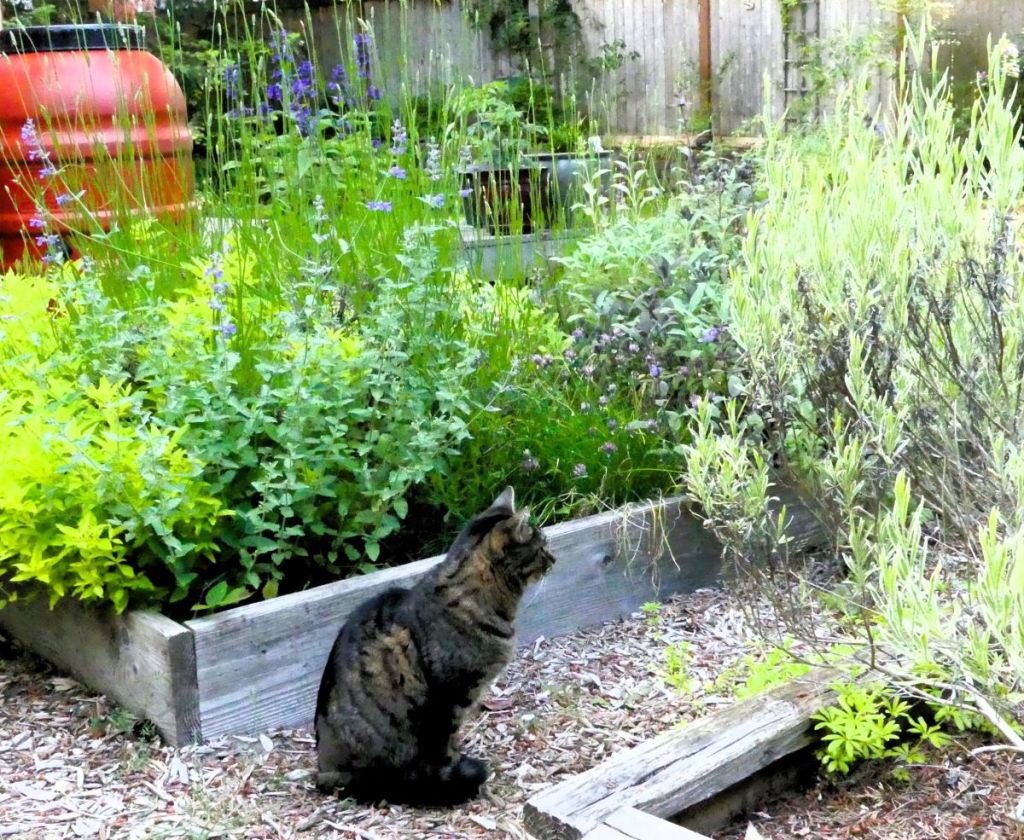
It’s different than it was, but I still enjoy spending time in the garden with the cats and the birds.


Tiger is free to go outside by himself, but Benji must be supervised.
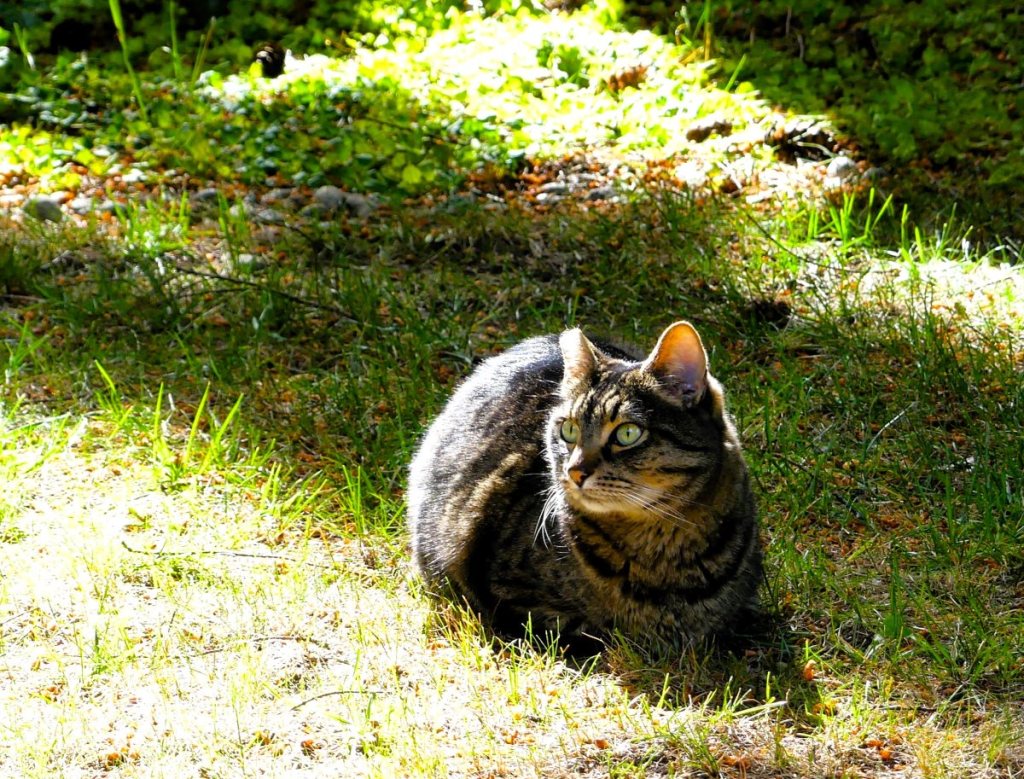
I’m hoping he can learn from Tiger to stay safely within the confines of the backyard. There’s plenty of space to sit and ponder, nibble on the grass and the catmint, and watch the birds (who stand a better chance of survival now that Benji is slower to the chase.)

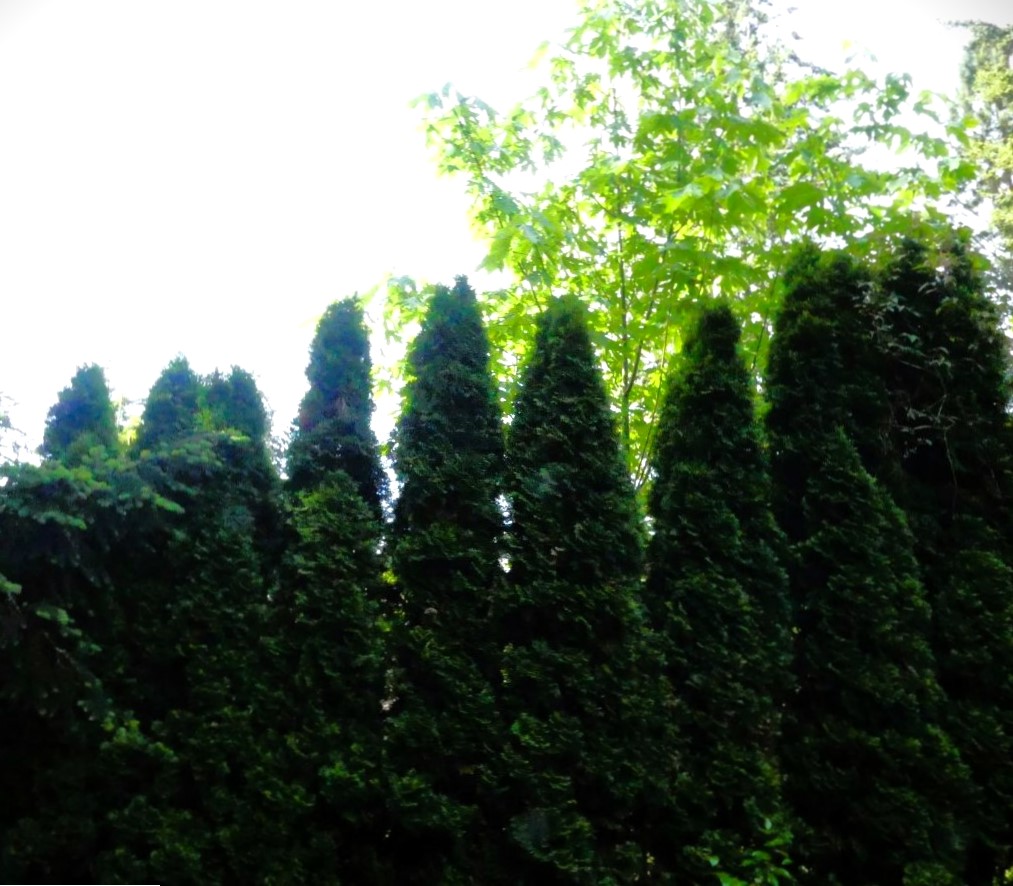
The side hedge makes a nice screen and is a favorite place for house finches to nest.
I love listening to their birdsong and watching their courtship. The males have a beautiful red crown, face and upper breast.


The female’s garb is bland but she’s still attractive to the male. Here she’s lit up by maple leaves behind her; I had to brighten them to see her more clearly in the shadows.


Unfortunately, the bottom of the hedge is a tangle of branches and ivy, with tunnels and pathways from which an adventurous cat might escape (and did.)
We’re still trying to figure out how to plug those gaps. In the meantime, there are supervised visits a couple times a day for Benji, not quite as relaxed as it once was for both of us, but still pleasant.
~ Susanne
Soothing Pastels in Flowers and Sunsets
Some days are too full of bold, brilliant color (or no color at all) when what you really need are pastels.
So here you go.
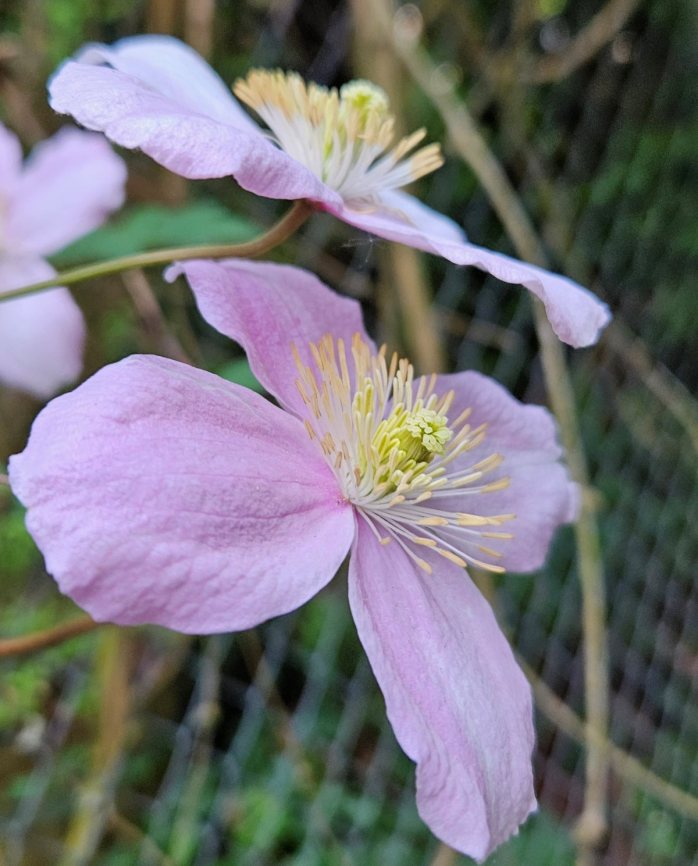
Every May, Montana Clematis begins its climb upward in my backyard and I relish its soothing pink color.
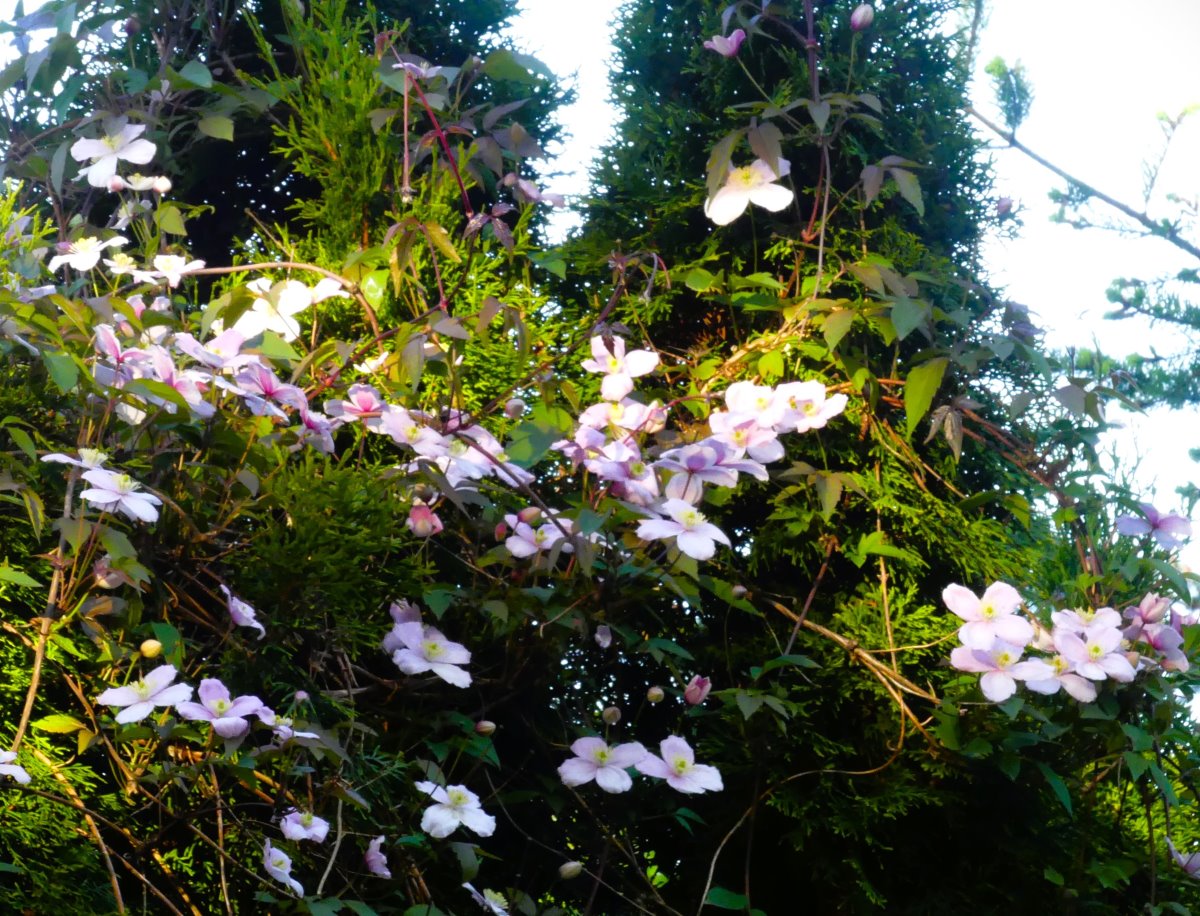

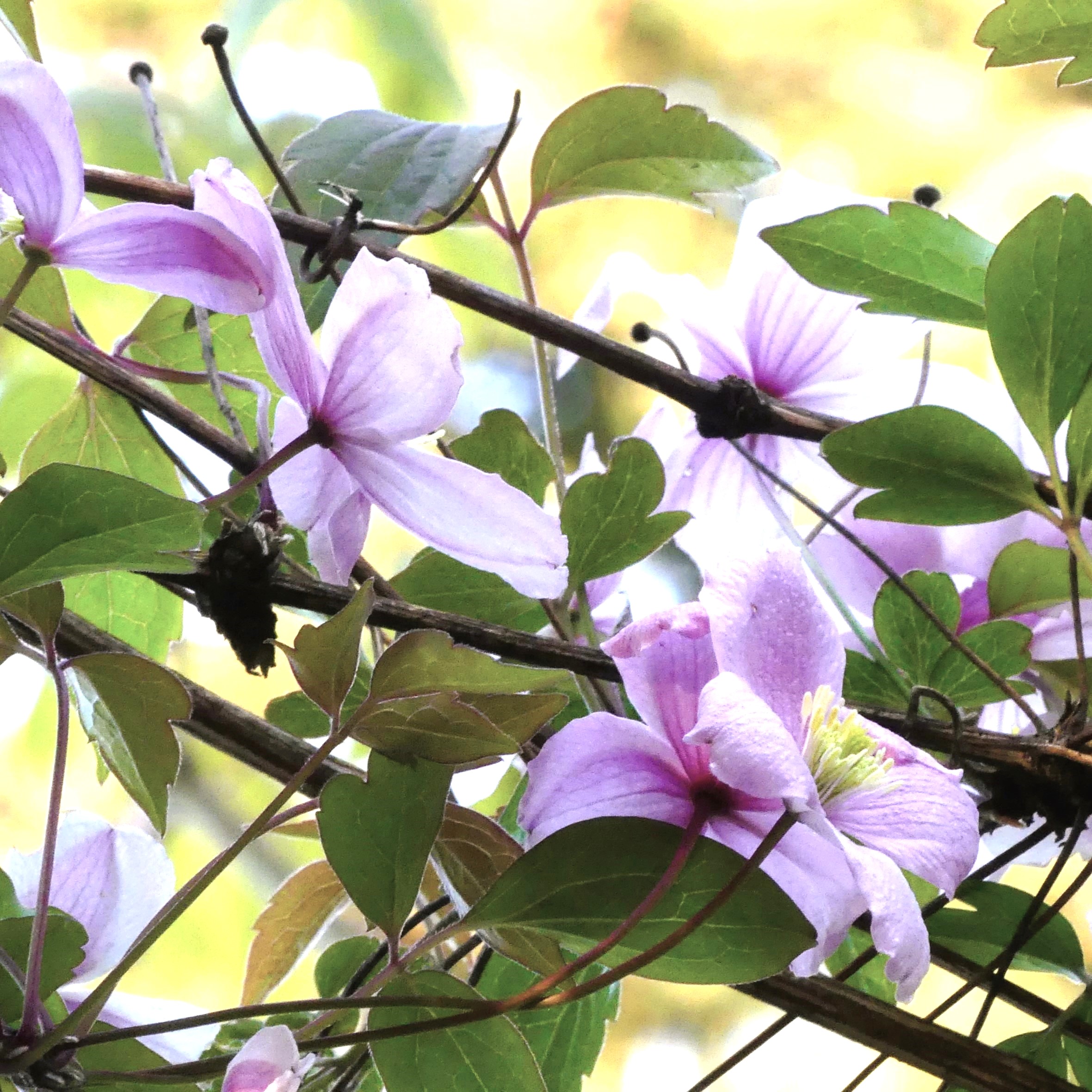
I found this fragrant rose last week at Soos Creek Botanical Garden, I can almost smell its old fashioned fragrance.

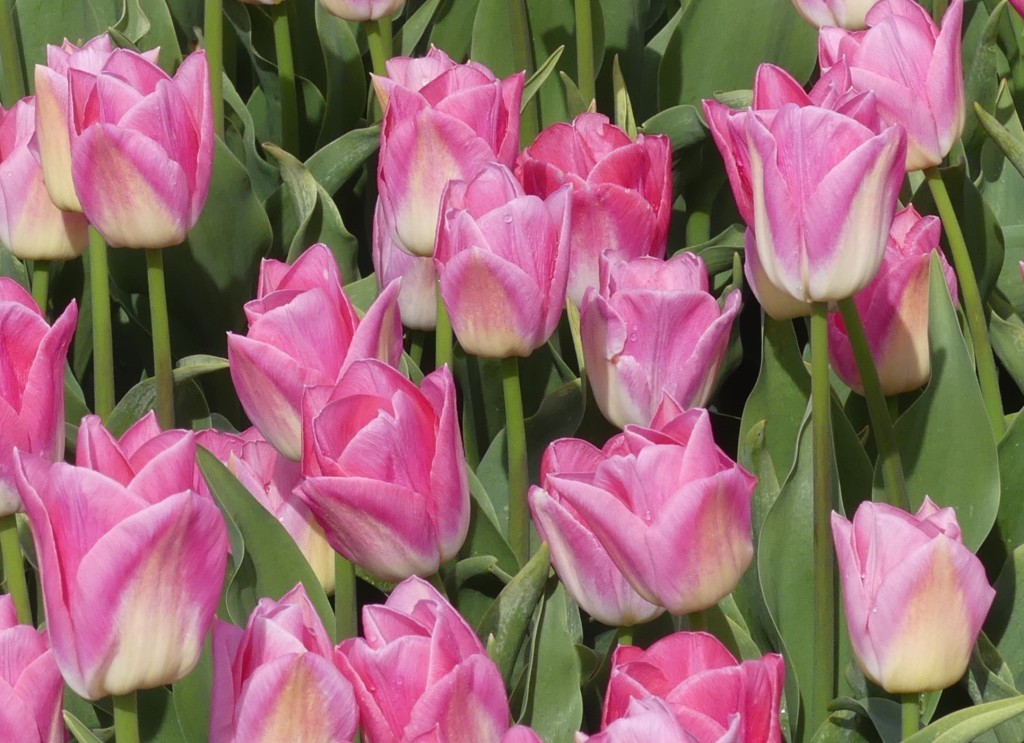
No fragrance but lots of color in these tulips from the Skagit Valley earlier this year.
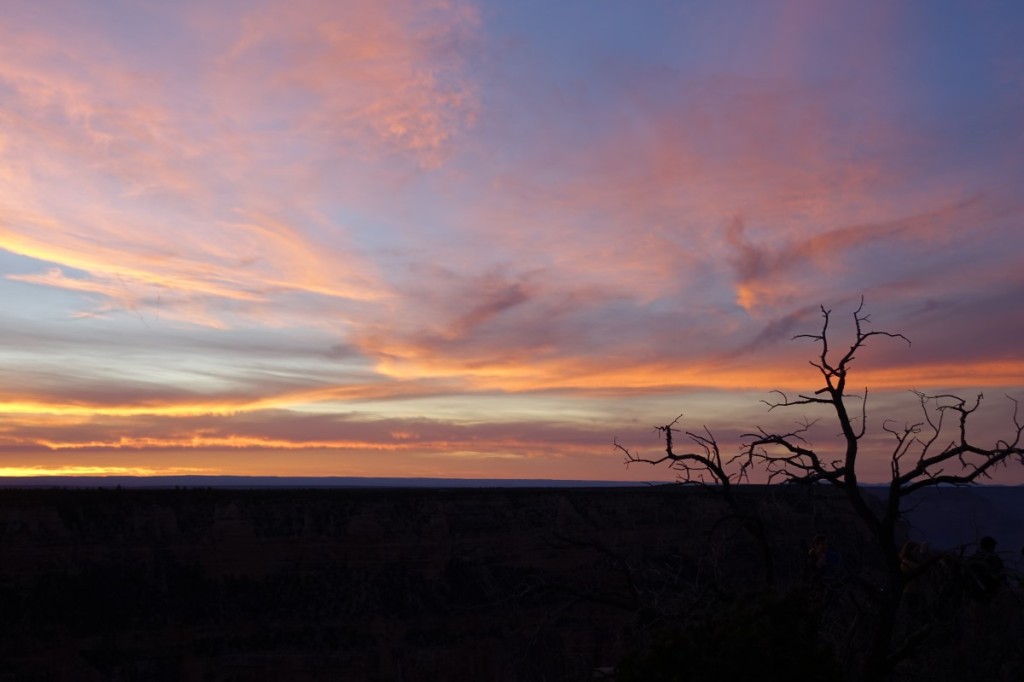
Sunsets often begin in pastels like this one over the Grand Canyon.
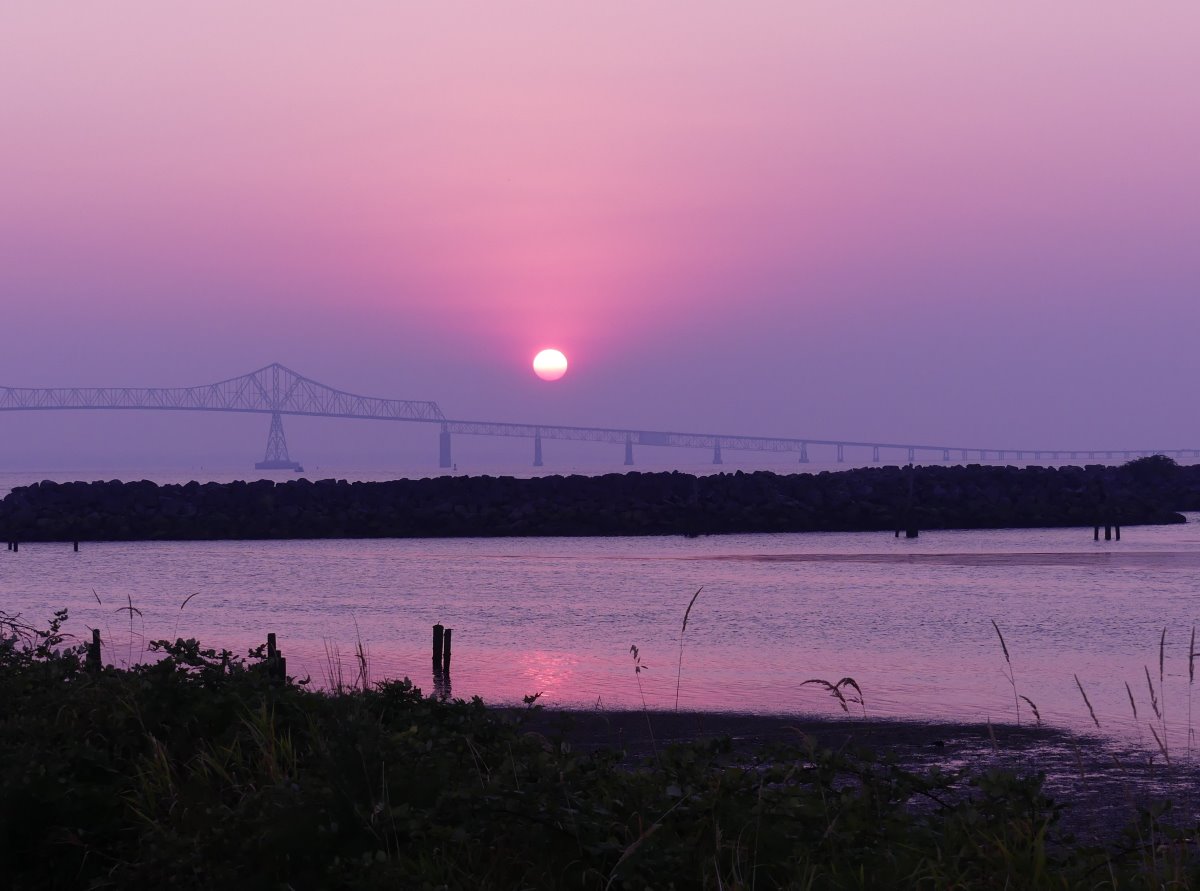
and the one below in Astoria, Oregon.
Sharing for #Sunday Stills.
~ Susanne
 Cats and Trails and Garden Tales