Cats and Trails and Garden Tales
Musings on cats, travel, gardens and life
Transformation of the Ginkgo Tree!
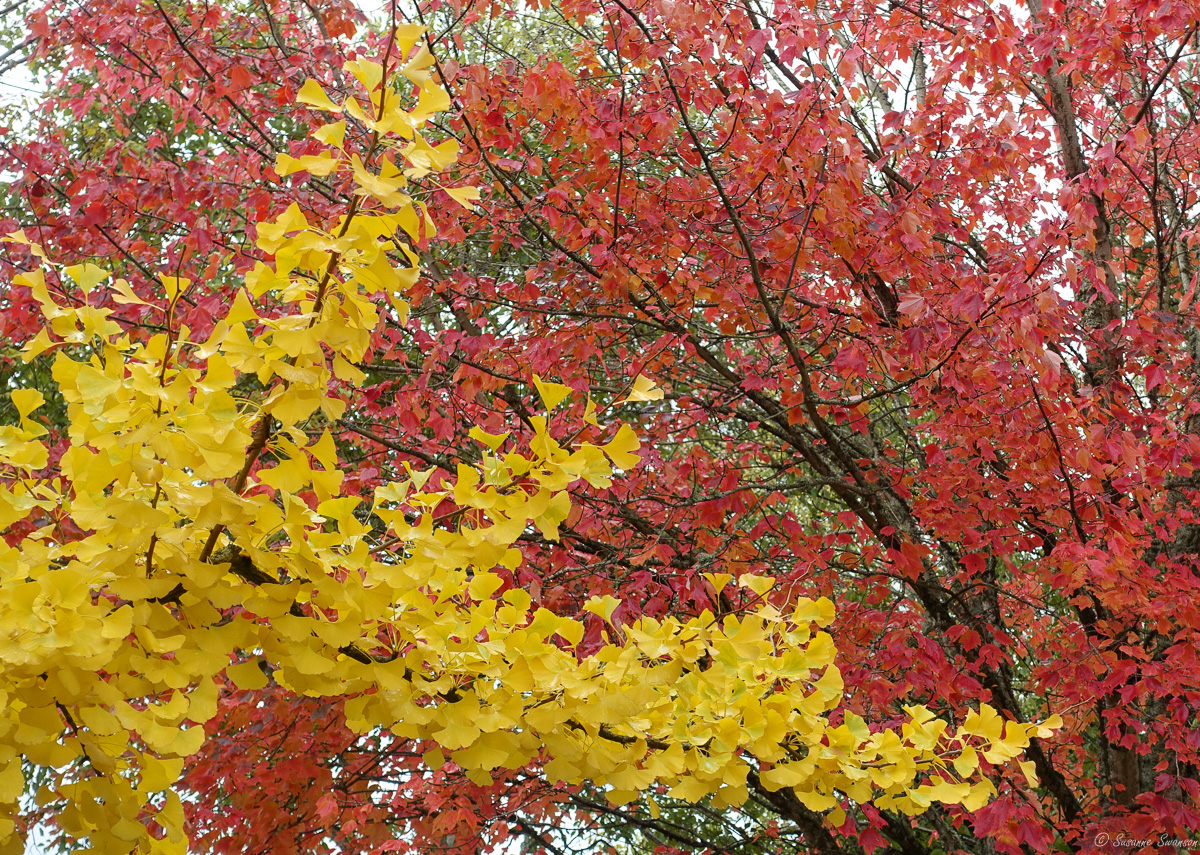
Yesterday I took a walk in the rain on the Cedar River Trail to see one of my favorite trees in glory – the Ginkgo Biloba.
It wasn’t hard to spot – it lit up the rainy path like a burst of sunshine!


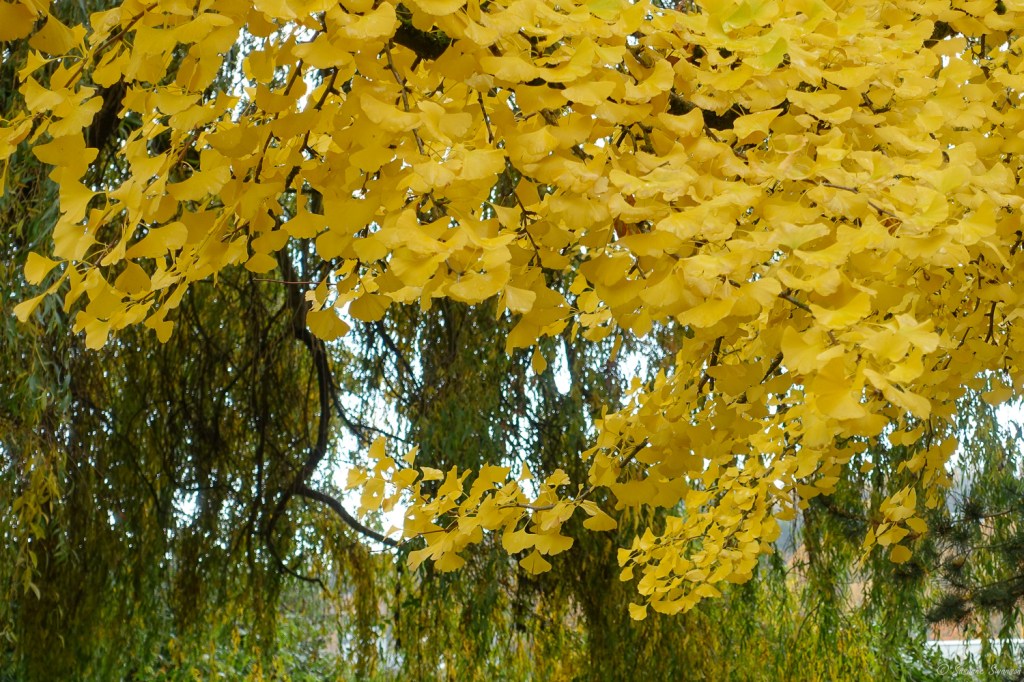
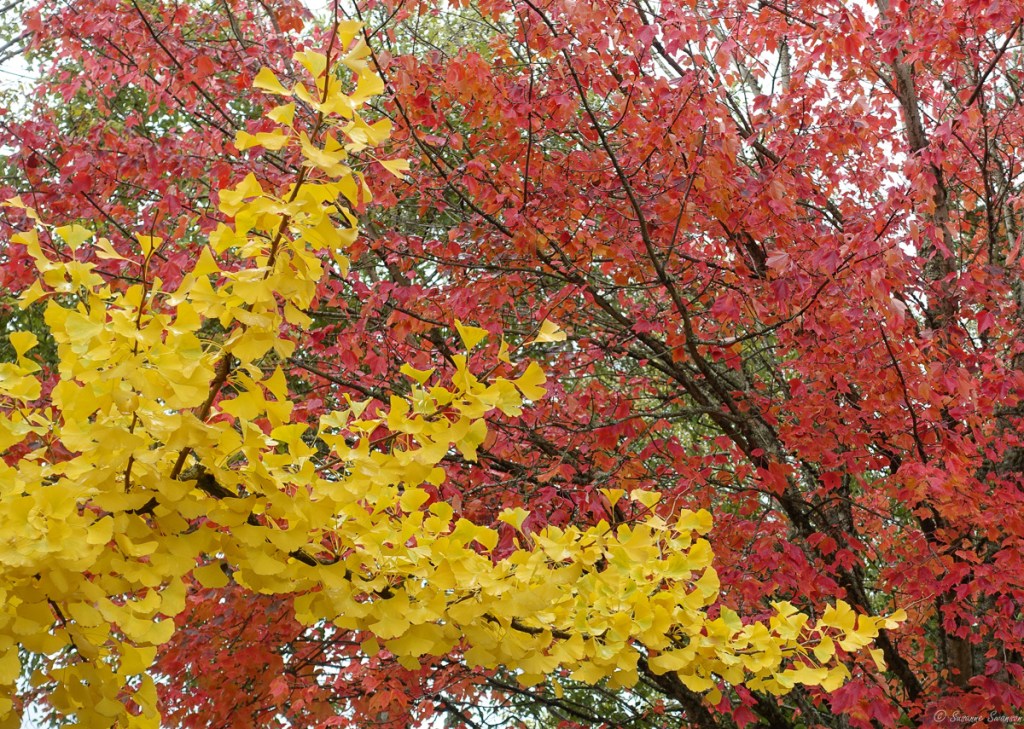


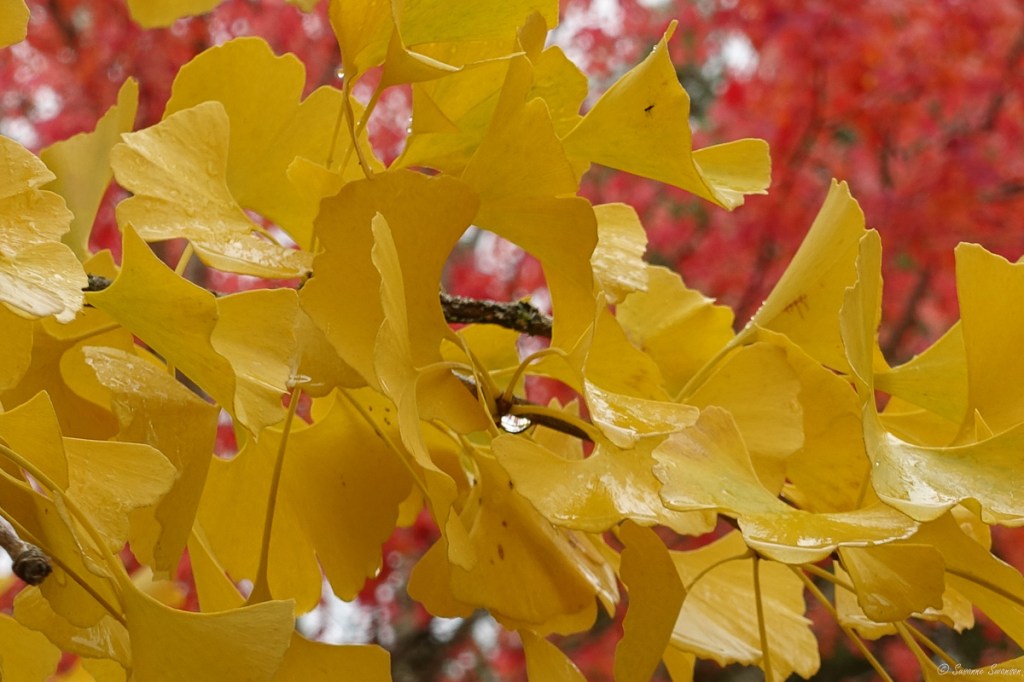
And to think it was mostly green less than 2 weeks ago.
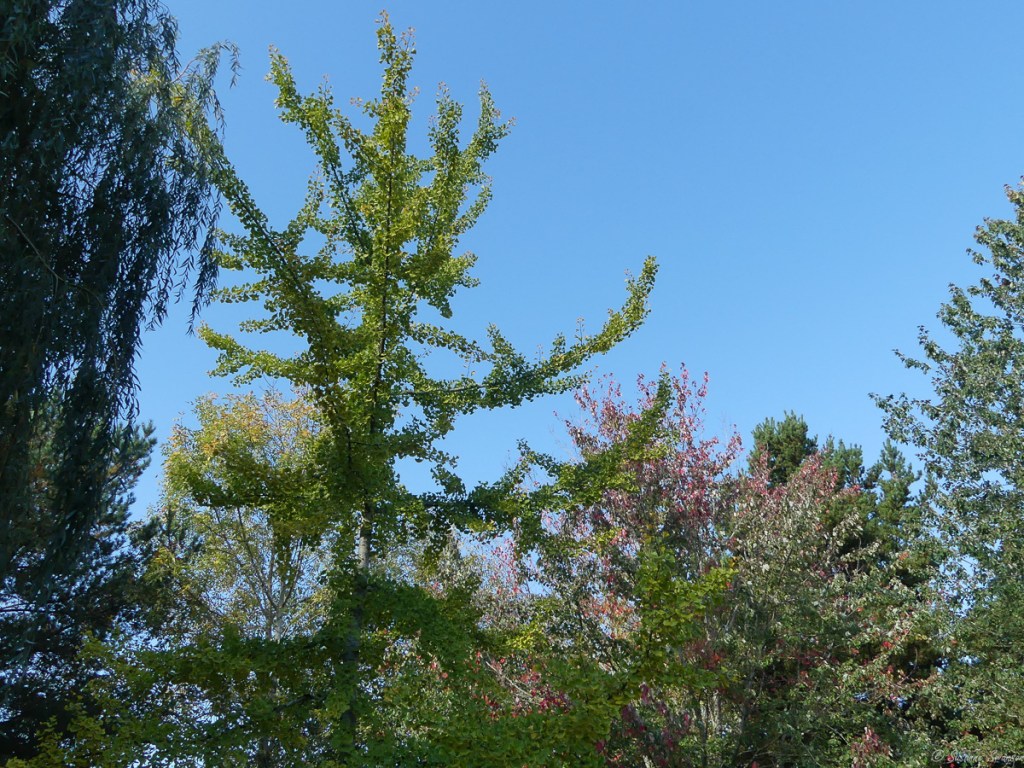

According to Wikipedia: “It is the last living species in the order Ginkgoales, which first appeared over 290 million years ago. Fossils very similar to the living species, belonging to the genus Ginkgo, extend back to the Middle Jurassic epoc approximately 170 million years ago.”
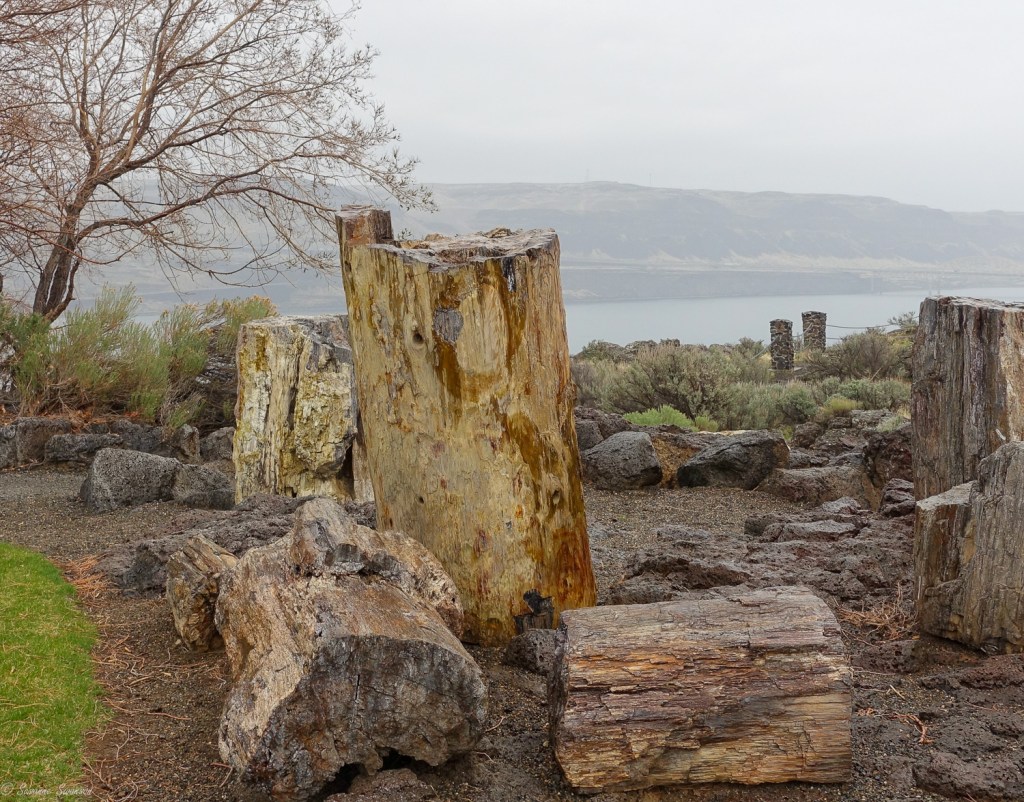
Which reminds me of Ginkgo Petrified Forest near the Columbia River, where over 50 species of petrified wood including Ginkgo, were discovered in the 1930’s. We stopped by for a look a few years ago and saw beautiful specimens of petrified wood and Indian petroglyphs.
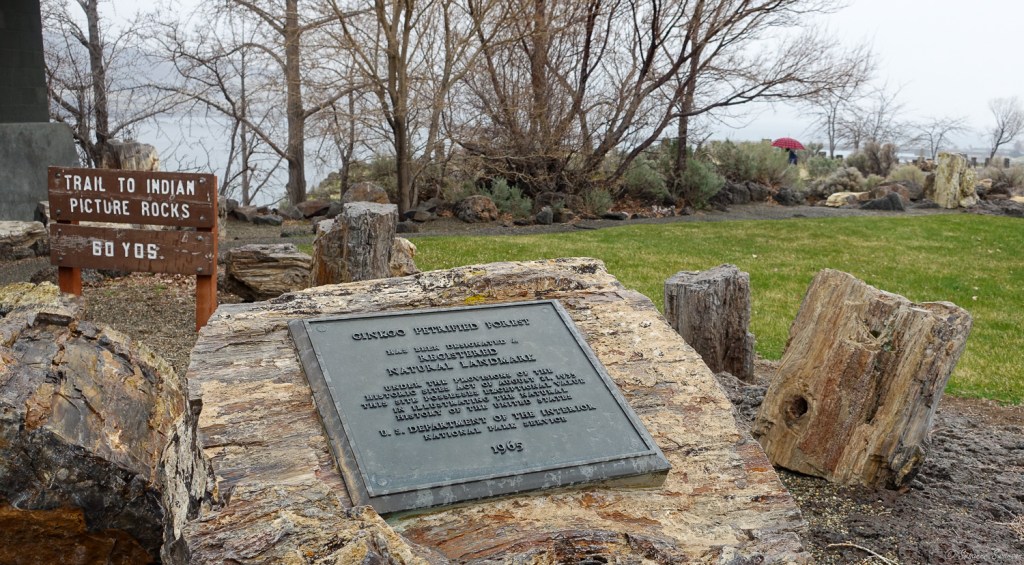

According to the signboard,
“Once living trees are converted into ‘trees of stone’ during a long slow petrification process. It began roughly 12 to 17 million years ago when lava poured out of cracks in the earth. The silica enriched lava flows covered 63,000 square miles burying the area where you stand today. One of these flows spilled into an ancient lake that once existed here. As the lava cooled around water soaked logs, the silica from the lava slowly replaced organic cells in the trees. over time these fallen trees were transformed into the petrified forest of Ginkgo State Park.”


Now that’s a transformation!
~ Susanne
I Brake for the Leaves of Autumn!
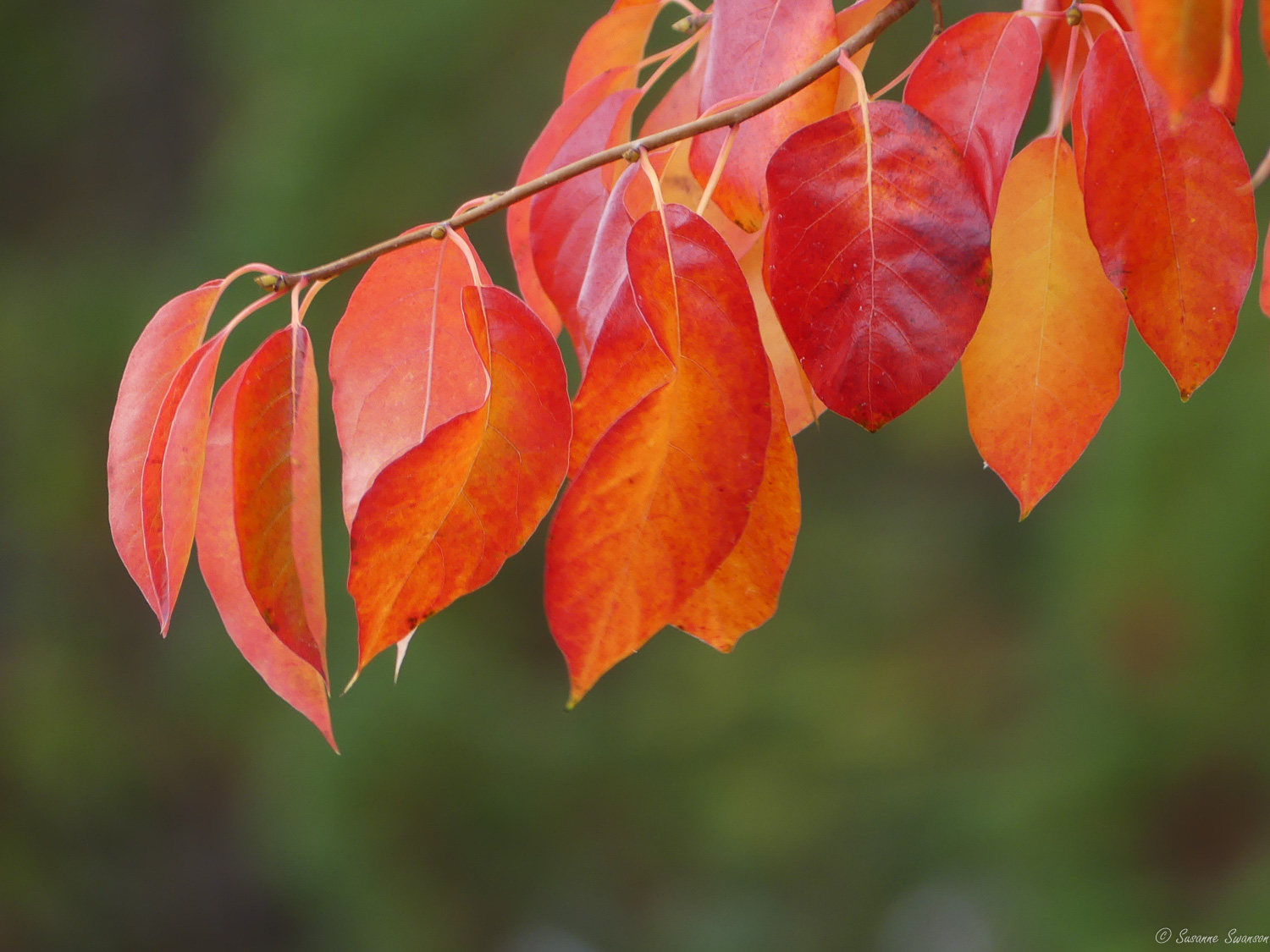
Well, I’d like to, though I admit it’s not always possible!
A major road near my house is lined with gold – gold! – the leaves on the trees form a canopy above and cast a glow below. How often I wished I could stop right there for a photo, but I haven’t figured out yet a safe way to do it.
Fortunately, there are trees in the parks and side streets that provide plenty of opportunities to safely enjoy the fall colors in the neighborhood.
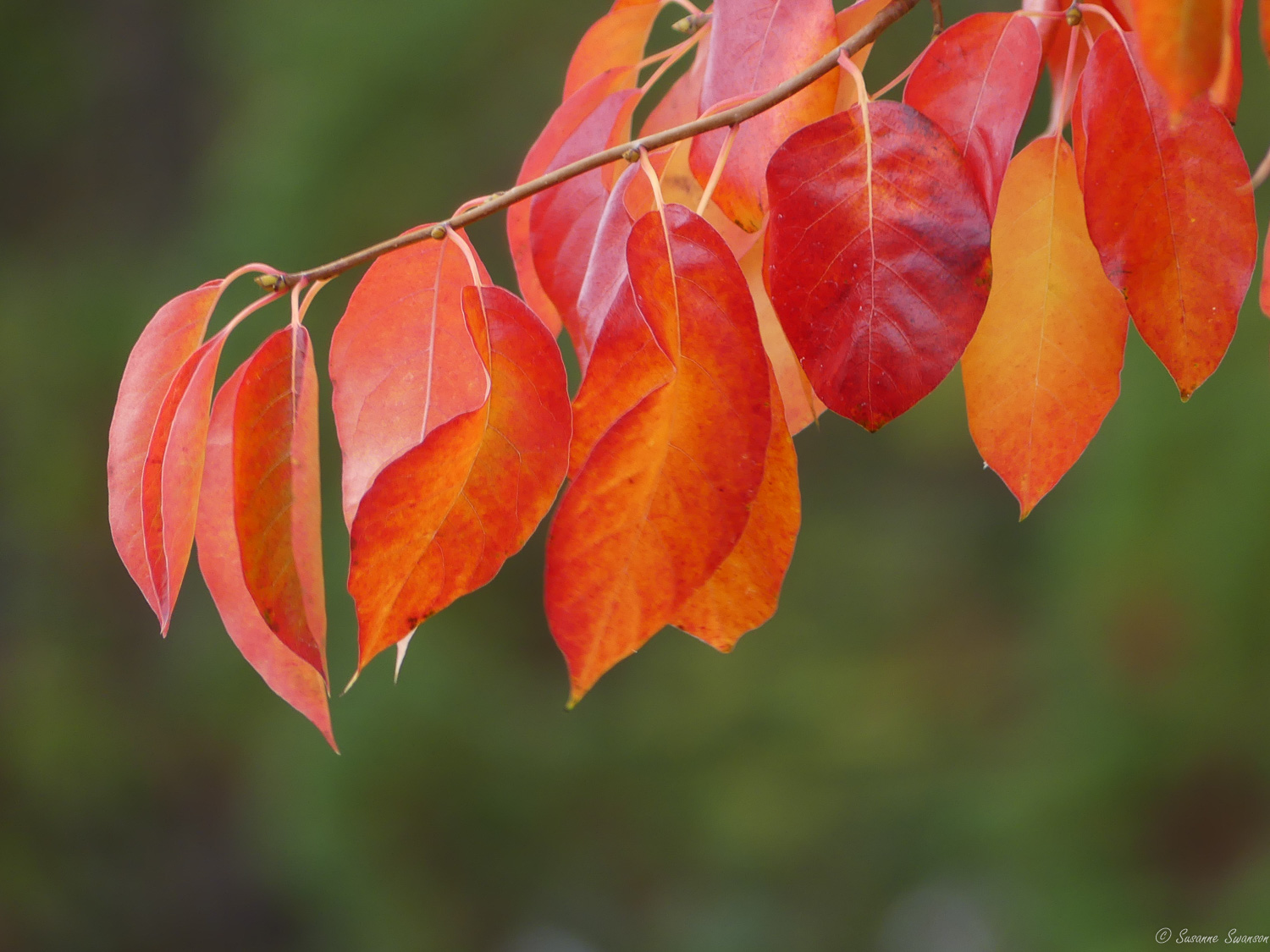
Recently, I was enchanted by this beauty at Coulon Park. I don’t know the name of the tree – perhaps you do? – I would love to have one in my yard.


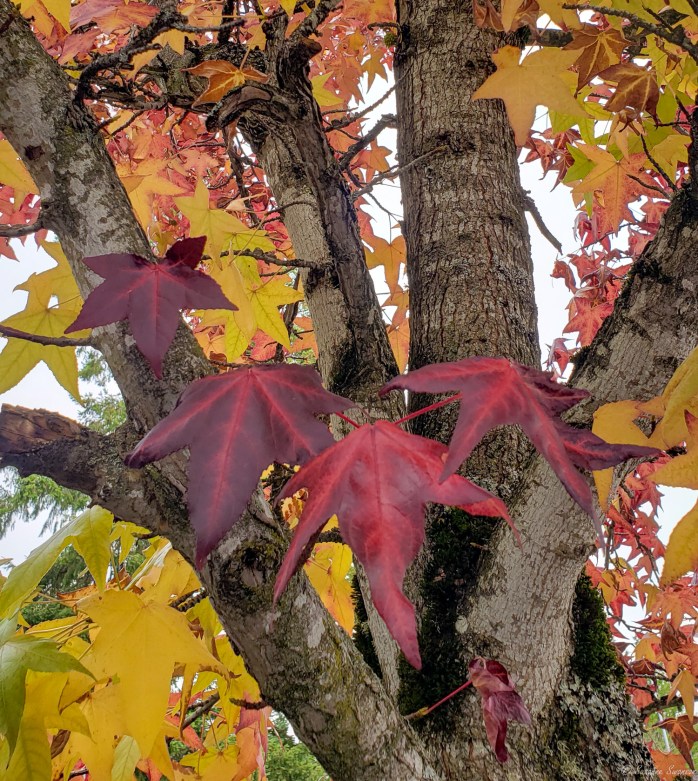
The maple below was in the parking lot of my local grocery store. The red leaves stood out as if placed just so, by an unseen hand.
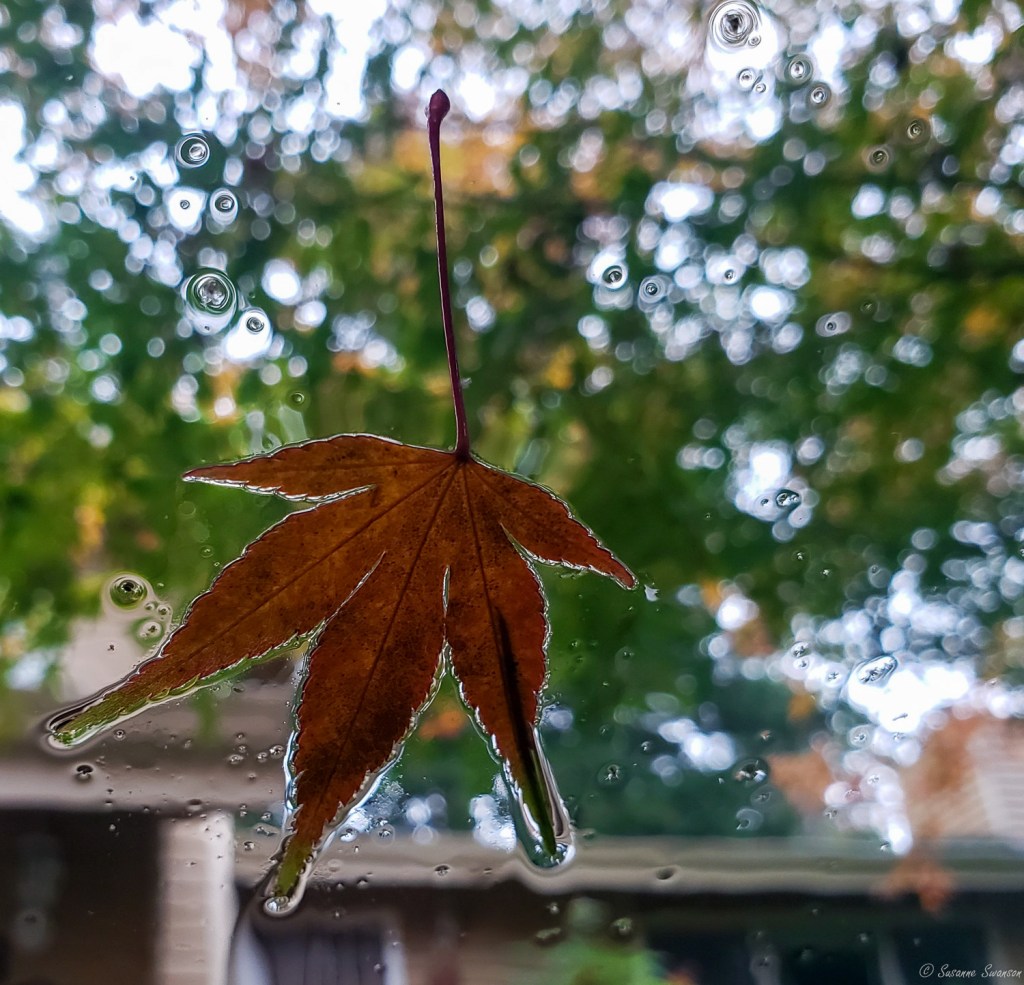
Closer to home, even the leaves on my car were beautiful today,
including this one which looked to me like an angel.
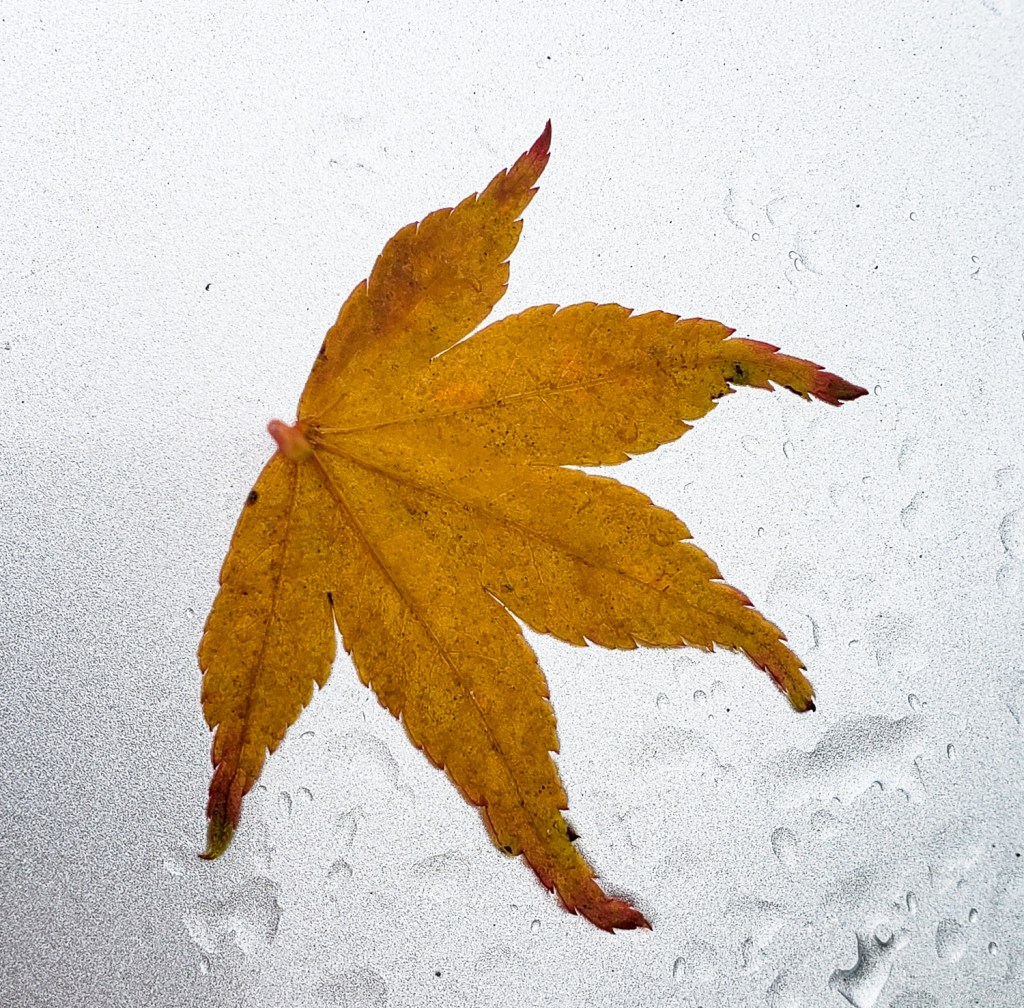
And I was reminded of the verse, “the leaves of the tree are for the healing of the nations.”
I can hardly wait for that.
Sharing with #Sunday Stills, Leaves of Autumn.
~ Susanne
What to do on a Rainy Saturday? Backyard Birding!
I woke to thunder and lightning and pounding rain which ruined plans to meet a friend for lunch (she’d have a long drive on the freeway and we thought it best to reschedule.)

Regardless of the lousy weather, the birds were out in full force, in between storm gusts.
I replenished the hummingbird feeder and shortly afterwards, the Anna’s arrived.


Lucky for me, I was still outside with my camera when the Downy Woodpecker returned, and I got several shots of the handsome boy. Seems like he may become a regular, hooray!
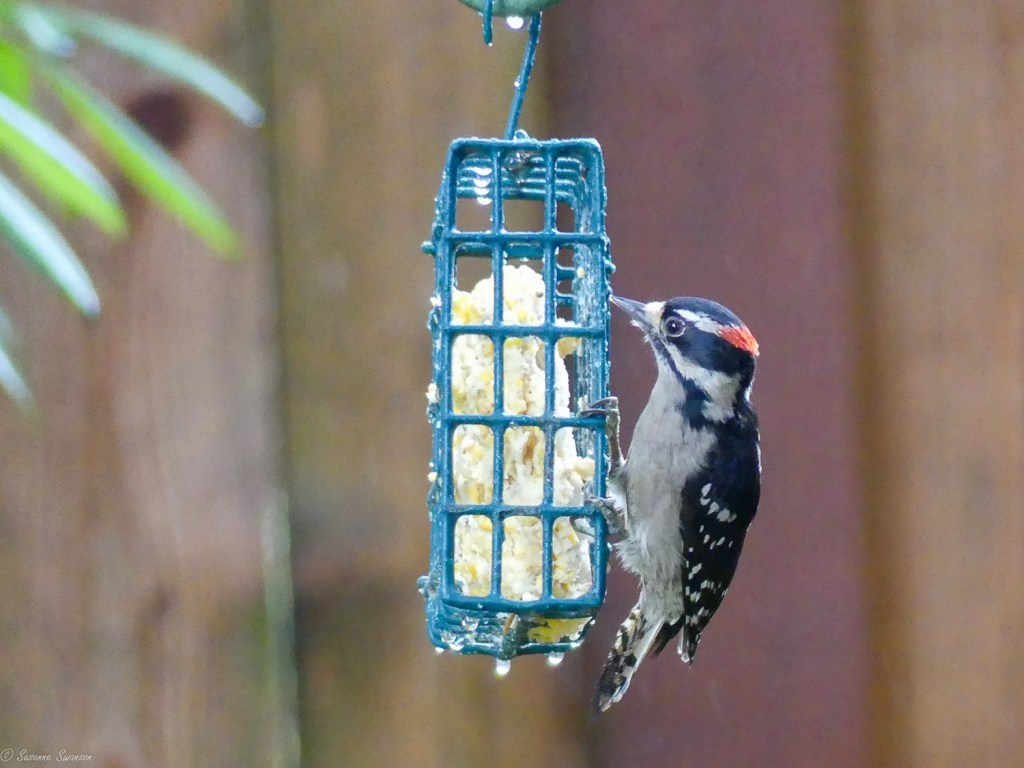
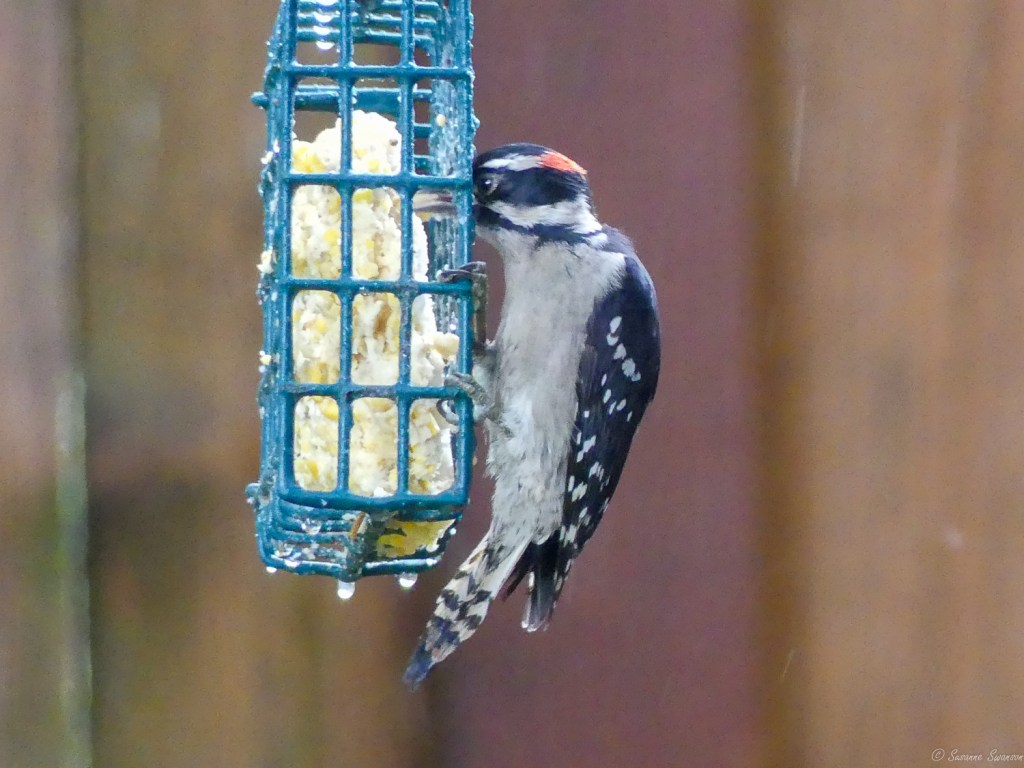

When he was done the chickadees were next in line.


Meanwhile, back at the old location the squirrels were raiding the seeds. I may have sunflowers popping up all over my yard next year as they seem to bury as much as they eat!

Still, it occupied them while a wren dropped by for suet.

As long as I keep feeders under the tree there’ll be no keeping the squirrels out. I’ll continue playing with feeder types and locations so all can get their fill.
Until then,
~ Susanne
Downy Woodpecker
This handsome bird dropped by my backyard this week for some suet and was kind enough to stay till I could grab my camera.
(I’d just moved the suet to a new location which I hope will thwart the squirrels from eating it all too quickly. I left some for them in the old location for now.)
Not the clearest of pictures as it was getting dark, and I snapped them in a hurry before he flew away.

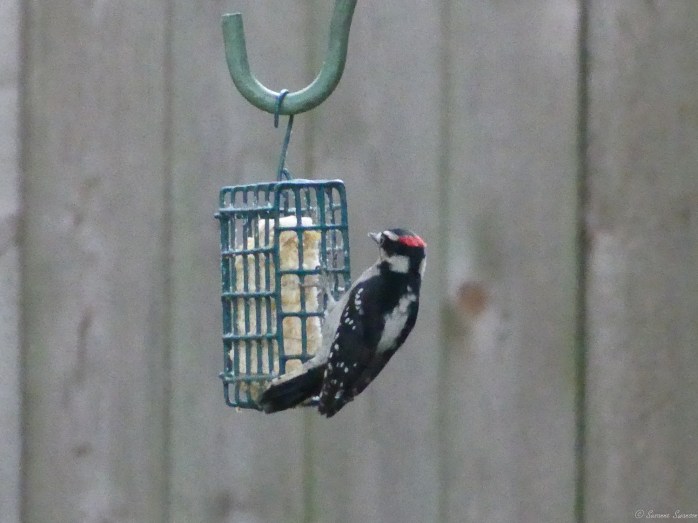

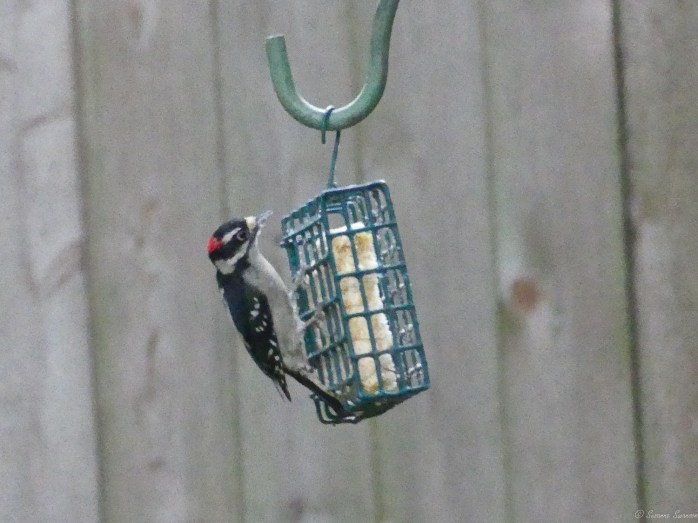

The Downy Woodpecker is the smallest woodpecker in North America; the male is most handsome with the bright red patch on the back of his head. They feed primarily on insects, but supplement thier diet with seeds and berries, and suet when available.
~ Susanne
What do you see in the Clouds?
I see skies of blue, trees of green …

sung by Jimmy Durante!

What do you see?
For (mostly) #Wordless Wednesday
~ Susanne
Life is Better in Color – On the Snoqualmie River
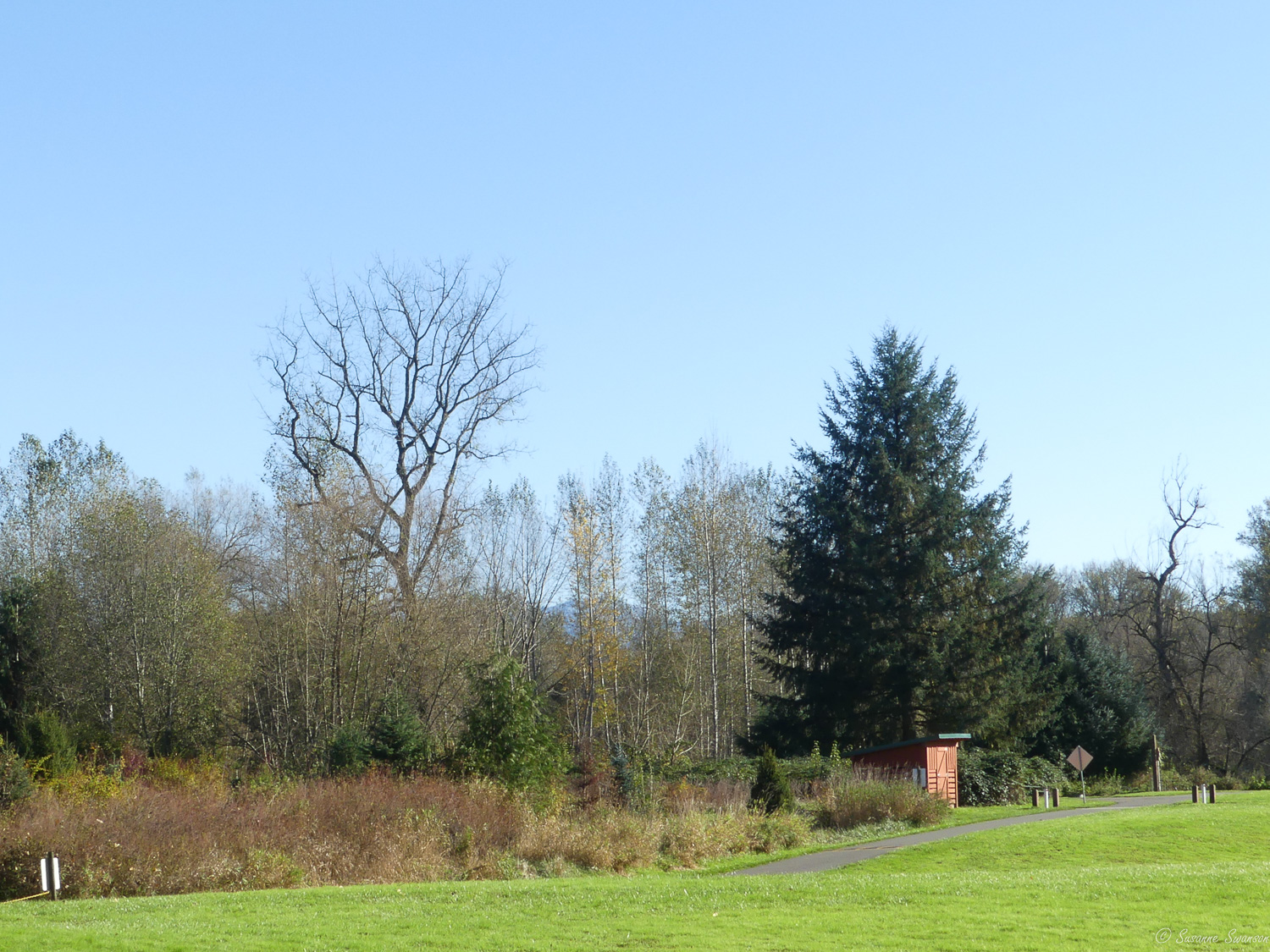
Last weekend on a cold and crisp, clear, sunny day, we headed east to visit the small towns and parks that surround the Snoqualmie River and Falls. In my last post, I drained the color from the landscape and the scenery became almost frightful, so I thought I’d better show you the world as it really is – in living color.
Snoqualmie Falls is much more beautiful lit up by sunshine and fall foliage. Did you know you could drive to the bottom? Much easier than taking the hike down from above.


Afterwards, we had lunch in the small town of Carnation, then stopped by Tolt-MacDonald for a walk in the park.
We crossed the suspension bridge and the river flowed calm and shallow underneath, after a low-water summer.

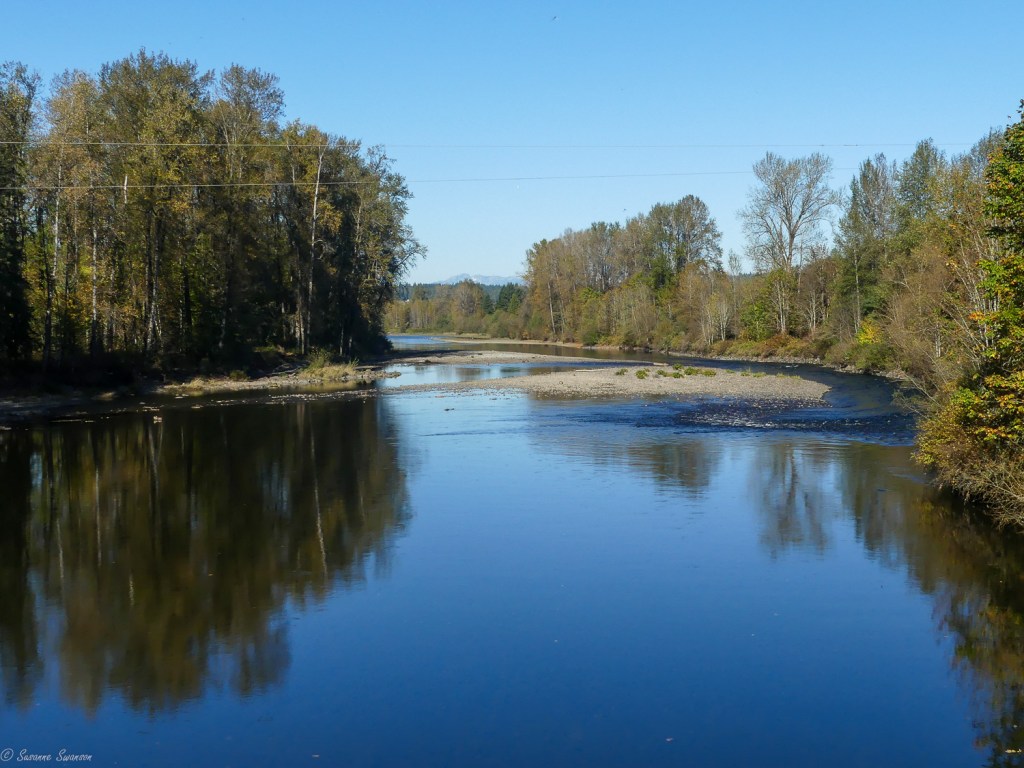
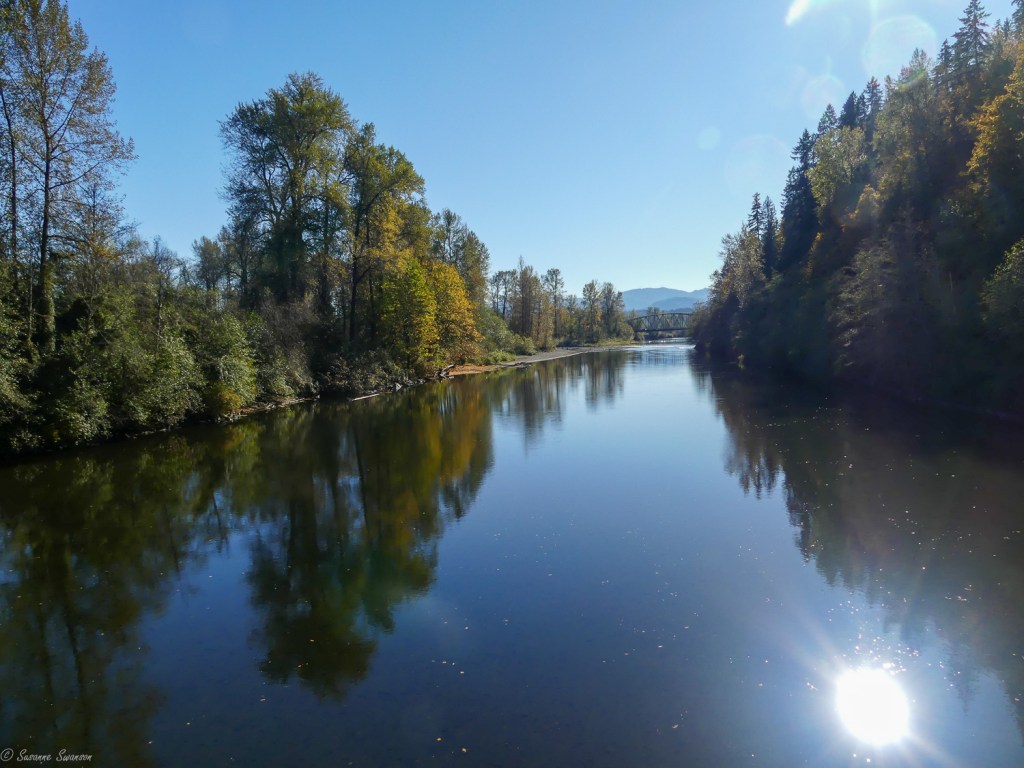

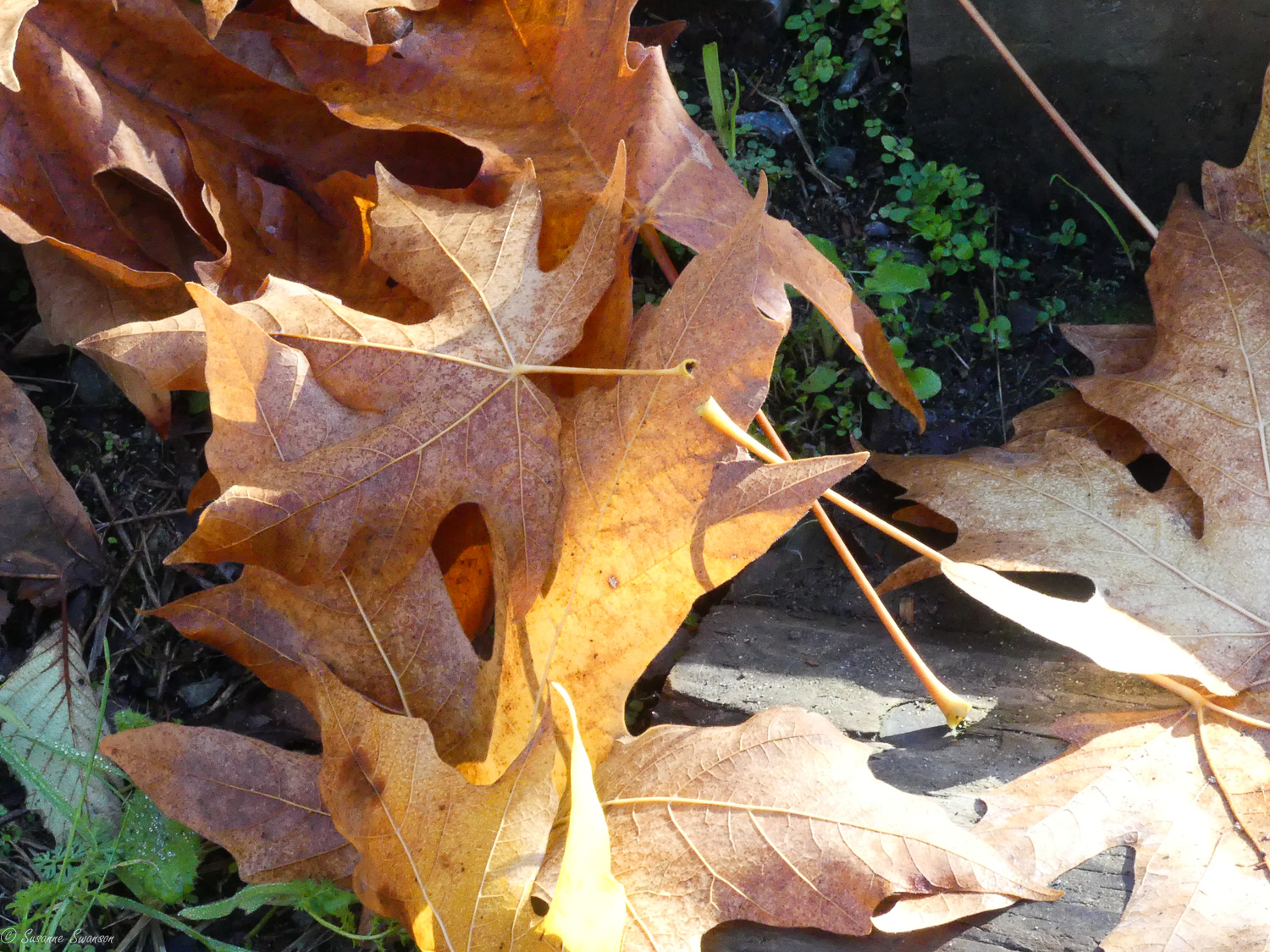
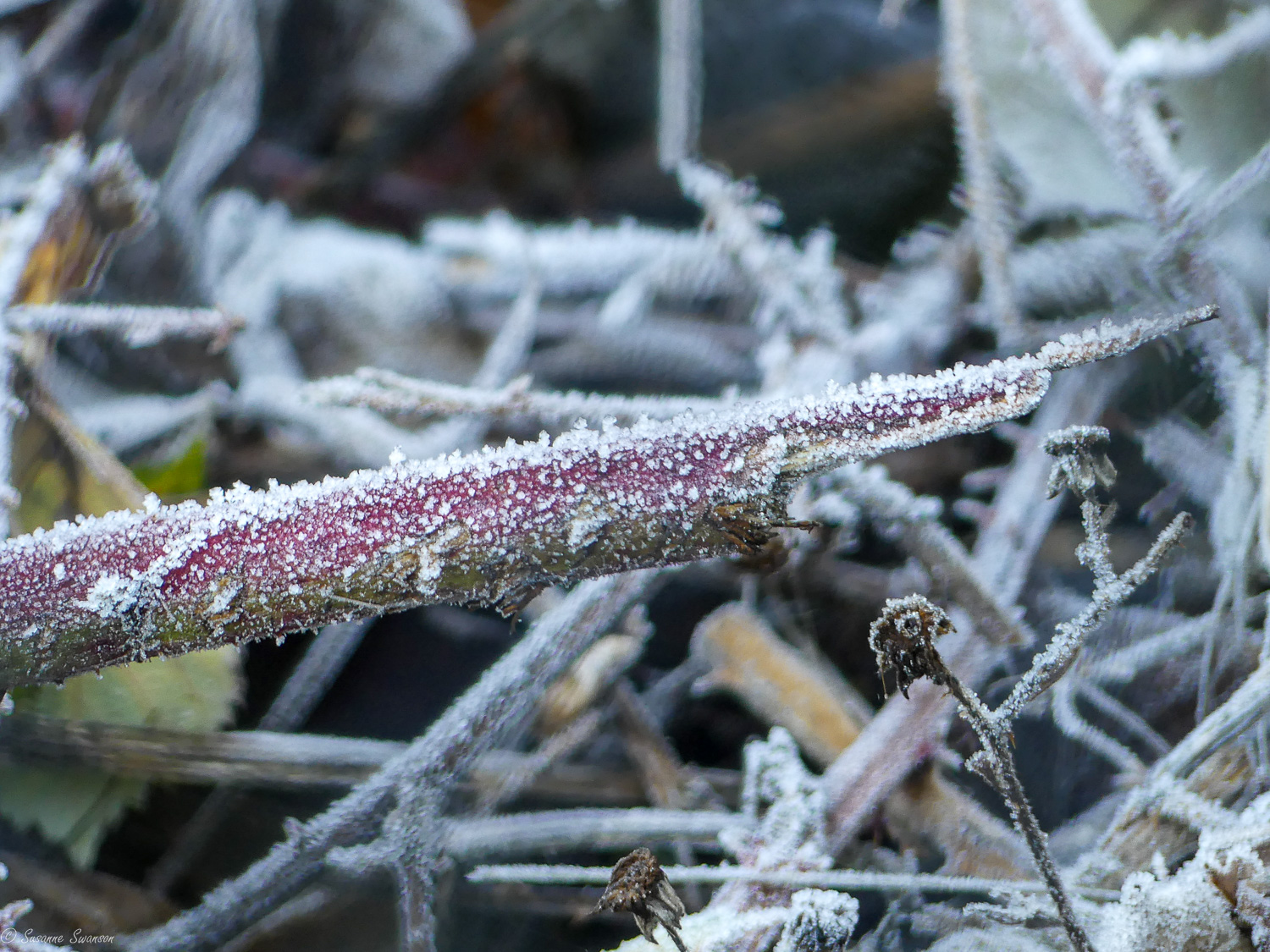
We’re barely half-way through fall, but we have frost in the mornings and snow has arrived in the foothills of the Cascades, heralding winter to come.

That’s all for now.
~ Susanne
Making the Ordinary Frightful
Yesterday we enjoyed visiting the small towns that dot the mountains and valleys just east of here, on a crisp, cold and beautiful fall day.
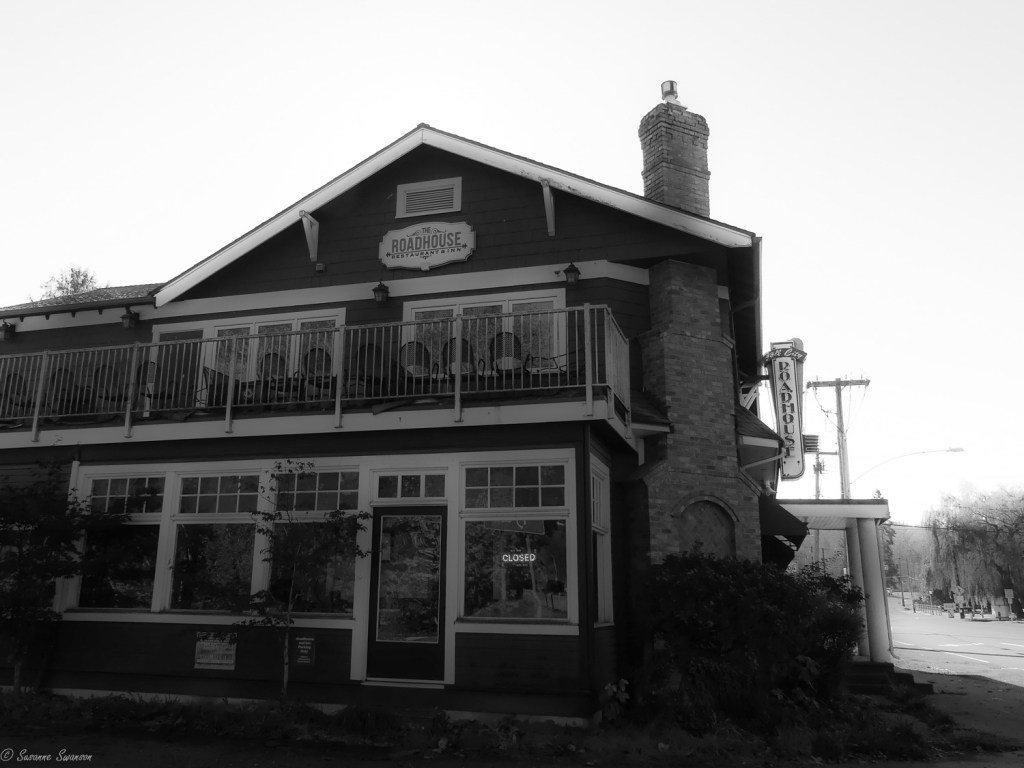
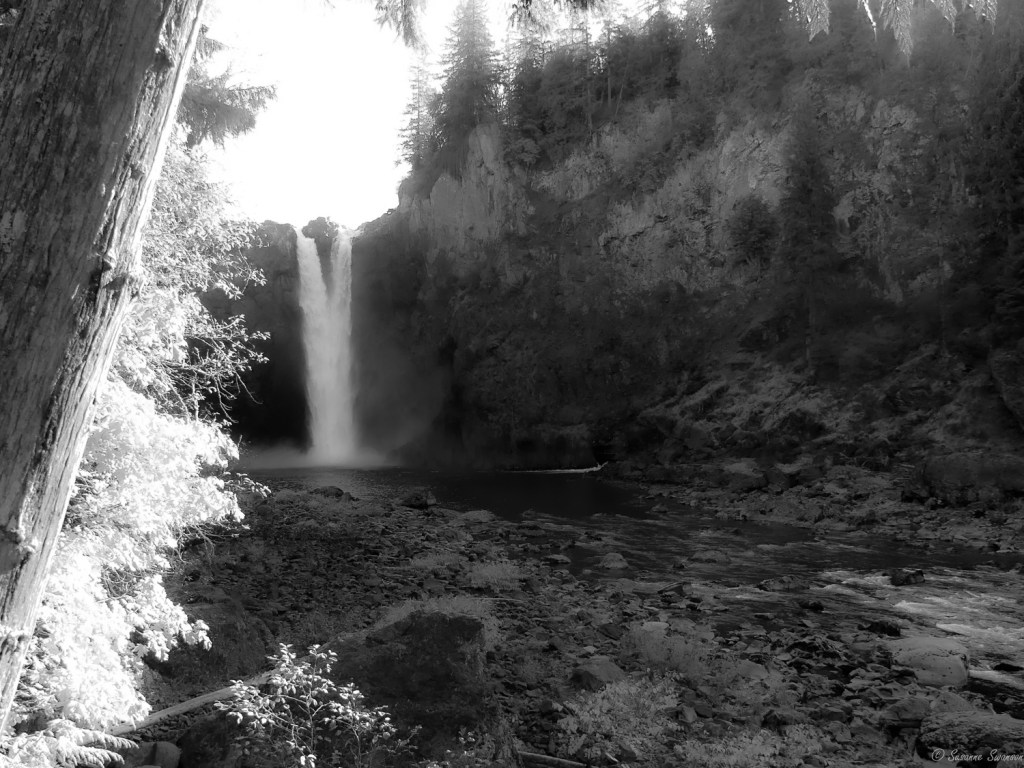
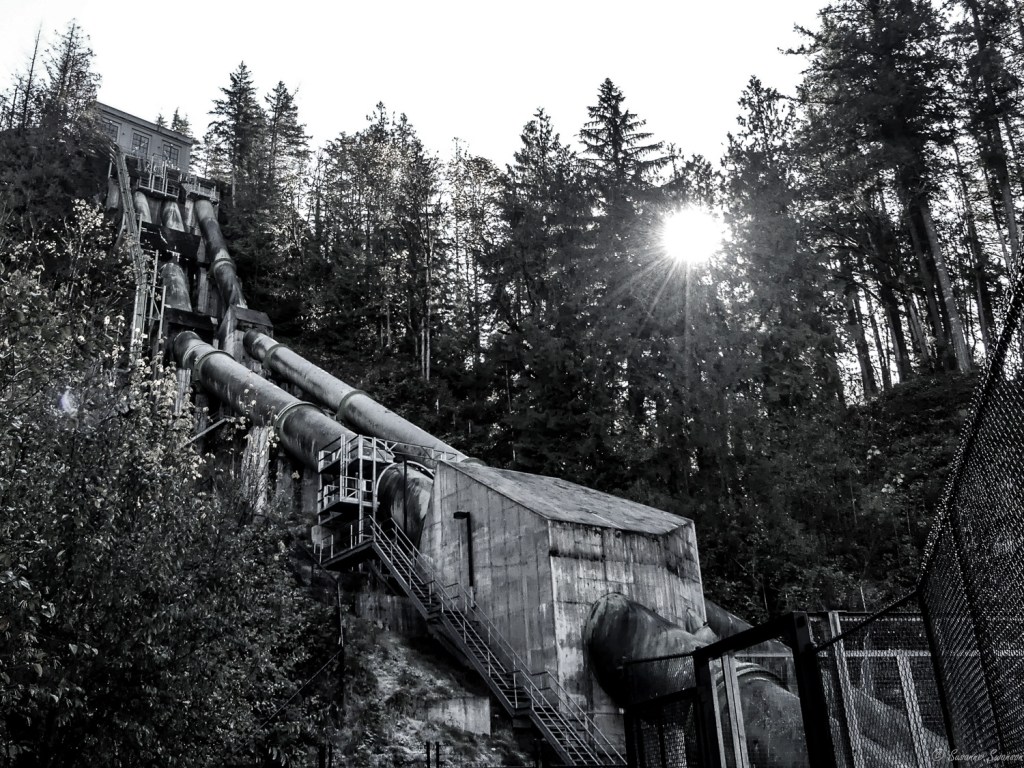
But I couldn’t help but notice some of the same scenes were almost frightful when drained of their color.
Would you stay at this old Roadhouse? I wouldn’t, in black and white. Built in Fall City in 1920, imagine the stories it could tell.
Why was it called Fall City? Because of this – Snoqualmie Falls – just up the road.
The falls aren’t exactly frightening but how about these penstocks nearby? Connecting to the powerplant at the bottom, they looked out of this world.
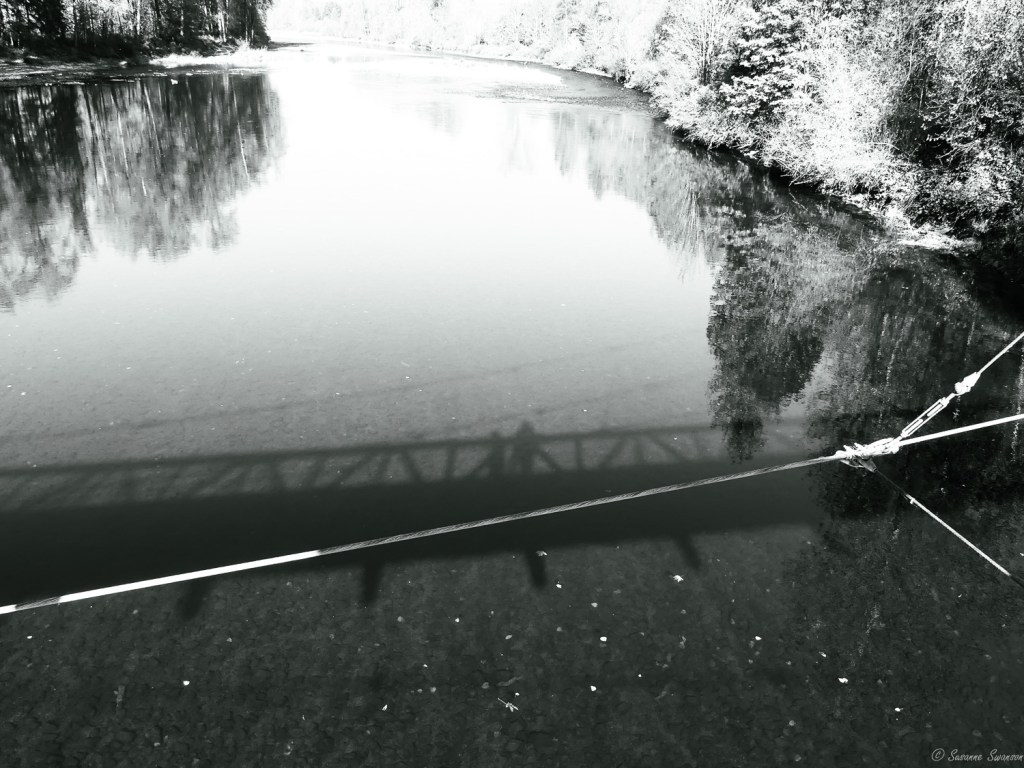
At Tolt-MacDonald Park up the road we crossed the suspension bridge and it swayed, causing us to quicken our steps, lest we be plunged into the water below.
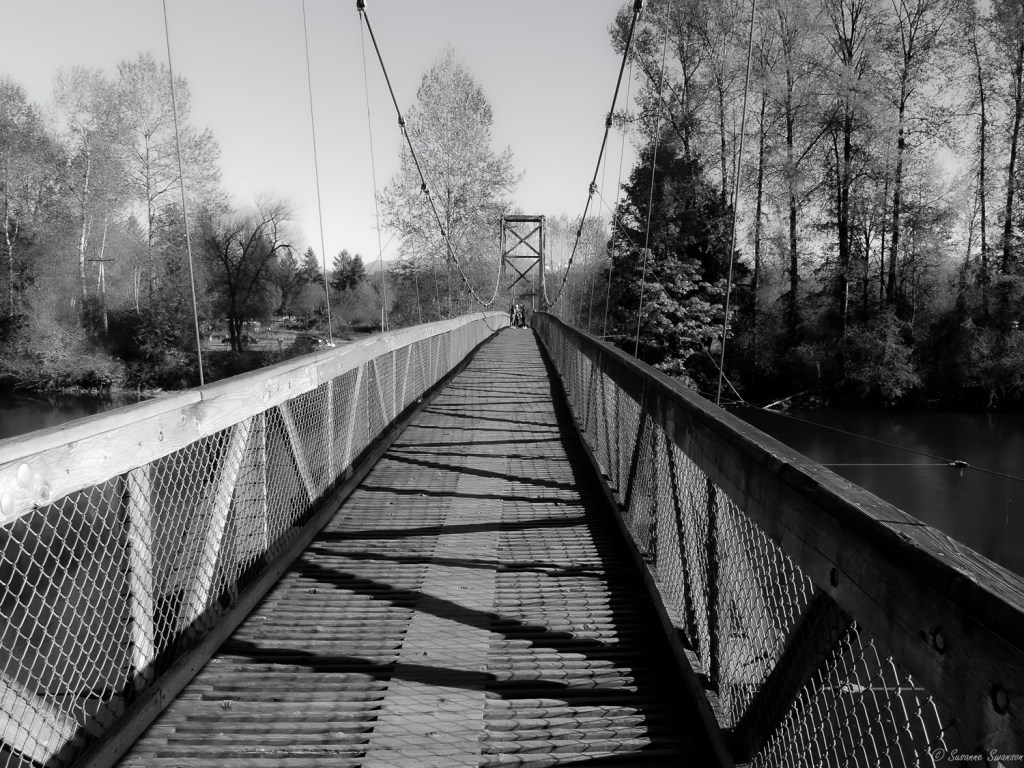
(Yes, I’m exercising a bit of poetic license here.)
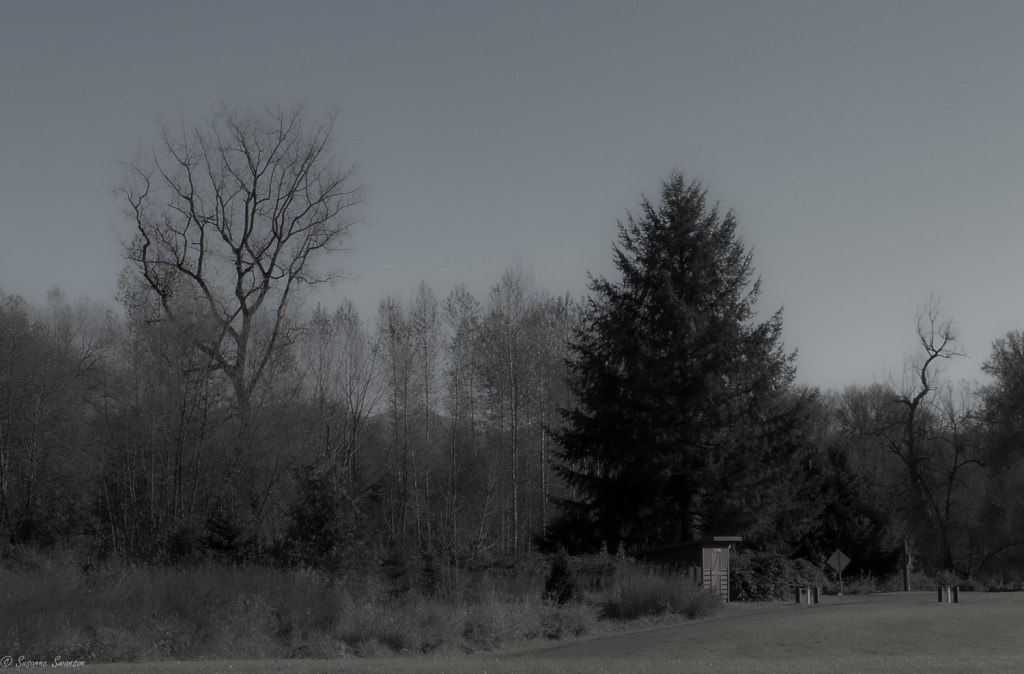
On the other side were trees, especially frightful in black and white.
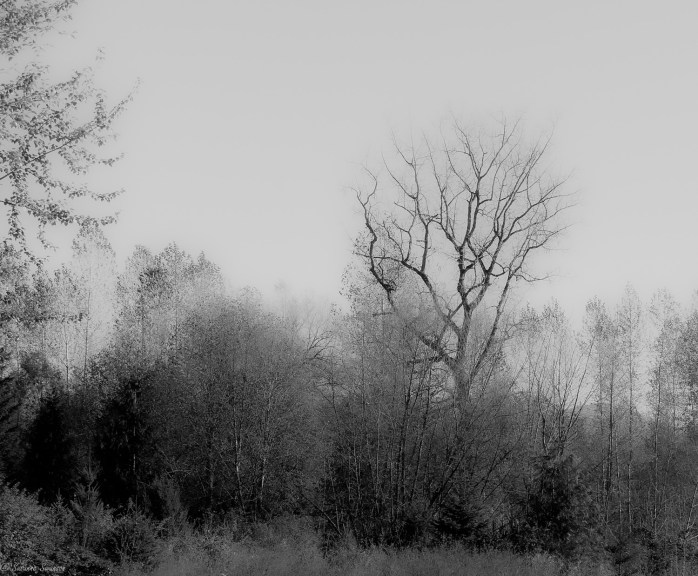
Even the frost was treacherous.
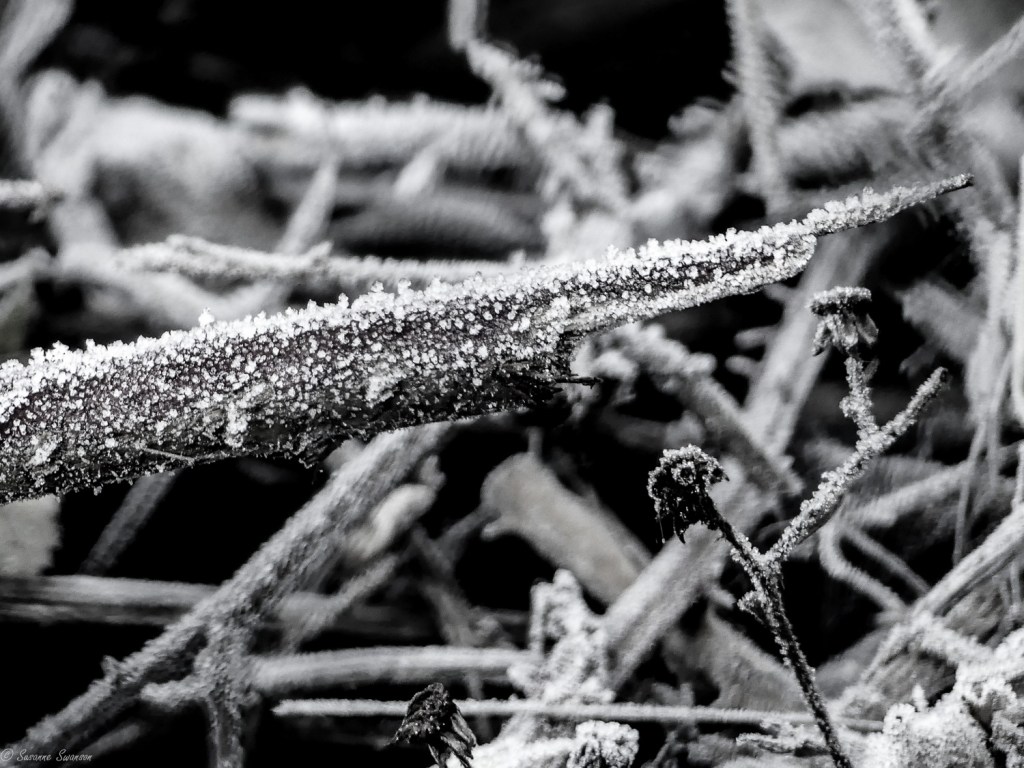
I’ll be back later this week to show you some of these sights as they belong, in living color.
But for today, I’m sharing the ordinary made #Frightful for Sunday Stills.
Susanne
Cruise to Alaska -Leaving Endicott Arm for Rainy Juneau
The 4th day of our cruise started early – 1:00 a.m.to be exact, when the captain came over the loudspeaker to tell us the northern lights were up ahead. I got up to see the dim, green highlights in the sky, then went back to bed; I learned later the colors were brilliant at 3. Oh well. Morning would come soon enough as we would sail into Endicott Arm before sunrise.
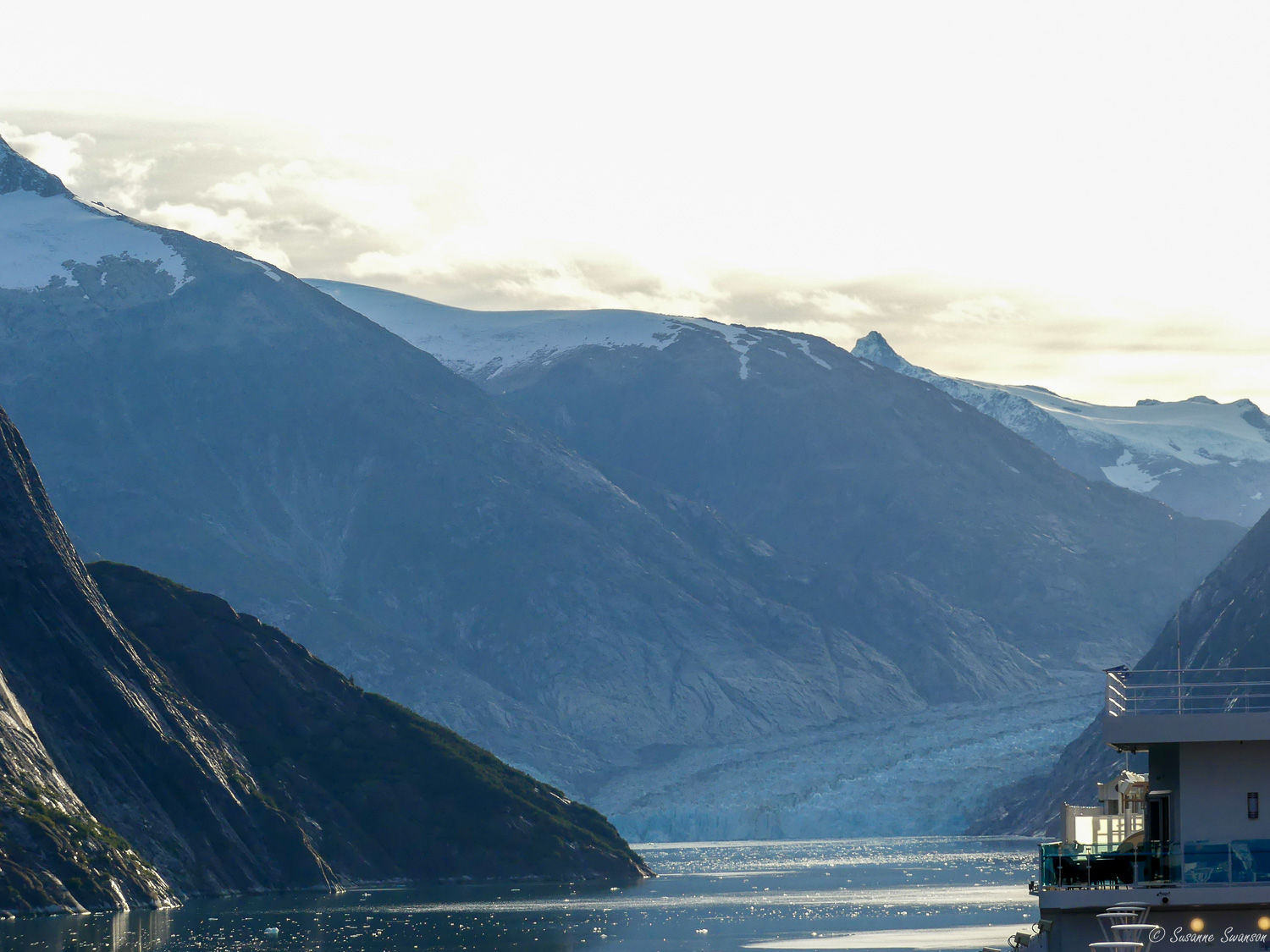
All was peaceful as we entered the fjord and slipped past the Hanging Glacier under the cloak of darkness.

Slowly, the sun began to rise, illuminating the beauty surrounding us.


At the end of the fjord we came face to face with Dawes Glacier (as close as a giant ship can safely get.)
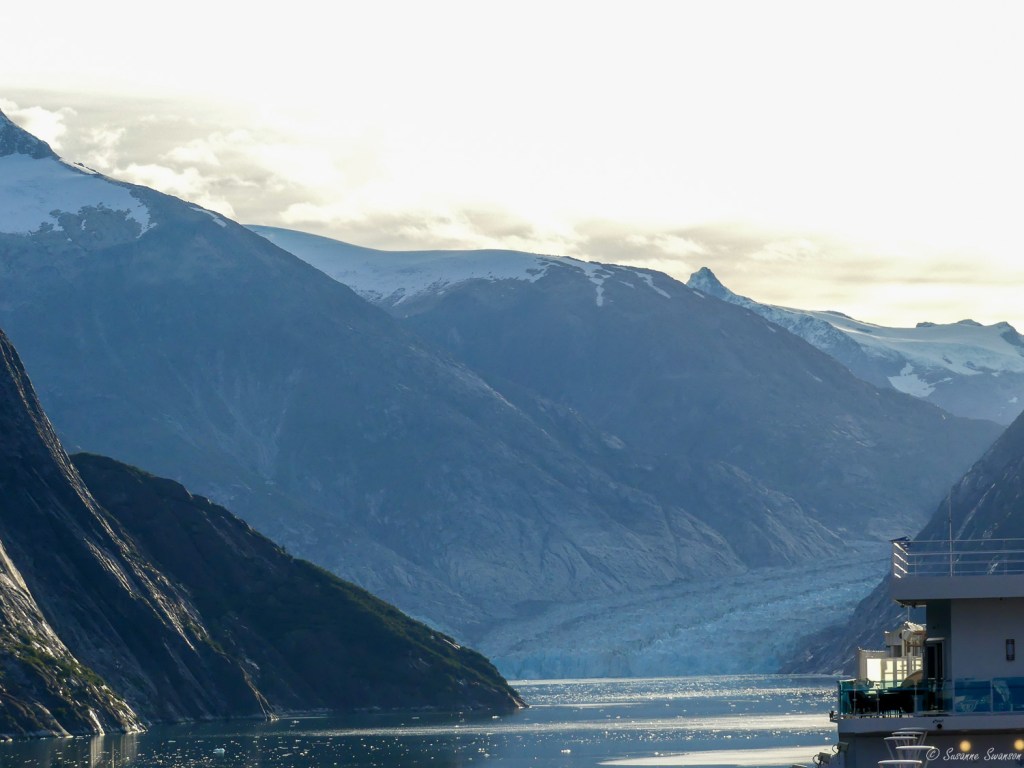
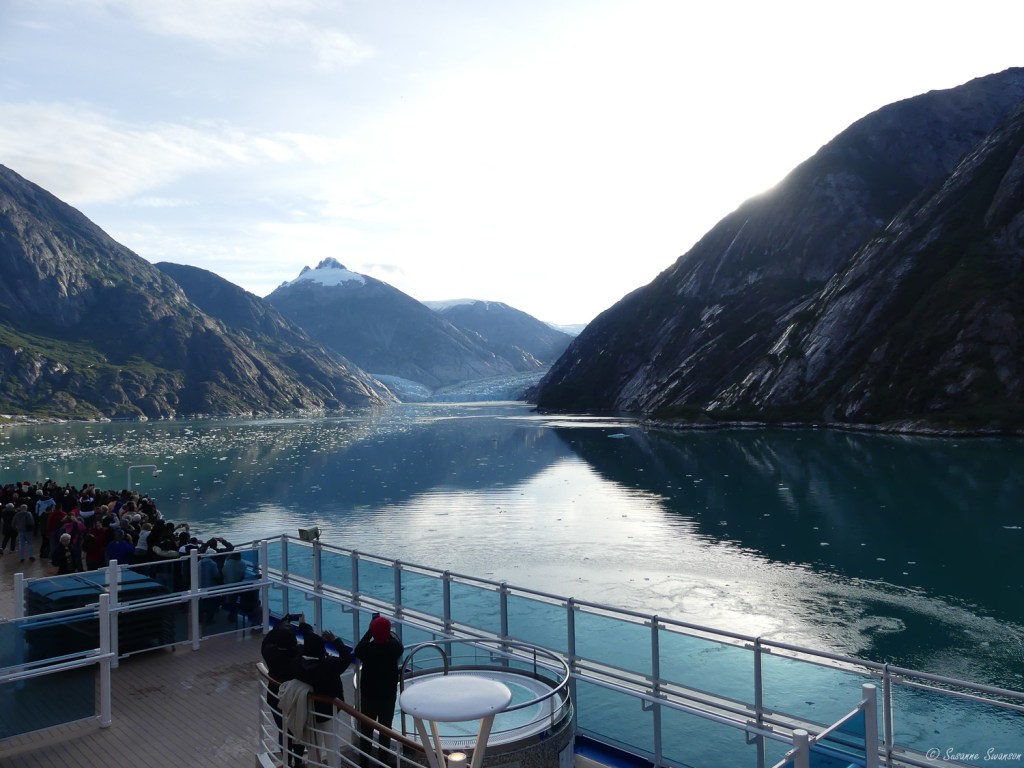

Wrapped in a blanket with coffee in one hand, and camera in the other, I enjoyed the marvelous views outside as we continued through the Inside Passage – the mountains, forests, islands, and ice floes.


“Shaped by the staggering force of massive glaciers millions of years ago, Alaska’s Inside Passage stretches 500 miles along the Pacific Ocean and boasts wildlife-filled fjords, tidewater glaciers, and lush island scenery. The Tongass National Forest— the largest national forest in the United States and the largest intact temperate rainforest in the world — covers the vast majority of the Inside Passage.”
Travelalaska.com

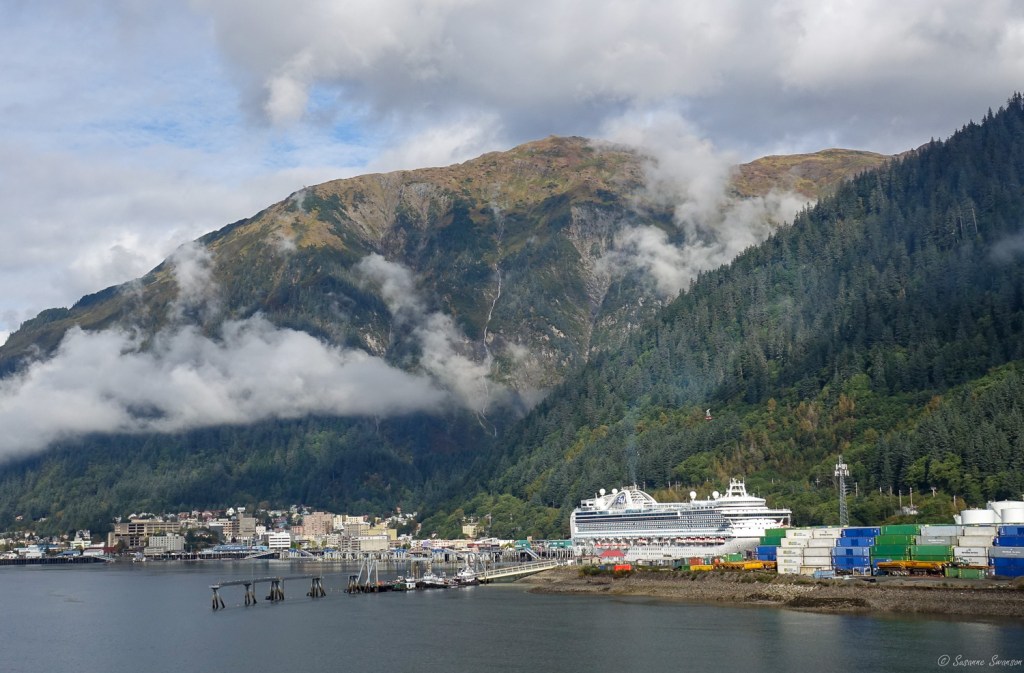
The weather held the next few hours but as we approached Juneau it was not to be – we were greeted with heavy rain.
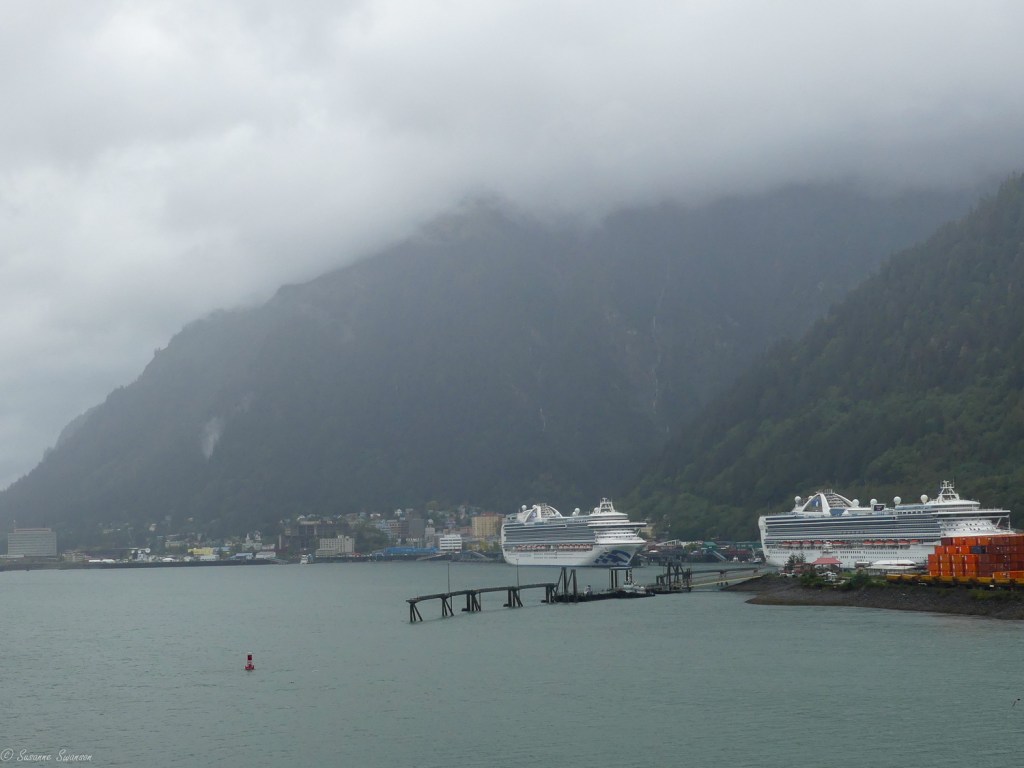
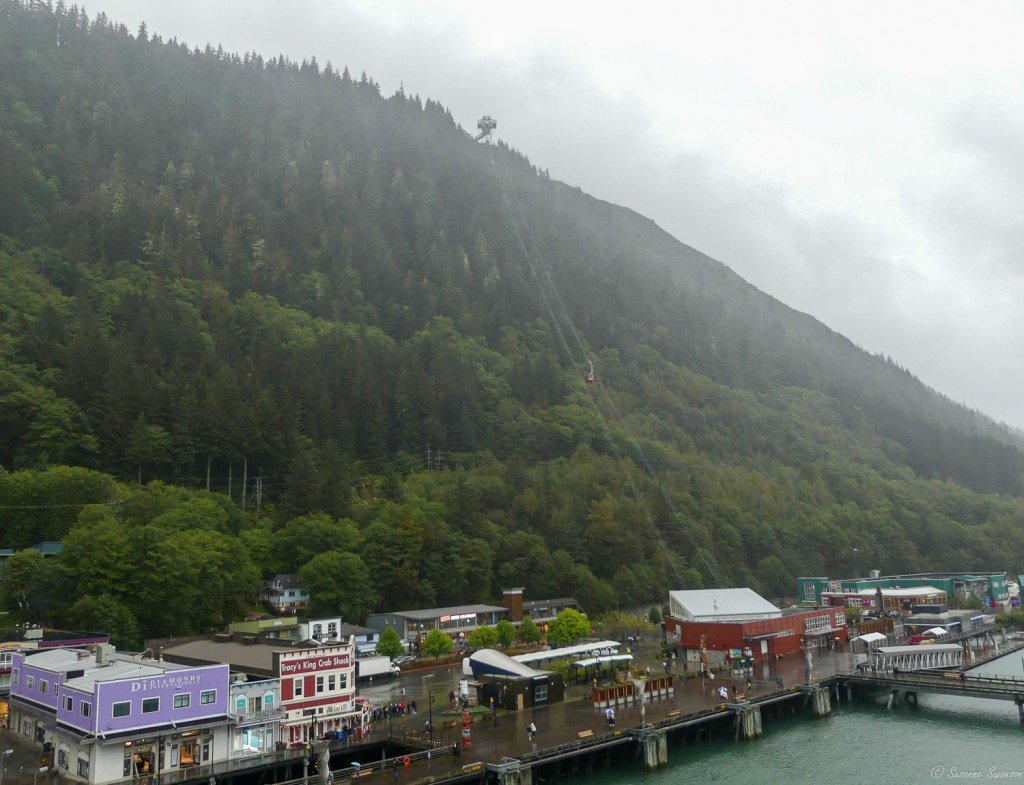
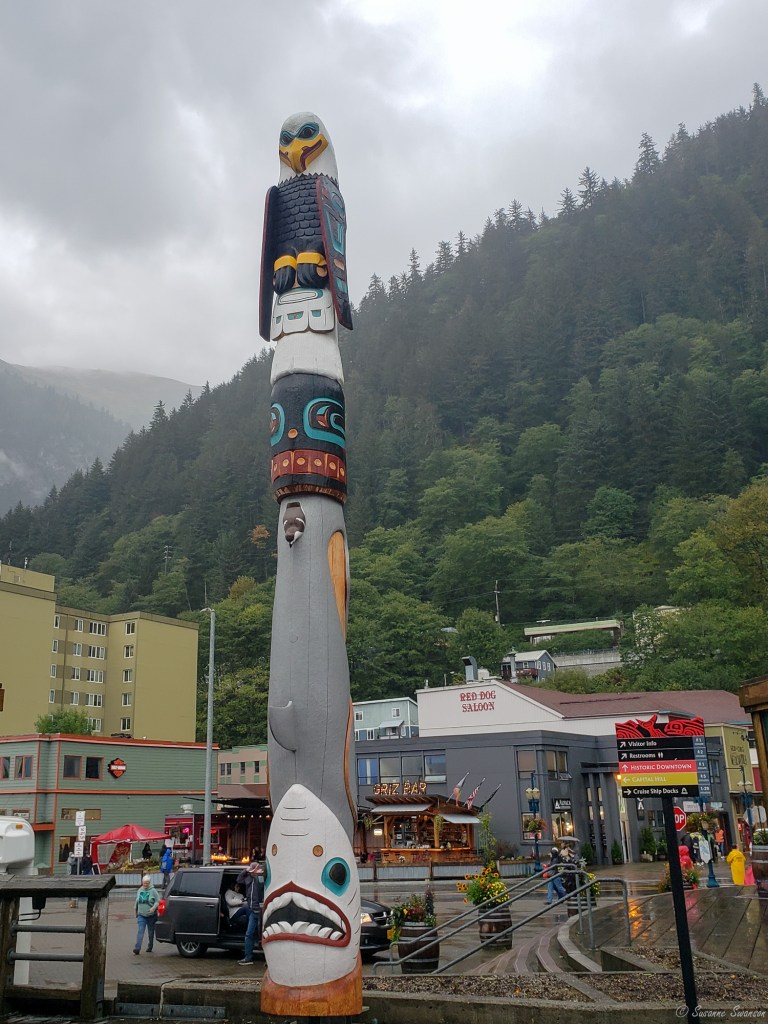
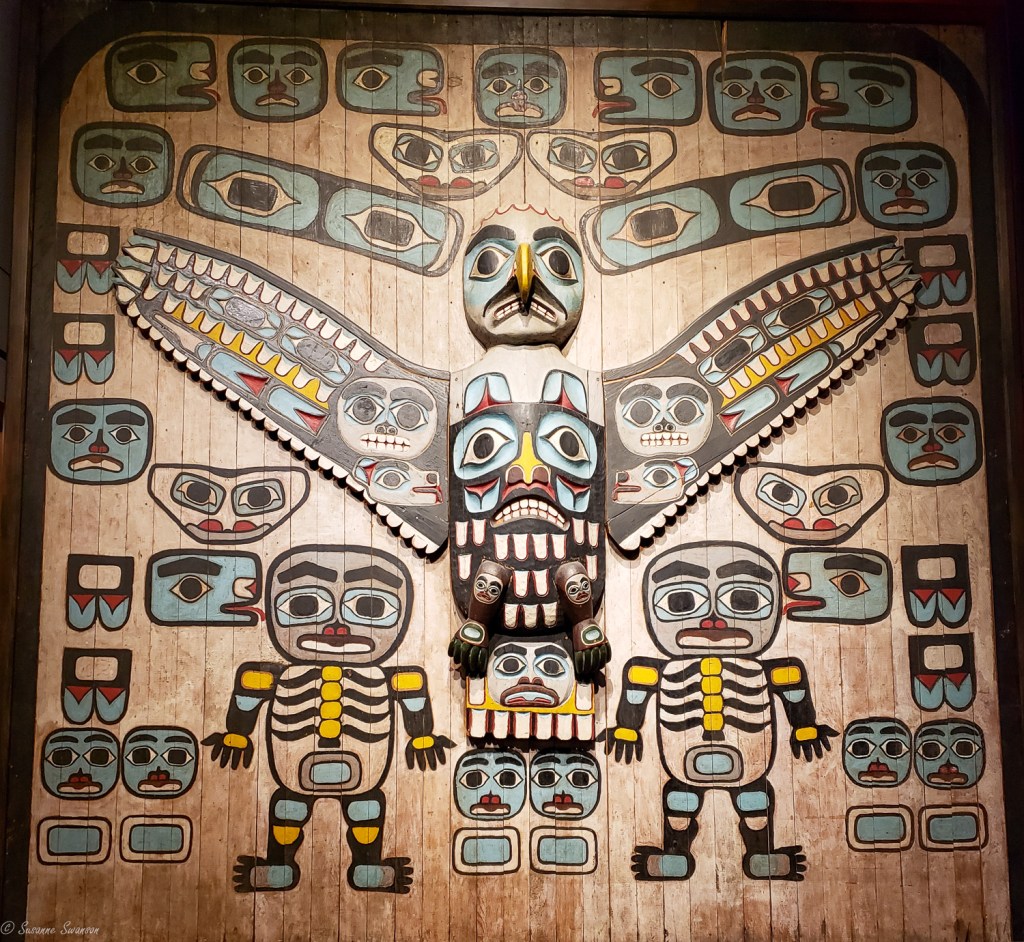
I was glad we hadn’t purchased an excursion. Instead, we carried umbrellas and walked the few blocks to the Alaska State Museum where we saw historical artifacts including this Thunderbird Screen from 1905.
“In Southeast Alaska, Tlingit clan history was preserved in precise detail between generations. Stories of their origins and early activities were passed orally over thousands of years. These histories are also represented in song, personal and place names and as symbolic crests on regalia, totemic carvings and other decorated objects.” This screen documents the history of the House of the Yakutat Tlingit.
Alaska was considered a colony of Russia until purchased by the United States in 1867 for 7.2 million, a purchase known at the time as ‘Seward’s Folly.’ (There’s been quite a return on investment.)
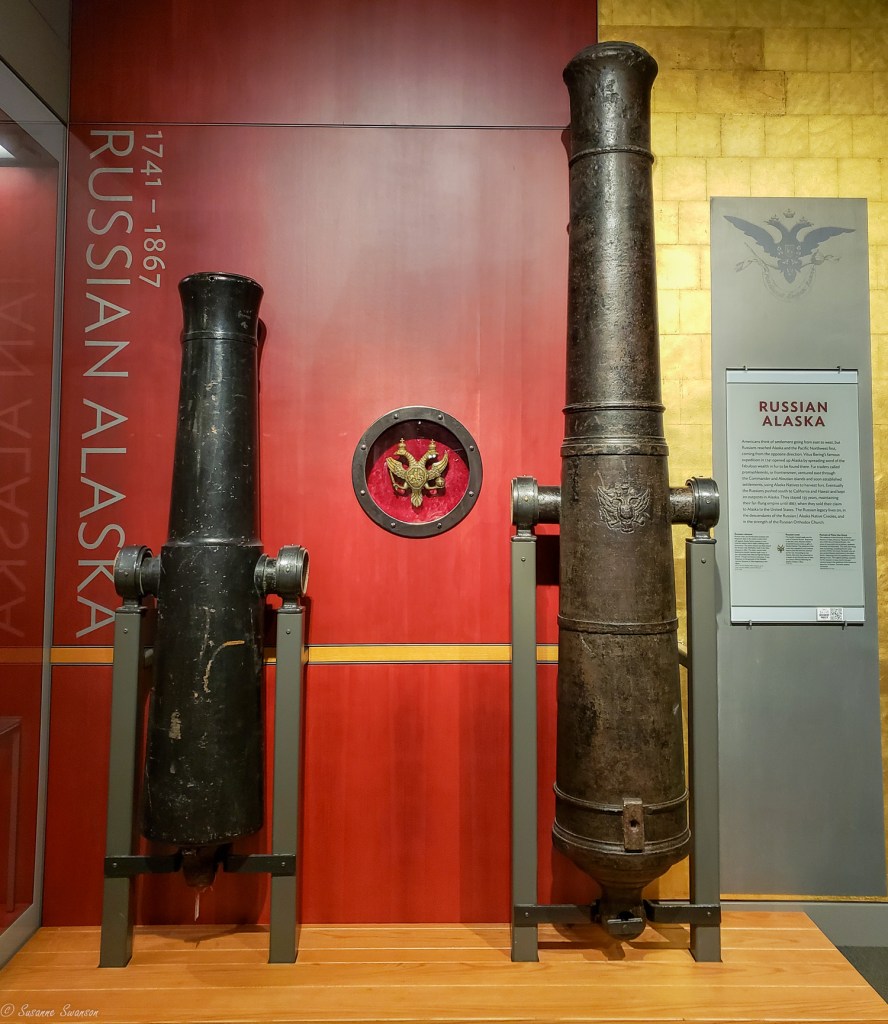
The native inhabitants of Alaska protested the ‘selling’ of their land which was never owned by Russia, but it would take years before any settlement and payment to the natives would occur.


After the museum we headed back into the rain which hadn’t abated – in fact the wind picked up, turning our umbrellas inside out.
We gave up any ideas of shopping and returned to the ship for an early dinner.
No, it was not a good day for sightseeing, but fortunately we explored Juneau on our first cruise to Alaska a few years ago,
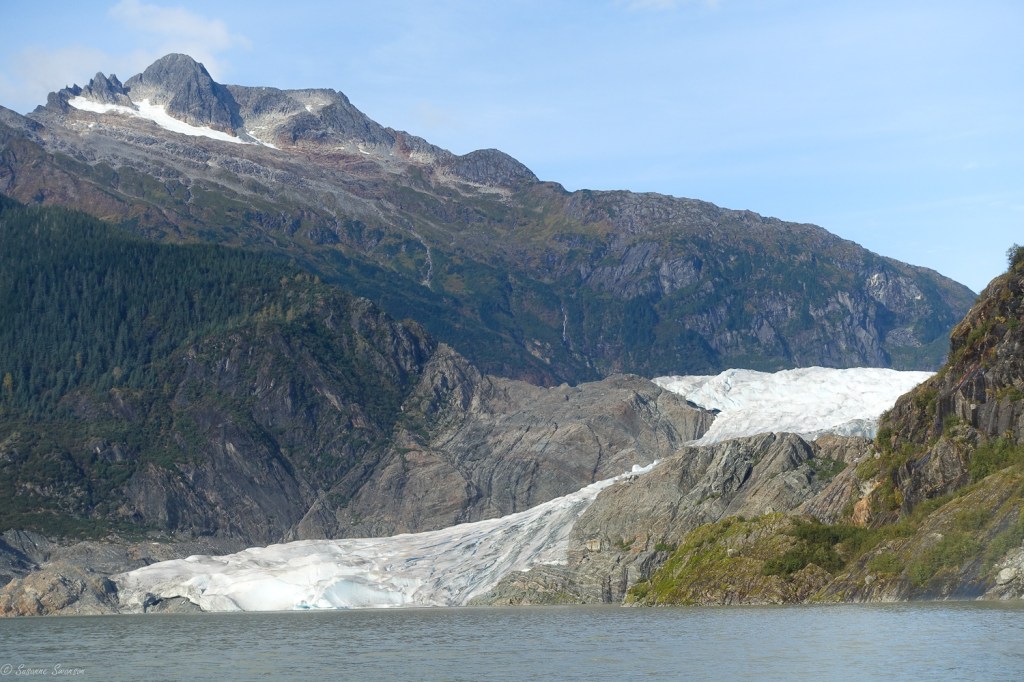
including a visit to Mendenhall Glacier, a few miles from town.
And that will do for now.
~ Susanne
Sharing with the Squirrels
It’s that time of year when I put the feeders out for the birds in my backyard.

I fill them with seed and suet, and both are welcomed by the chickadees, nuthatches and finches.

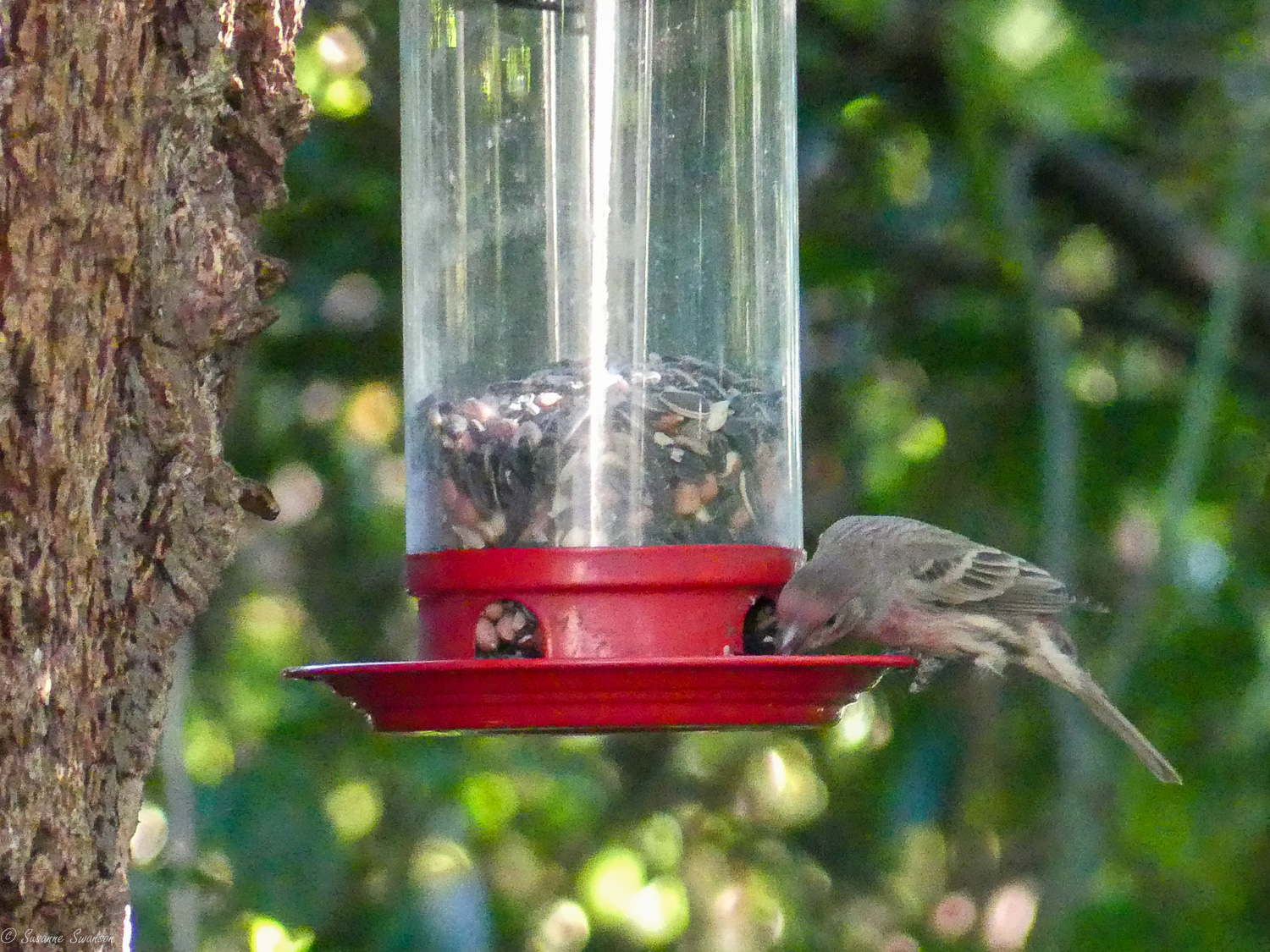
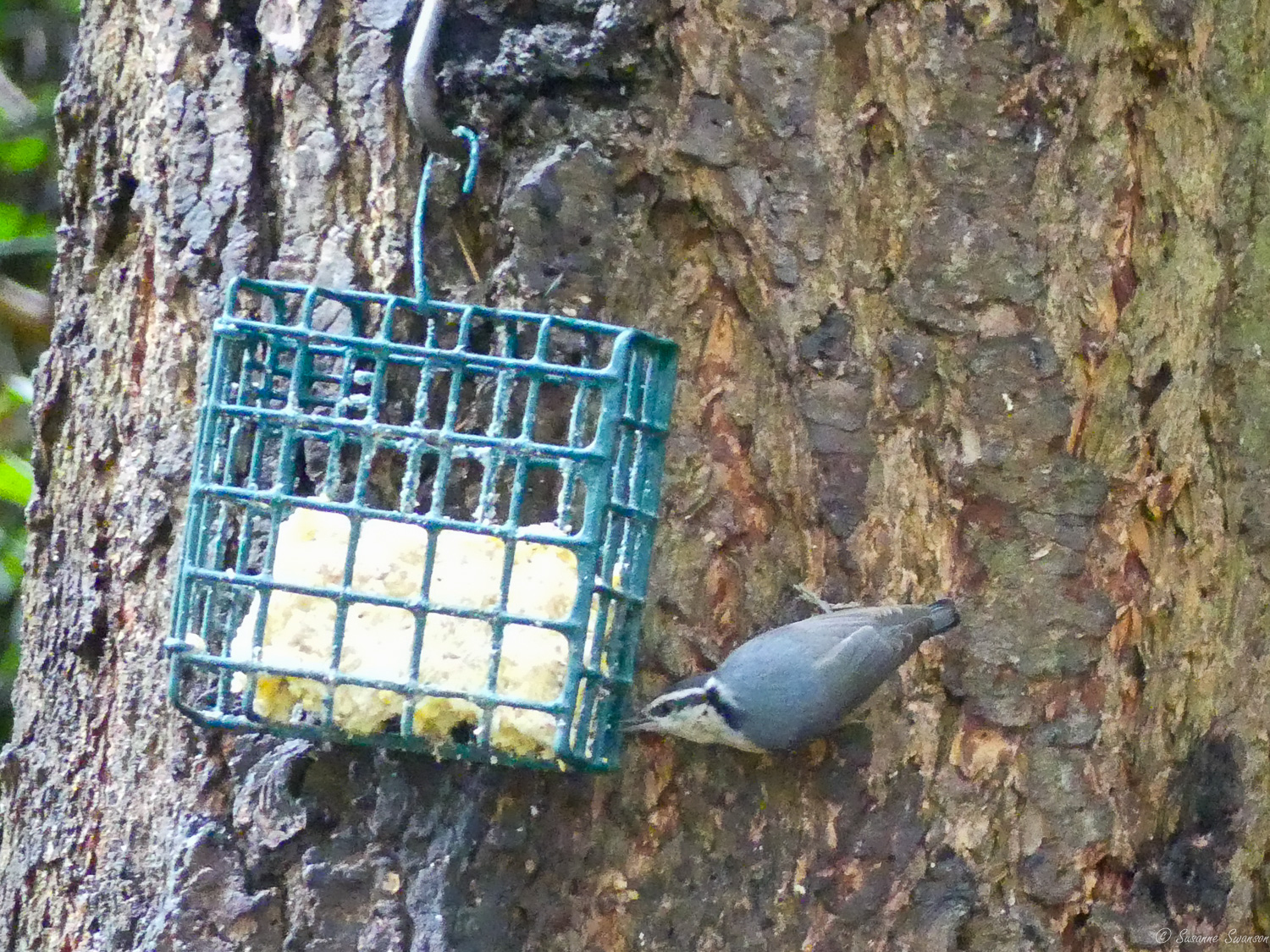
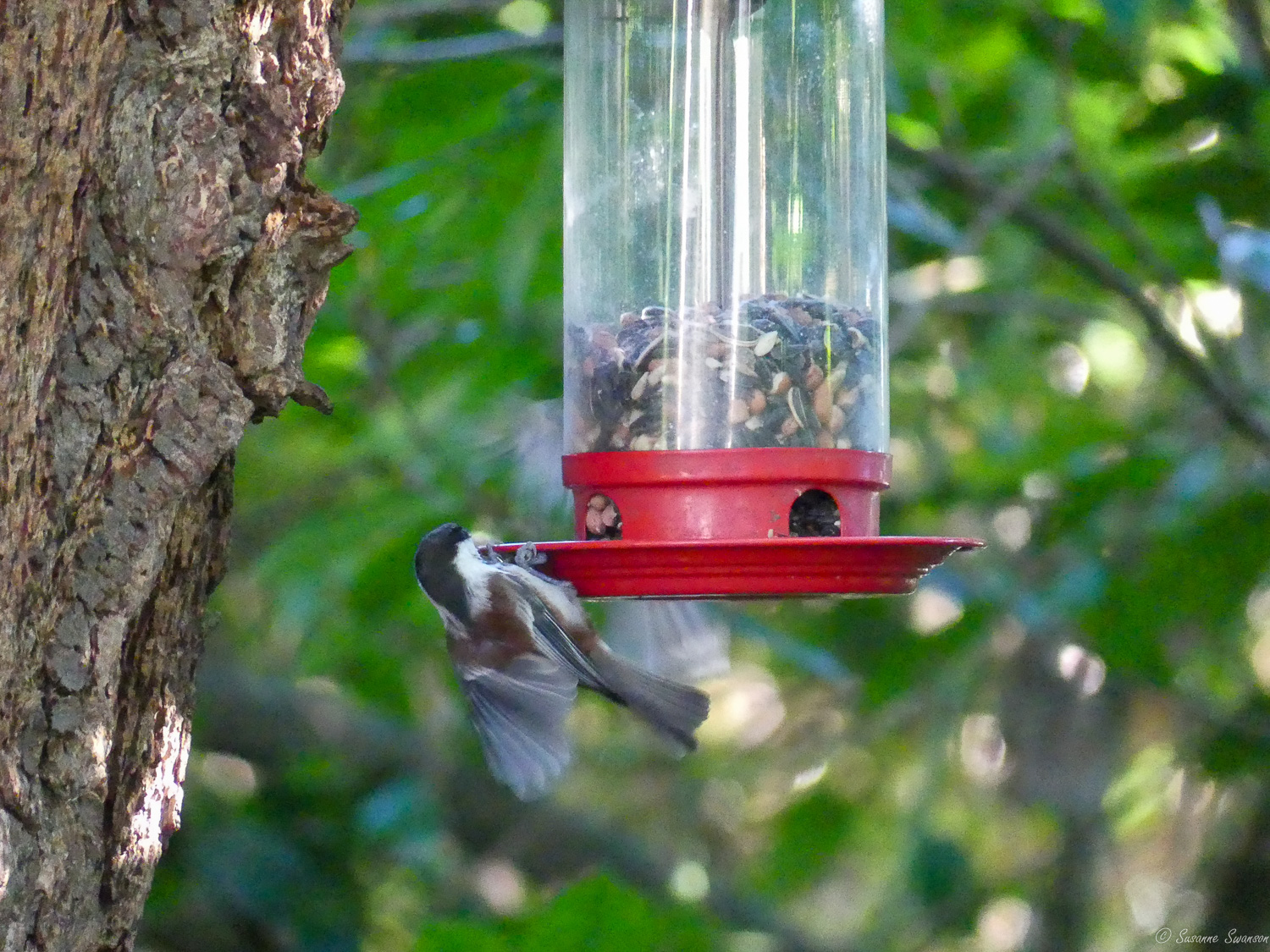
You know who else gets their fill?
These guys.

Sorry to say, the Eastern Gray Squirrel is not native to the Pacific Northwest and thus not welcome at the feeders by most backyard birders.


On the other hand, they are charming and acrobatic, and virtually impossible to keep away, despite everyone’s best efforts.
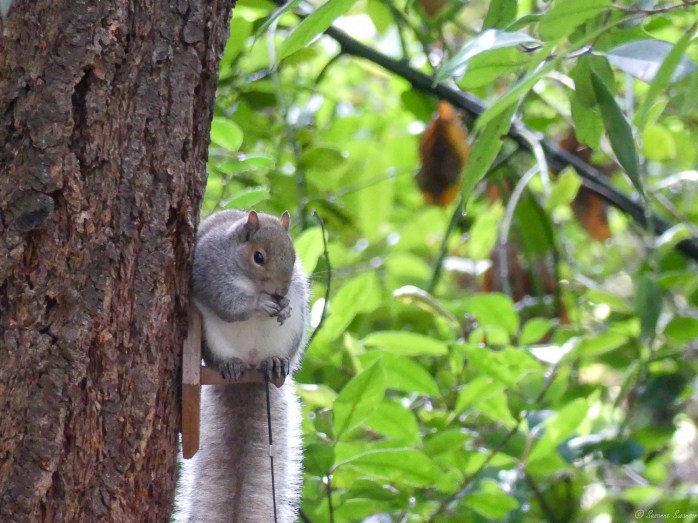
I don’t begrudge them; everybody’s got to eat, and the birds don’t seem to mind. So I just keep the seed and suet coming.

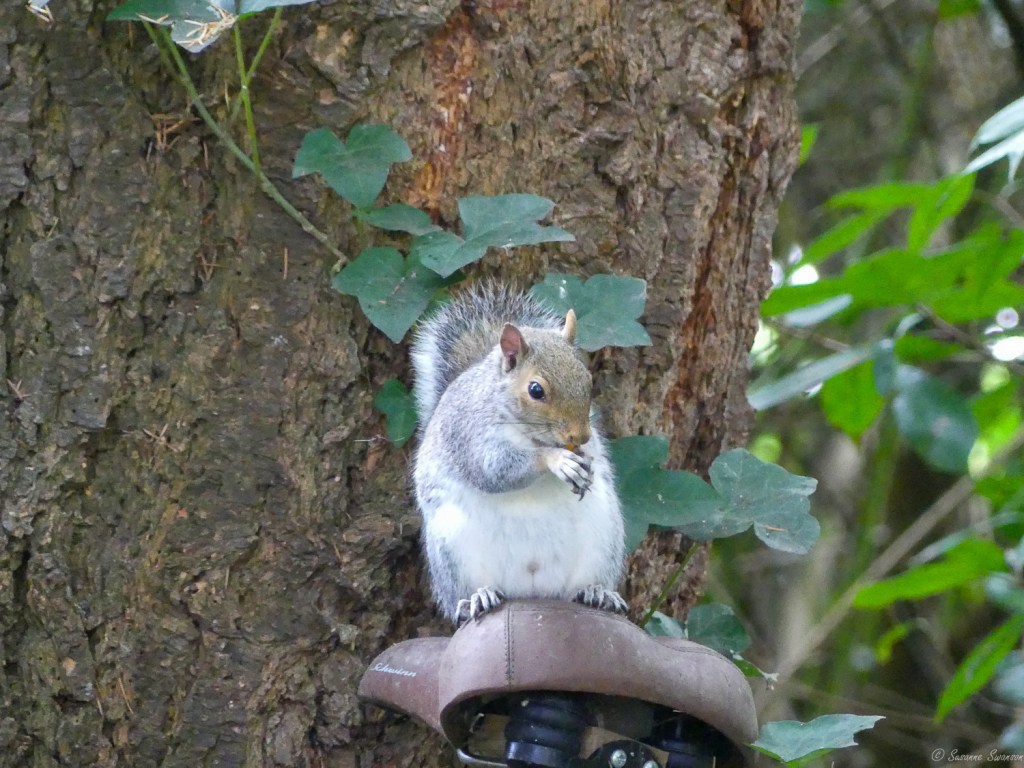
They appreciate it.
~ Susanne
Benji in the Funny Pages
I’ve had many cats in my day, and all were unique and wonderful. But none made me laugh like Benji so I’m happy to share him for this week’s Sunday Stills, #Funny Pages.
Benji and the Mystery Cat


Scaredy Cat

Invasion of the Cat Snatchers

“Take me to your leader.”
Hideaway Cat


If it fits…

or not,

there’s only one Benji.

~ Susanne
 Cats and Trails and Garden Tales